
Last updated October 31, 2026
 Wrought iron
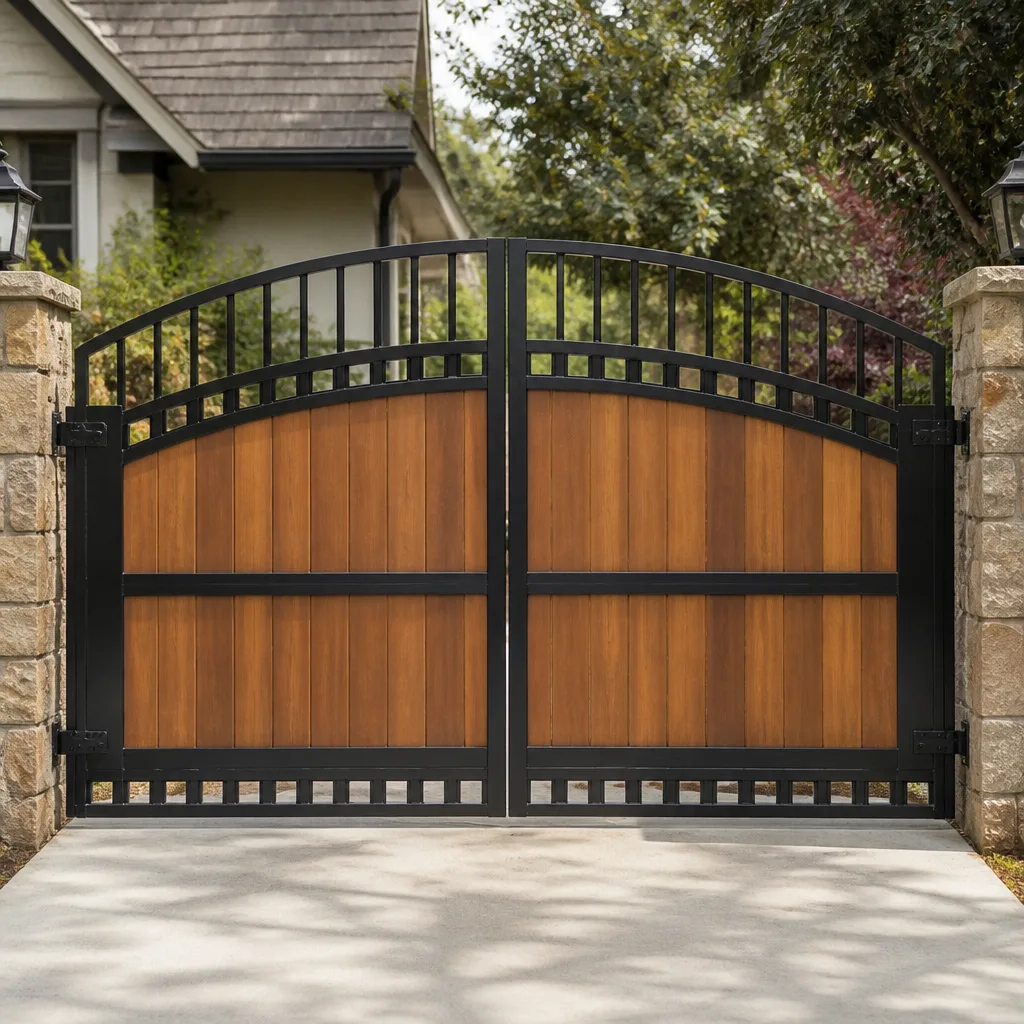 Wood & steel frame
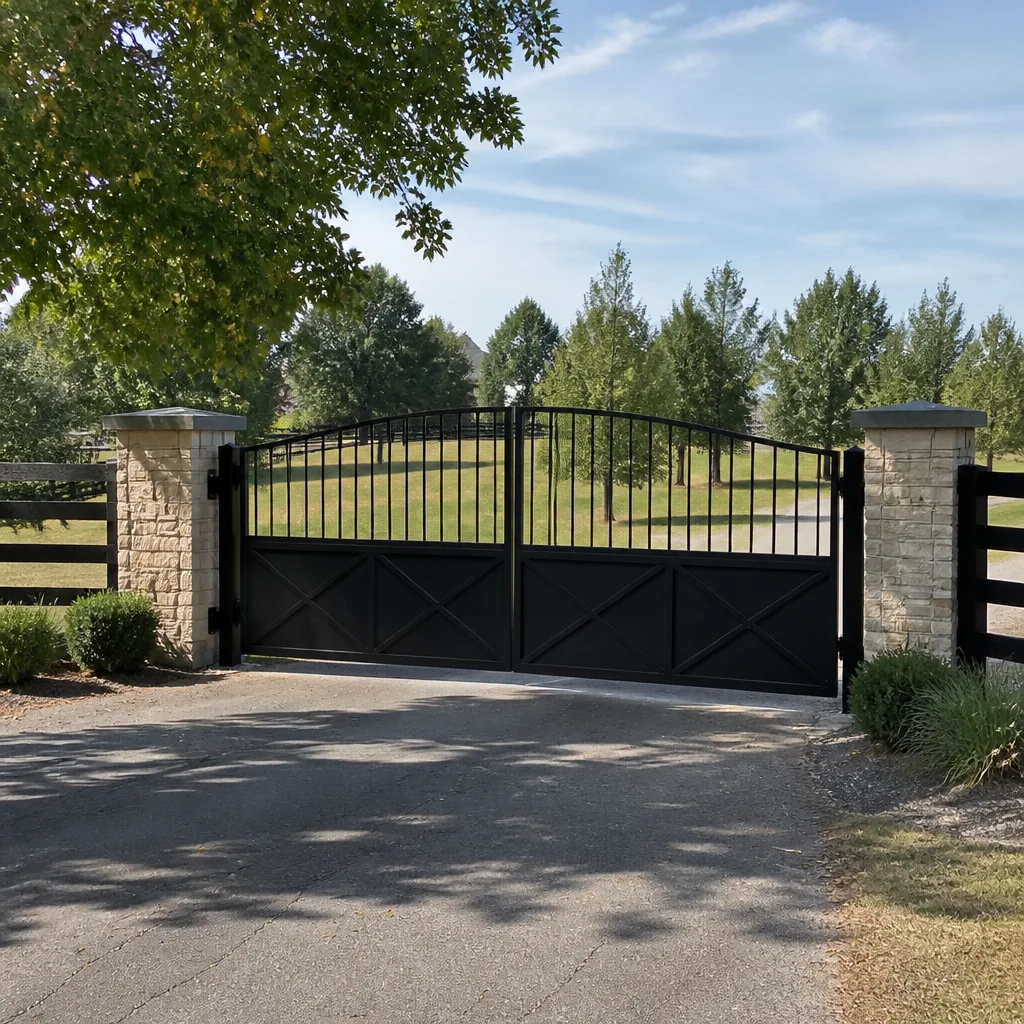 Farm & ranch
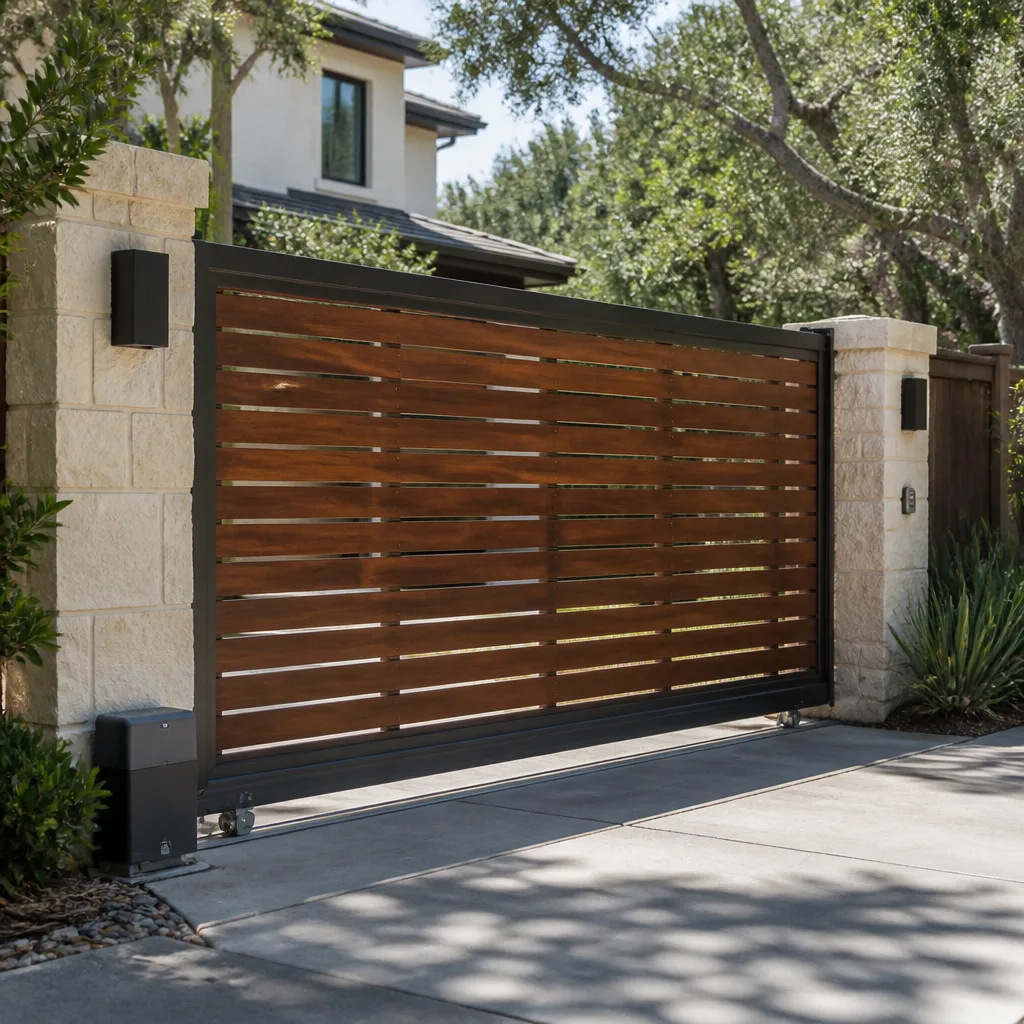 Sliding driveway gates
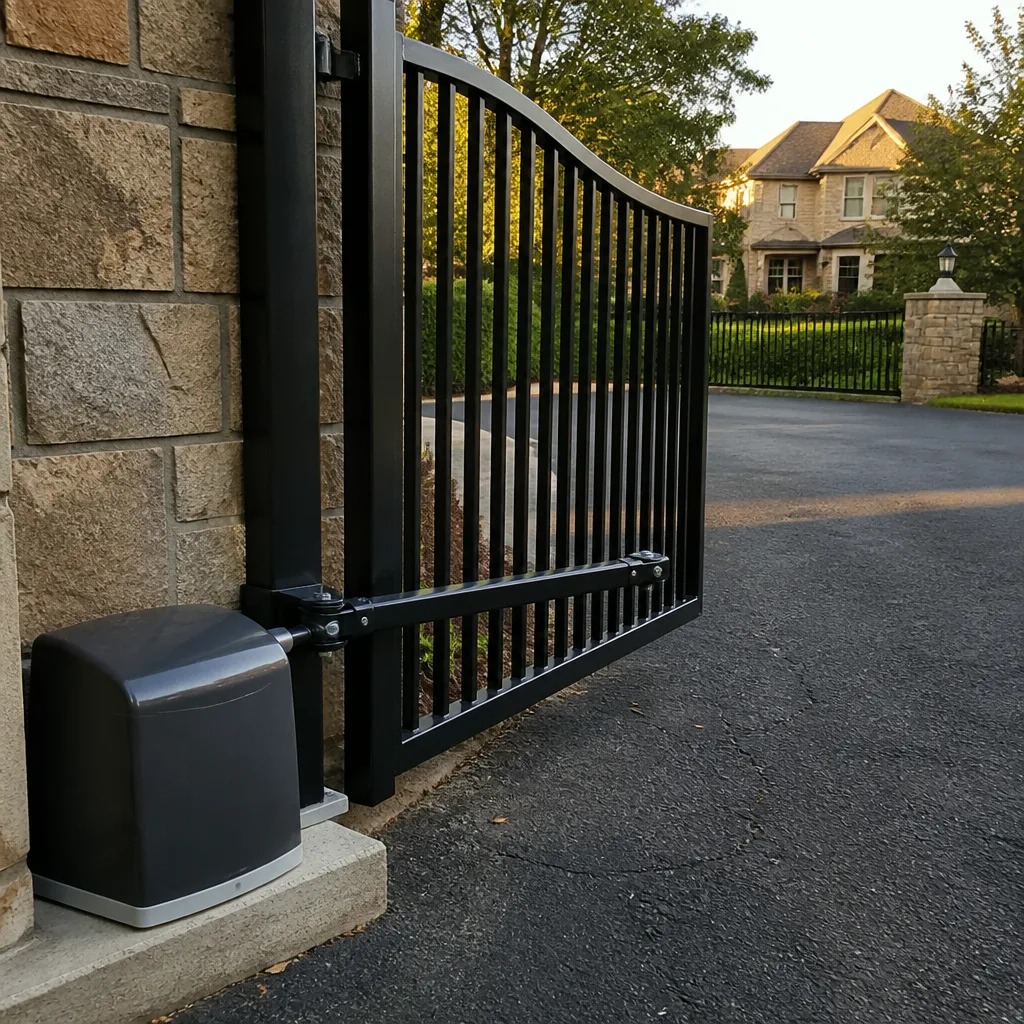 LiftMaster operators
Free on-site gate assessment - hinges, posts, and your LiftMaster or Nice gate operator checked before anything is quoted
The assessment is free and the quote is the invoice.
Get your free estimateGate Repair Warning Signs: A Rowlett Homeowner’s Reference Guide
A gate that hesitates for two seconds before opening isn’t “working fine, just a little slow.” It’s broadcasting a diagnostic signal that points to one of three underlying problems, each with a different repair path and cost. Rowlett homeowners deal with a specific set of gate stresses: clay soil that shifts with every wet-dry cycle, summer heat that cooks control boards inside metal enclosures, and the ever-present fine dust that works its way into rollers and hinges. This guide maps what you’re seeing and hearing to what’s actually failing underneath, so you know whether to schedule our Gate Repair services or treat it as an emergency.
Styles & brands we work with
Quick Answer
The most common gate repair warning signs in Rowlett are grinding or clicking sounds during operation, slow or jerky movement, a gate that reverses mid-cycle or stops short, visible rust streaking from fasteners, slight post lean, and remotes that only work at close range. Grinding usually means a mechanical part is wearing out. Clicking without movement usually points to an electrical or control-board problem. A gate that drifts or sags is a hinge or post issue. Any gate that runs without stopping, or a heavy gate whose post is visibly leaning, is an immediate safety risk.
Table of Contents
- Sound-Based Diagnosis: What Your Gate Is Telling You
- Movement-Based Diagnosis: Slow, Jerky, Reversing, or Drifting
- Visual Warning Signs Homeowners Underestimate
- Remote and Keypad Behavior as a Diagnostic Tool
- Urgency Assessment: Emergency vs. Scheduled Repair
- Rowlett-Specific Factors That Accelerate Gate Wear
- Common Mistakes to Avoid
- When to Call a Professional
- Frequently Asked Questions
- The Bottom Line
Sound-Based Diagnosis: What Your Gate Is Telling You
Gates make noise. That’s true of every mechanical system. But the type of noise, and when it happens, is a surprisingly precise diagnostic tool. Most Rowlett homeowners we talk to can describe the sound their gate makes with impressive accuracy. The problem is they don’t know what the sound means. Here’s what the four most common gate sounds indicate.
Grinding or metal-on-metal scraping. This is almost always mechanical. On a sliding gate, it’s typically a roller bearing that’s seized, a track that’s collected enough Rowlett dust and grit to become abrasive, or a guide wheel that’s out of alignment. On a swing gate, grinding points to a hinge that’s lost its lubrication or has worn to the point where the gate’s weight is scraping the pin. Ignoring grinding doesn’t just make the sound worse. It converts a $150 roller replacement into a $900 track replacement when the track gets gouged. If you have a Ghost Controls or Mighty Mule swing arm, grinding can also come from the arm’s internal gears stripping, especially if the gate has been forced manually while the operator was engaged.
Clicking without movement. You press the remote. You hear a click. The gate doesn’t move. That click is a relay firing on the control board. It means the board is receiving the signal and trying to send power. The failure is downstream: a capacitor that’s lost its charge, a motor that’s seized, a limit switch that’s stuck open, or a wiring connection that’s corroded. On DoorKing and Elite operators, clicking without movement is a common symptom of a failed start capacitor. On FAAC and BFT hydraulic operators, it can indicate the pump motor isn’t building pressure. The key diagnostic point: clicking means the brain works. The muscle doesn’t.
Humming with no movement. A hum is the sound of a motor receiving power but not turning. On a sliding gate, this often means the gate is physically bound: a wheel has jumped the track, debris is wedged under the gate, or the rack is out of mesh with the pinion gear. On a swing gate, a hum can mean the operator’s internal gears are stripped, or the gate has been pushed out of the operator’s travel range. Humming for more than a few seconds is dangerous for the motor: it’s drawing locked-rotor current, which builds heat fast. If your gate hums, stop trying to operate it and disconnect power until it’s inspected.
Intermittent beeping. Most automated gate operators beep as a warning before movement, or to signal a fault condition. If your operator beeps but doesn’t move, or beeps continuously after an interruption, it’s trying to tell you something specific. On LiftMaster and Linear operators, continuous beeping after a power interruption usually means the battery backup is depleted or the board needs to be reset to clear a fault code. On BFT and Viking systems, a repeating beep pattern is a fault code, and the number of beeps maps to a specific problem in the manual. Don’t guess at beep codes. Write down the pattern and call a Gate Repair in Rowlett specialist who knows that brand’s fault-code language.
Movement-Based Diagnosis: Slow, Jerky, Reversing, or Drifting
Movement problems are what finally push most Rowlett homeowners to call. The gate isn’t completely broken, but it’s obviously not right. Here’s what each movement symptom points to.
Slow operation, especially on hot afternoons. A gate that’s noticeably slower than it was six months ago is telling you that something is working harder than it should be. On sliding gates, the usual culprits are failing roller bearings, a track that’s out of level, or a motor that’s losing torque. On swing gates, slow movement is often hinge wear: as hinges wear, the gate’s effective weight on the operator increases, and the operator slows down to compensate. In Rowlett, we also see heat-related slowdowns: operators mounted in direct afternoon sun on west-facing gates can overheat and reduce motor output. If your gate is slow only on hot days, the operator may be running at its thermal limit. That’s a design problem worth correcting before the motor fails completely.
Jerky or stuttering movement. A gate that moves in fits and starts is usually fighting something physical. On a sliding gate, that’s often a wheel catching on a rough spot on the track, a gear rack with a damaged tooth, or debris in the track channel. On a swing gate, jerky movement frequently signals a hinge that’s binding, or an operator arm whose pivot points have worn. Jerky movement is not normal operation. Every jerk is a mechanical component being asked to absorb a shock load it wasn’t designed for.
Reversing mid-cycle. An automated gate that starts to close, then reverses and opens again, is usually responding to its safety system. The safety edge or photo-eye is detecting an obstruction. Sometimes there’s a real obstruction: a branch that’s grown into the gate’s path, a child’s toy, or a rock that’s been kicked into the track. But in Rowlett, we also see false obstruction signals from sensors that have been knocked out of alignment, sun-glare on photo-eyes at certain times of day, or safety edges that have cracked and are shorting. If your gate reverses with nothing visible in the way, the safety system itself needs diagnosis.
Drifting or sagging. A gate that doesn’t hold its position when stopped, or that visibly sags toward the latch side, is a mechanical support problem. On swing gates, drift almost always means hinge wear or post movement. On sliding gates, a gate that rolls when it should stay put means the track isn’t level, or the gate’s weight distribution has shifted. Drift is progressive: it gets worse every week, and it puts increasing strain on every other component. We’ve seen Rowlett gates where six months of ignored drift turned into a snapped hinge and a gate that had to be lifted off the post with a tractor.
For any of these movement symptoms, the core question is whether the problem is in the operator (the motor and control board) or the mechanical gate structure (hinges, track, wheels, posts). The answer determines the repair path. Our Electric Gate Repair in Rowlett work starts with that distinction, because the two paths have very different costs.
Visual Warning Signs Homeowners Underestimate
Most gate failures announce themselves visually long before they announce themselves audibly. These are the signs Rowlett homeowners consistently walk past for months.
Hairline cracks at hinge welds. A hairline crack in a weld is not a cosmetic blemish. It’s a structural fracture that’s already in progress. Swing gates put enormous cyclical stress on hinge welds: every open-and-close cycle flexes the metal slightly. Over years, that flexing work-hardens the steel and cracks form. Once a crack starts, it propagates. A hinge weld that cracks completely drops the gate onto its operator and latch, usually causing secondary damage. Check your hinge welds monthly. If you see a line that wasn’t there before, it needs attention now, not at the next scheduled maintenance.
Post lean of even 1 to 2 degrees. A gate post that’s leaning slightly is the single most underappreciated warning sign in this guide. Rowlett’s clay soil expands when wet and contracts when dry, and that cycle slowly works posts out of true. One degree of lean on a post translates to a significant change at the latch end of a 12-foot gate: the latch no longer lines up, the gate drags, and the operator has to work harder every cycle. By the time a post is leaning 3 degrees, the gate’s weight is pulling it further over with every cycle, and the failure compounds. A post that’s caught at 1 to 2 degrees of lean can often be corrected and secured. One that’s left to lean farther usually requires excavation and re-pouring.
Rust streaking from fasteners. Rust streaks running down from a bolt head or hinge screw tell you that moisture is getting in and staying. It usually means the fastener’s protective coating has failed and oxidation is active inside the connection. On gates, rusted fasteners don’t just look bad: they seize, which means disassembly for any repair becomes more expensive, or they weaken, which means a load-bearing connection is quietly losing strength. Rust streaking at the bottom corners of a steel gate frame also signals internal moisture, and in Rowlett’s occasional freeze-thaw cycles, trapped water can freeze and split tube steel from the inside.
Gap inconsistency at the latch. If the gap between the gate and its latch post is wider at the top than the bottom, or wider one day than it was the week before, something structural is moving. On a swing gate, it’s hinge wear or post movement. On a slide gate, an inconsistent gap at the closed position usually means the gate’s guide rollers at the top or bottom are worn and letting the gate tip. Gap changes are a measurement, and they’re one of the few gate diagnostics a homeowner can do with no tools and no training. Mark the gap with a pencil line on a fixed surface and check it weekly. If the line moves, so is something under the gate.
Remote and Keypad Behavior as a Diagnostic Tool
Your remote and keypad aren’t just convenience accessories. They’re diagnostic instruments, if you know what their behavior means. Here’s how to read them.
- Intermittent response. The remote works sometimes, doesn’t work other times, and there’s no obvious pattern. On a gate system, intermittent response usually points to a receiver problem, not a remote problem. The receiver antenna may be damaged, the receiver may be mounted inside a metal enclosure that’s blocking signal, or the receiver’s power supply may be fluctuating. In Rowlett, we also see interference from nearby properties whose gate remotes operate on the same frequency band. Try replacing the remote battery first. If the problem continues, the receiver is the next suspect.
- Reduced range. The remote works, but only from 10 feet away instead of 40. Range loss is usually antenna-related: a damaged or improperly routed receiver antenna, or a receiver that’s been moved behind metal. Weather also matters: Rowlett’s thunderstorms can create temporary atmospheric conditions that reduce range. But persistent range loss that gets worse over weeks is a hardware signal. It often means the remote’s output is declining (age, battery wear) or the receiver’s sensitivity is dropping.
- Code errors on the keypad. The keypad stops accepting the code that worked yesterday, or requires multiple attempts. This can mean a failing keypad board, corroded wiring between the keypad and the operator, or a control board that’s no longer storing codes reliably. On DoorKing and Elite systems, keypad code storage lives on the main control board, and a board that’s losing code memory is often a board that’s on its way to complete failure. The difference matters: a keypad replacement is a small job. A control board replacement is a bigger job. Diagnosing which one you have before replacing parts saves money.
- Works from the keypad, not the remote (or vice versa). This is a powerful diagnostic split. If the keypad works but the remote doesn’t, the problem is in the remote or receiver path: remote battery, remote programming, receiver board, or antenna. If the remote works but the keypad doesn’t, the problem is in the keypad or its wiring. If neither works but the gate operates when you use the manual release and push it, the problem is in the operator’s receiving and control circuitry. This three-way split is exactly the kind of diagnostic path a specialist uses to pinpoint the failure without replacing parts on a guess.
Understanding remote and keypad behavior gives you a head start. But the actual repair often requires knowing how that specific operator board manages signals. We work on the brand you already have, whether it’s a Ghost Controls residential swing operator or a Viking commercial slide unit, so the diagnosis doesn’t start with “we don’t service that.” It starts with “here’s what that symptom means on your board.”
Urgency Assessment: Emergency vs. Scheduled Repair
Not all gate warning signs are equally urgent. Here’s how to sort them.
Treat as an immediate safety risk:
- A heavy gate whose post is leaning visibly. A gate that falls can crush a person, a vehicle, or a pet. Rowlett gates, especially solid steel driveway gates, can weigh 400 to 800 pounds. That’s not a repair you schedule for next week.
- An operator that runs without stopping. If your gate keeps moving after it should have stopped, or reverses and then runs again without input, a limit switch or control board has failed. A gate that can’t find its endpoints can drive itself into its end posts repeatedly, and if the safety system is also compromised, the hazard is serious.
- A gate that has jumped its track or come off a hinge. A partially disconnected gate is an unstable structure. Until a specialist has re-secured it, treat the area around it as a danger zone.
Can usually be scheduled within days to a week:
- Grinding or scraping sounds that are new but not yet severe.
- Slow operation that’s consistent but not accompanied by other symptoms.
- Remote range loss or keypad code errors.
- Rust streaking and early hinge-weld cracks that haven’t progressed.
- A gate that reverses occasionally with no visible obstruction.
The dividing line is this: if the gate’s structural support is in question, or if the operator can’t stop itself, it’s an emergency. If the gate still opens and closes safely, and the problem is about wear, range, or noise, you have a scheduling window. Most Rowlett homeowners are good judges of this once they know what to look for.
Rowlett-Specific Factors That Accelerate Gate Wear
Gates in Rowlett fail differently than gates in Dallas or Plano, and the differences come down to geography and climate.
Clay soil movement. Rowlett sits on the Blackland Prairie’s expansive clay soils. These soils swell when they absorb water and shrink when they dry. A summer of alternating rain and drought can move a gate post by an inch or more, even when the post was properly set. That movement opens the door to every structural problem in this guide: hinge misalignment, latch gap changes, post lean, and operator strain. If your neighborhood sits on a slope leading down toward Lake Ray Hubbard, the soil movement can be even more pronounced. Drainage around gate posts matters more in Rowlett than in most North Texas suburbs.
Heat and sun exposure. Rowlett summers regularly push 100 degrees, and a gate operator in a metal enclosure in direct sun can reach internal temperatures of 140 degrees or higher. Control boards are rated to 158 degrees in many cases, which means many operators run within 20 degrees of their thermal limit for hours every day. That accelerates capacitor aging and can cause intermittent shutdowns. West-facing gates get the worst of it, especially between 4 and 7 p.m. in July and August. If your operator’s thermal cutoff has ever tripped, the board has been cooking for weeks before that point.
Dust and grit. Rowlett’s fine clay dust works its way into roller bearings, track channels, hinge pins, and operator gearboxes. Once dust mixes with bearing grease, it forms an abrasive paste that accelerates wear. This is why Rowlett sliding gates need track and roller maintenance more frequently than the same gate would in a coastal climate. It’s also why cheap sealed bearings fail fast here: the seals can’t hold up against clay fines.
Wind loading on solid gates. Rowlett gets meaningful spring and fall wind, and a solid metal gate is effectively a sail. When a 12-foot solid gate catches a 35 mph gust, it transmits a shock load through the gate, the hinges or track, and the operator’s gearbox. Over years, those shock loads loosen fasteners, accelerate hinge wear, and shorten operator life. If your gate faces the prevailing wind, and it’s a solid panel rather than an open picket, expect faster wear on the same schedule of use.
These factors are why a generic gate maintenance schedule written for a national audience underserves Rowlett homes. The soil, the heat, the dust, and the wind all point toward more frequent inspection, not less. Our Gate Installation in Rowlett work accounts for all four factors from day one: post depth and concrete mix for clay soil, operator placement for heat management, sealed bearings for dust resistance, and wind-load calculations for solid panels.
Common Mistakes to Avoid
- Greasing a gate that grinds without diagnosing the grind first. Grease masks a mechanical problem for a few weeks, then the problem comes back worse because the underlying wear continued. By the time the symptom returns, the repair is bigger. Diagnose the source of the sound before lubricating anything.
- Replacing the remote battery and assuming that fixed a range problem. A fresh battery buys you temporary range improvement if the old battery was failing. But if the problem is the receiver antenna or a failing remote, the range loss returns in weeks. If a new battery doesn’t restore full range, the issue is deeper.
- Adjusting the hinge instead of investigating why the gate dropped. When a gate sags, the common homeowner fix is to shim or adjust the hinge. But if the post is moving in Rowlett’s clay soil, hinge adjustment is a band-aid on a structural problem. The post is the repair. The hinge adjustment just resets the clock until the next shift.
- Watching a post lean and waiting for it to get “bad enough” before calling. Post lean is compounding, which means the cost of the fix grows non-linearly. A 1-degree lean often needs post re-setting. A 3-degree lean often needs excavation and a new pour, plus possible gate and operator damage. Early intervention is cheaper by a wide margin.
- Ignoring a safety system that reverses the gate with nothing in the way. Some homeowners respond to false obstruction signals by disconnecting the safety edge or bypassing the photo-eye so the gate will close. That converts a minor repair into a serious safety hazard: the next time there is an obstruction, the gate won’t stop. A safety system that’s misbehaving needs repair, not removal.
- Assuming a gate that still moves doesn’t need service. Movement is the last function to fail. By the time a gate stops moving entirely, the underlying problem has usually been developing for months. The hinges, bearings, board, and post all degrade before the gate stops. Service the symptom, not the shutdown.
- Hiring a generalist because the price is lower. Gate systems span mechanical and electrical work, and brand-specific operator knowledge matters. A handyman who mostly does fences may be able to replace a hinge but not diagnose a BFT control board fault. You pay for the diagnosis either way: once, from a specialist, or repeatedly, from guesses.
When to Call a Professional
If your gate is making a sound you can’t identify, moving in a way it didn’t six months ago, showing rust streaking or weld cracks, or responding to remotes and keypads inconsistently, that’s a diagnostic signal, not a coincidence. The right professional can map that signal to the failing component and fix the root cause instead of the symptom. Pinehurst Gate Repair works on LiftMaster, FAAC, BFT, Linear, Viking, Ghost Controls, DoorKing, Elite, and Mighty Mule systems, and we handle both manual and electric gates: swing or slide, residential or commercial. You can find our full scope on the Pinehurst Gate Repair home page. For a free estimate in Rowlett, call (877) 265-5743.
Frequently Asked Questions
Most gate repairs in Rowlett fall between $150 and $900, depending on the component. Roller and hinge replacements typically run $150 to $400, operator arm repairs $200 to $500, control board replacements $400 to $900, and post re-setting $500 and up. The spread is wide because the failure could be a $15 roller bearing or a $600 control board. The only way to know is diagnosis. Call (877) 265-5743 for a free estimate, and you’ll get a written price before any work starts.
A beeping electric gate is usually telling you a fault condition: a low battery backup, a tripped thermal cutoff, a stuck limit switch, or a communication error between the board and the motor. The beep pattern often maps to a specific fault code in the operator’s manual. If your gate beeps but won’t move, stop attempting to operate it and have the fault code read before resetting. Repeatedly clearing the fault without fixing the cause can hide a developing problem.
In many Rowlett homes, yes, if the lean is caught early. A post that’s moved 1 to 2 degrees can often be re-set and stabilized using methods that don’t require excavation or a new pour. Once the lean exceeds roughly 3 degrees, or if the existing concrete footing has fractured, a full re-pour is usually required. The difference in cost between early correction and late replacement is substantial, which is why post lean is one of the warning signs that should prompt a call rather than a waiting period.
That split points to the remote or receiver path: a dead or failing remote battery, a remote that’s lost its programming, a damaged receiver antenna, or a failing receiver board. It’s not a motor or hinge problem, because the gate operates from the keypad. The repair path is specific to your operator’s receiver architecture. On some Ghost Controls and Mighty Mule units, the receiver is integrated into the main control board; on others, it’s a separate module that can be replaced independently.
With proper installation and maintenance, most gate operators in Rowlett last 8 to 15 years before major component replacement. Operators in direct afternoon sun on west-facing gates tend toward the lower end of that range. Operators mounted on shaded north-facing walls tend toward the higher end. The most common age-related failure is the control board, followed by the motor. Regular inspection of the operator, its enclosure, and its wiring can extend that useful life by years.
It’s usually a safety-system problem, which means the gate’s obstruction detection is triggering when no obstruction exists. That’s often a misaligned photo-eye, a cracked safety edge, or sun glare hitting the sensor at certain times of day. The safety system is the gate’s primary line of defense against crushing injuries. If it’s misbehaving, the fix is to diagnose and repair the safety system, not to bypass it. A gate that reverses with no obstruction is safer than a gate that doesn’t reverse when there is one. Call (877) 265-5743 for an exact quote on safety-system diagnosis and repair.
The Bottom Line
Gate failure in Rowlett rarely announces itself without warning. It whispers first: a grind, a hesitation, a hairline crack, a post that’s a degree off plumb. The homeowners who avoid the expensive repairs are the ones who treat those whispers as actionable information rather than background noise. Learn the sounds your gate makes. Watch its movement. Check its structure monthly. When something changes, don’t wait for it to get worse. Call a specialist who can identify the failing component before it takes other components with it. A gate that warns you and gets serviced will last years longer than a gate that’s driven until it stops. For ongoing maintenance tips, see our more guides & resources.
Written by the team at Pinehurst Gate Repair, serving Rowlett since 2013.
See the difference
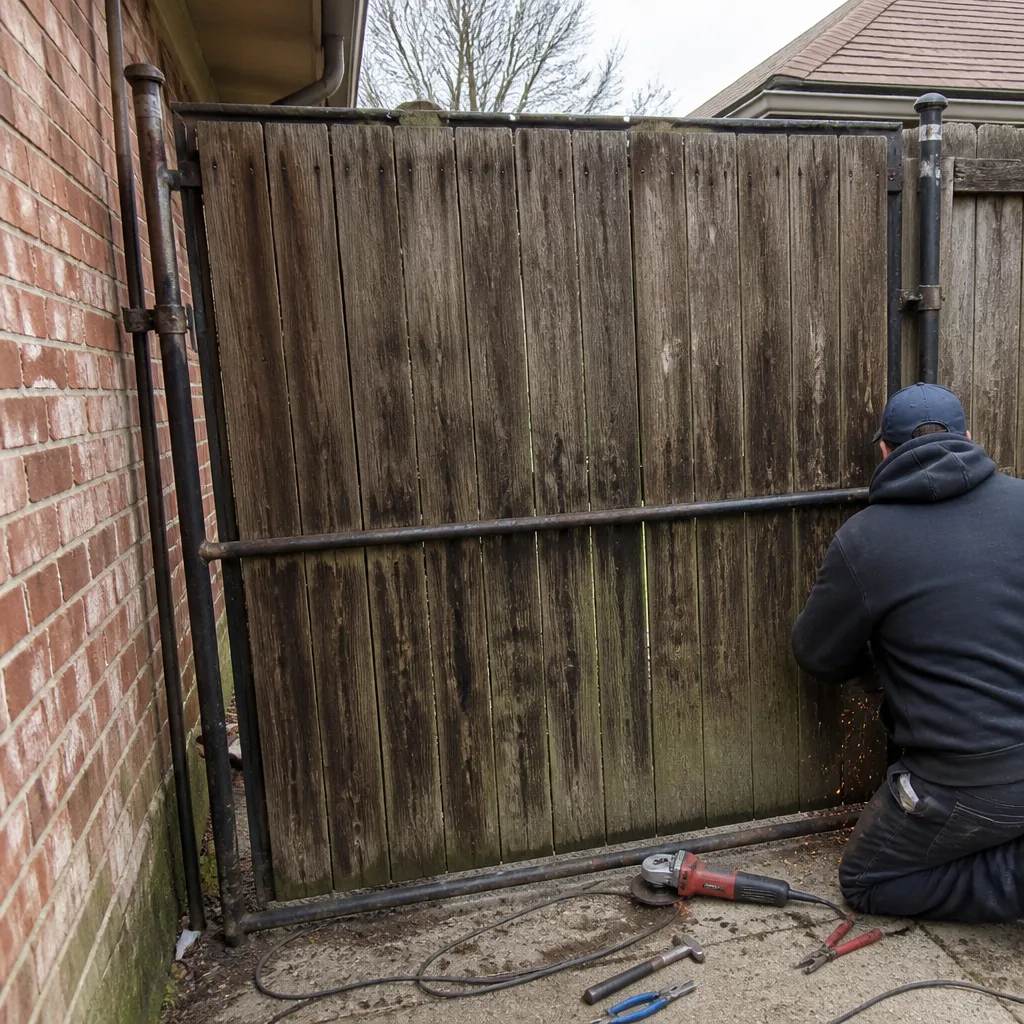 Before
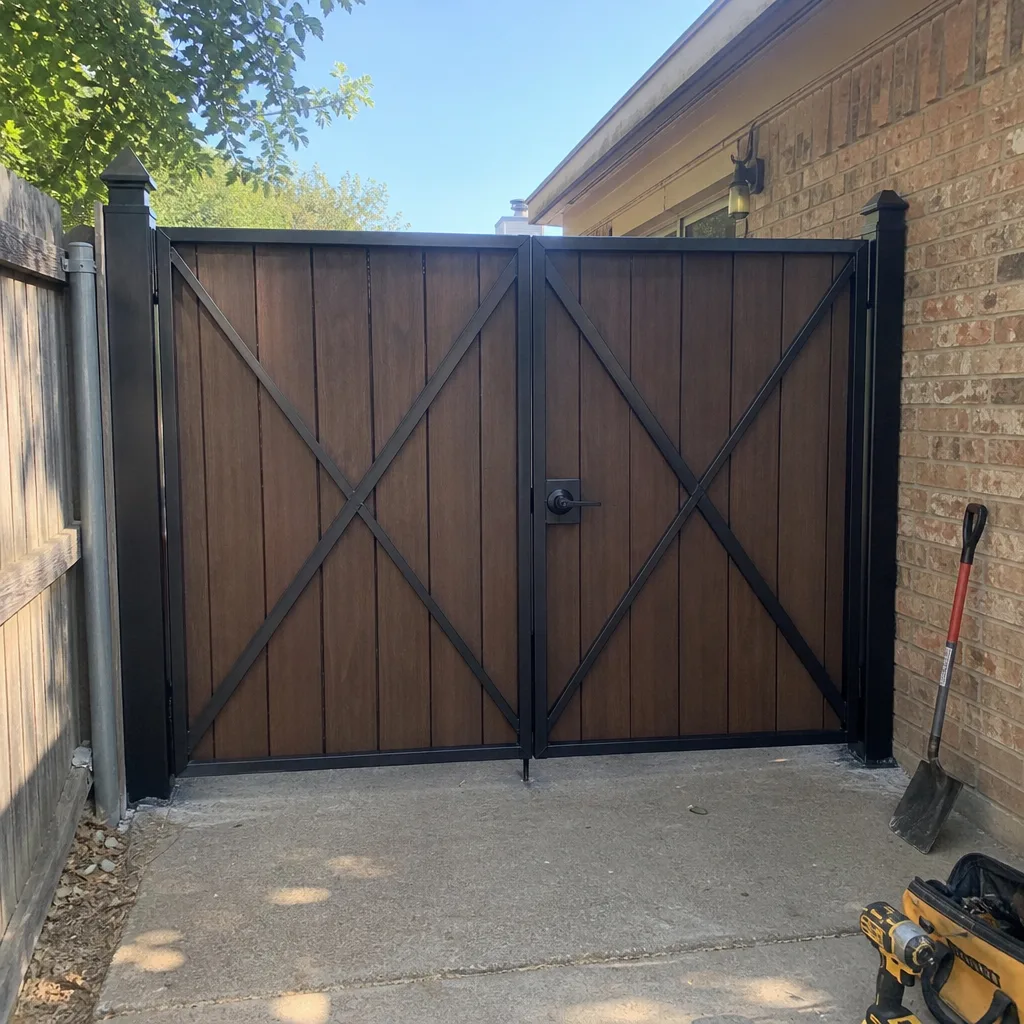 After
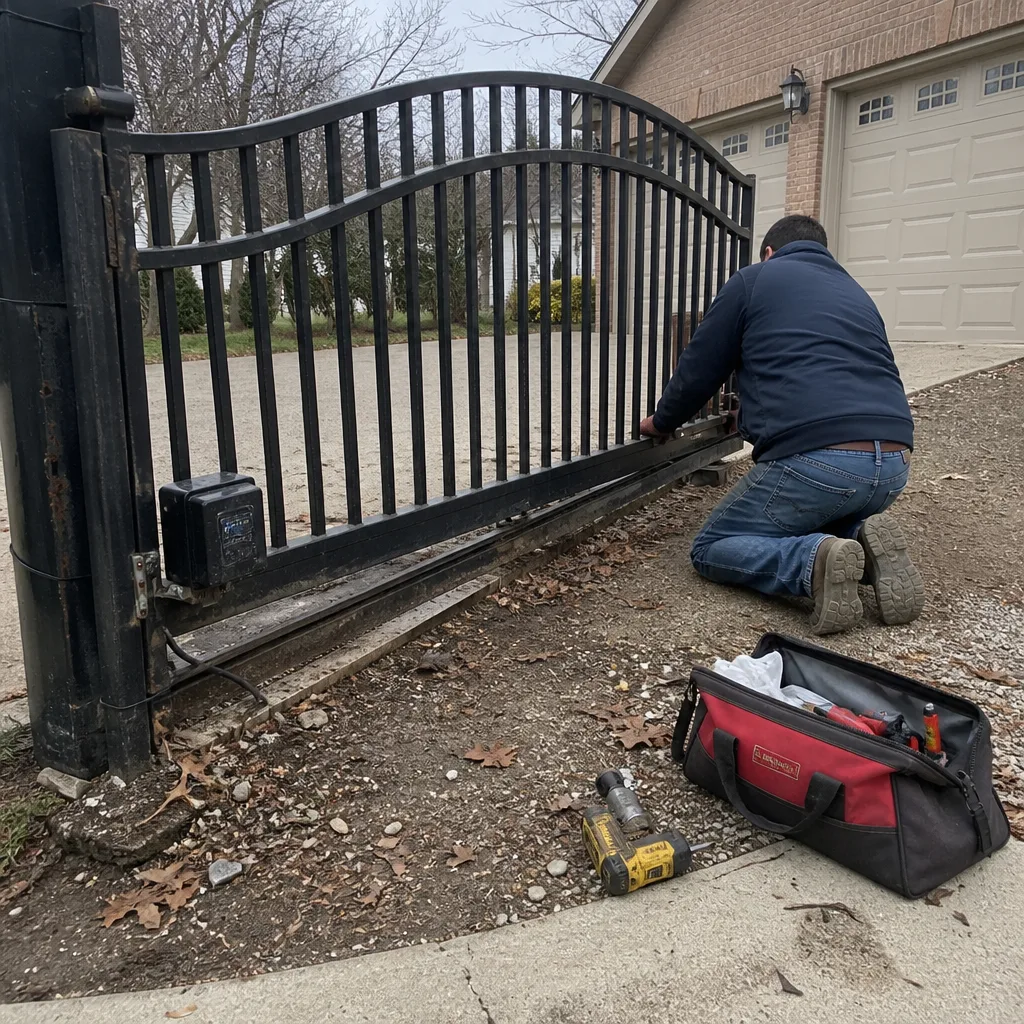 Before
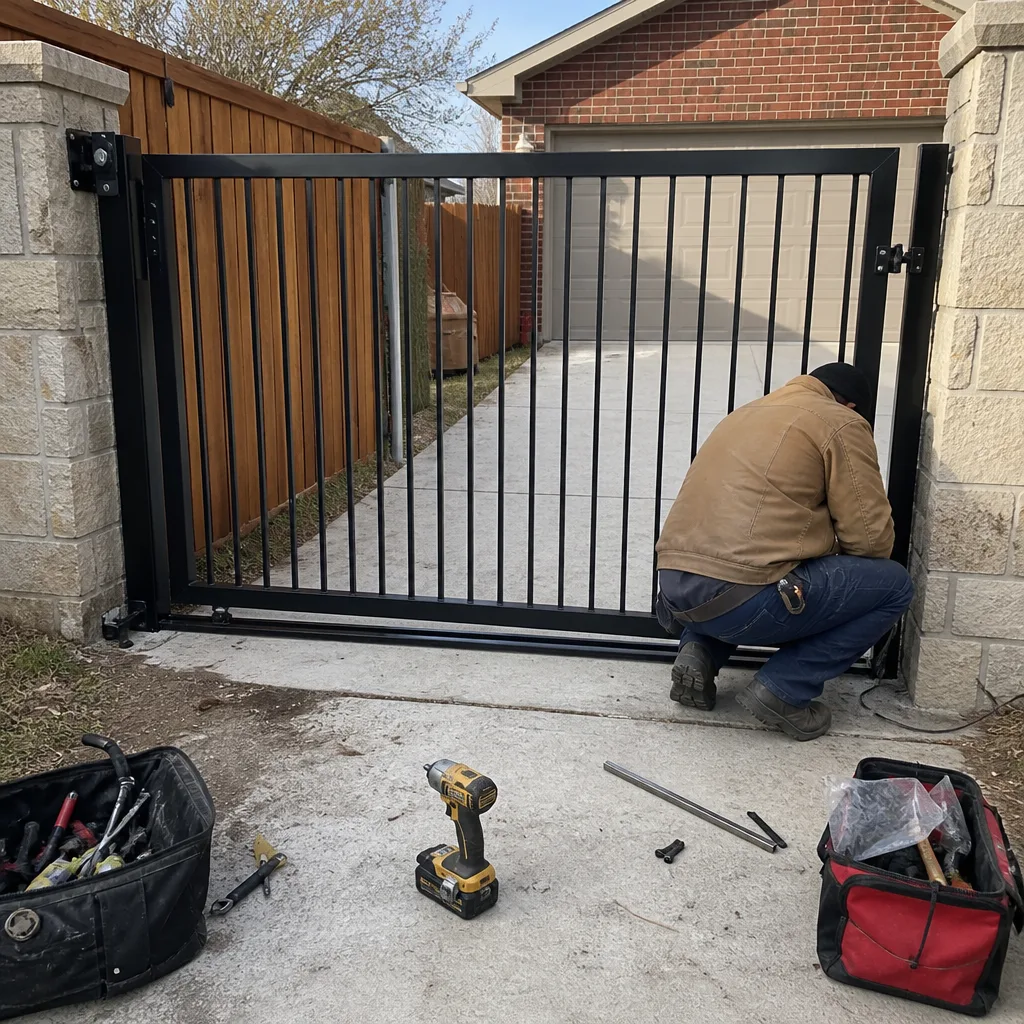 After
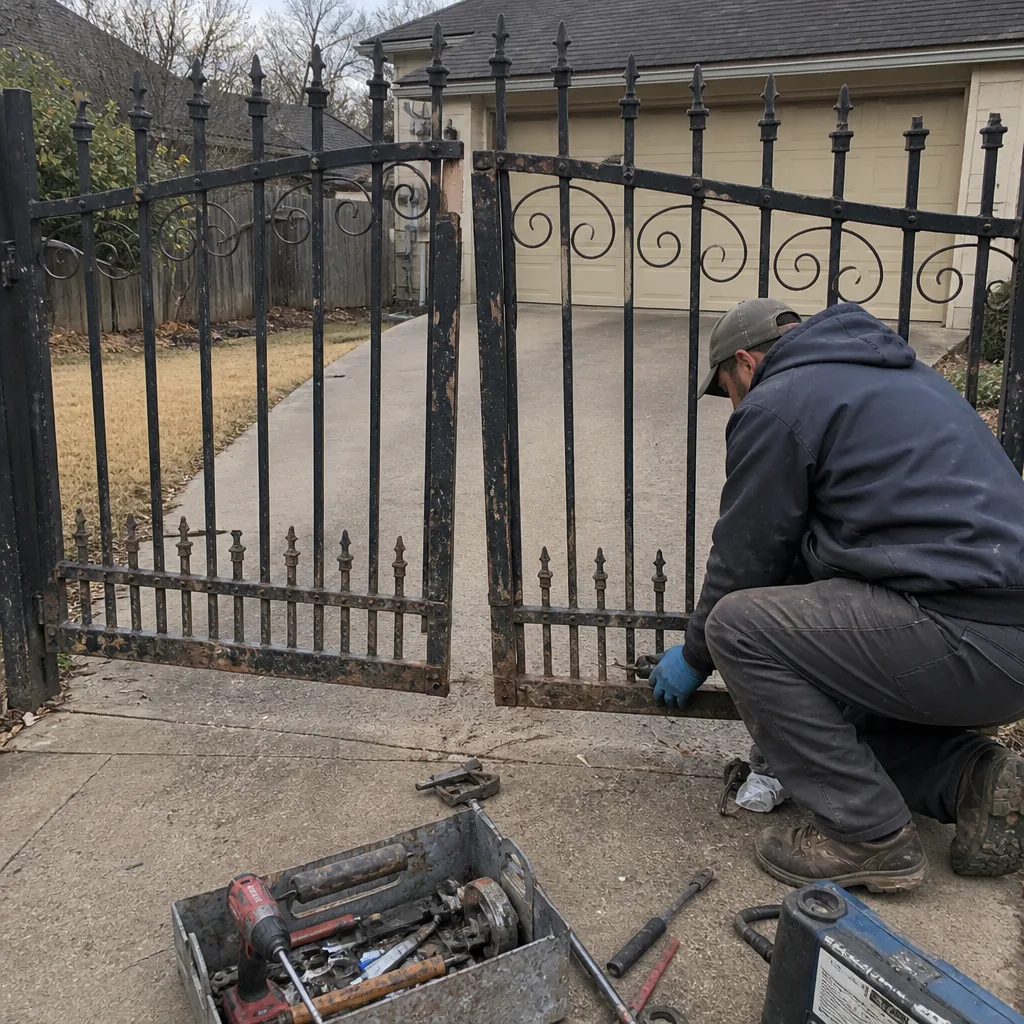 Before
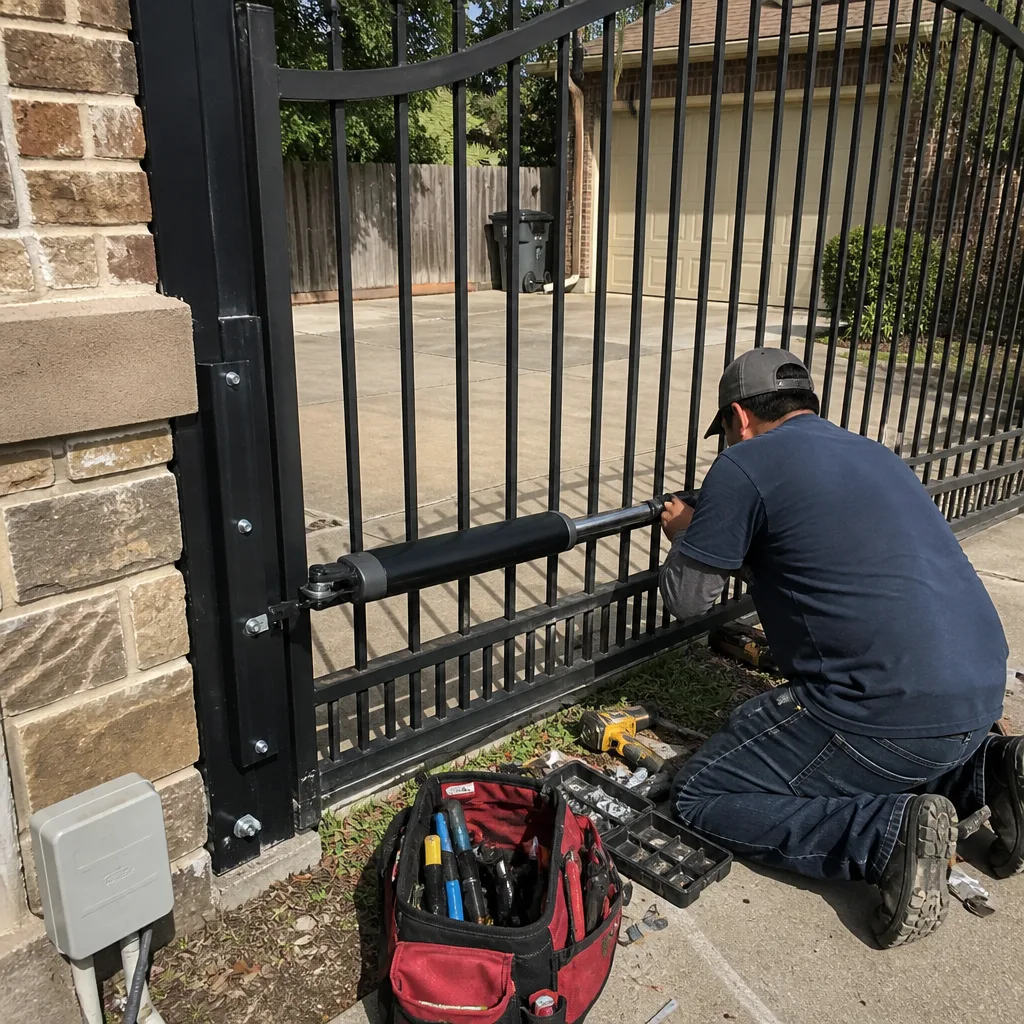 After