
Last updated October 31, 2026
 Wrought iron
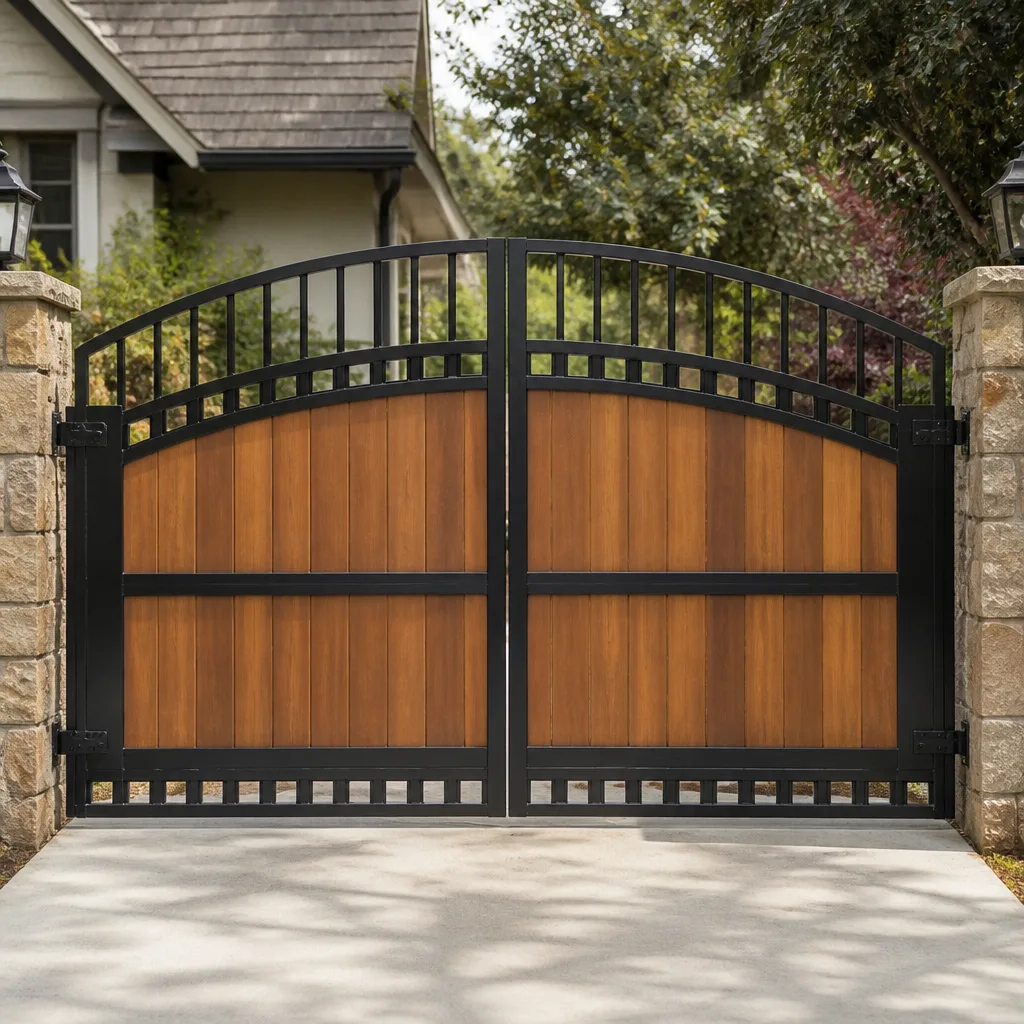 Wood & steel frame
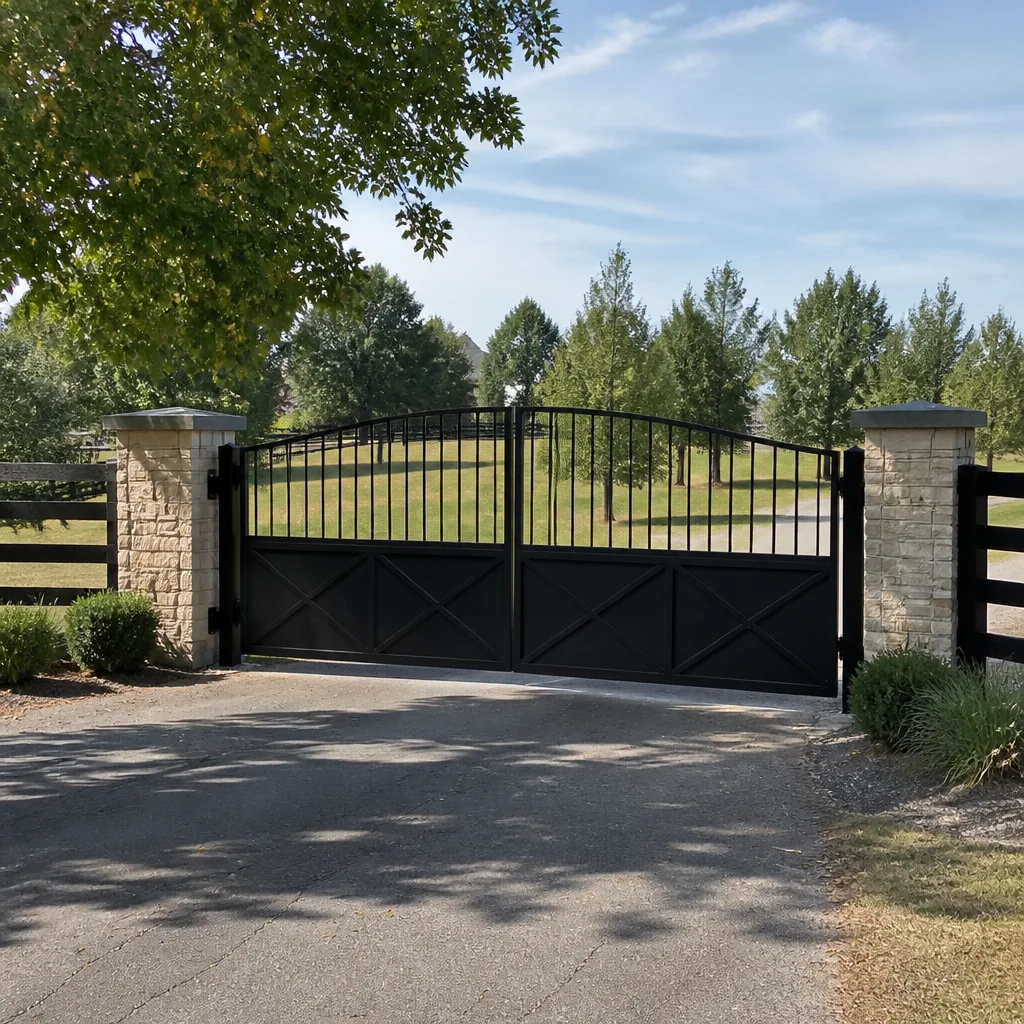 Farm & ranch
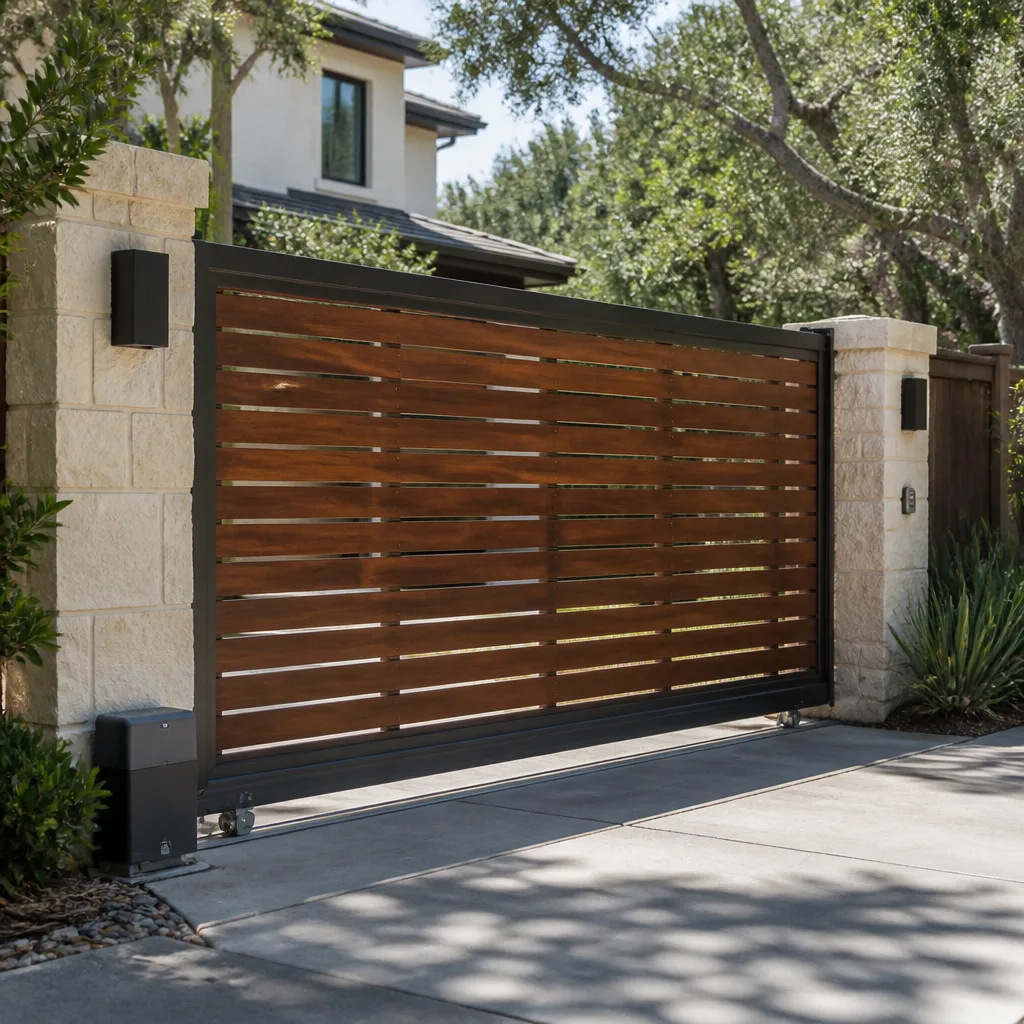 Sliding driveway gates
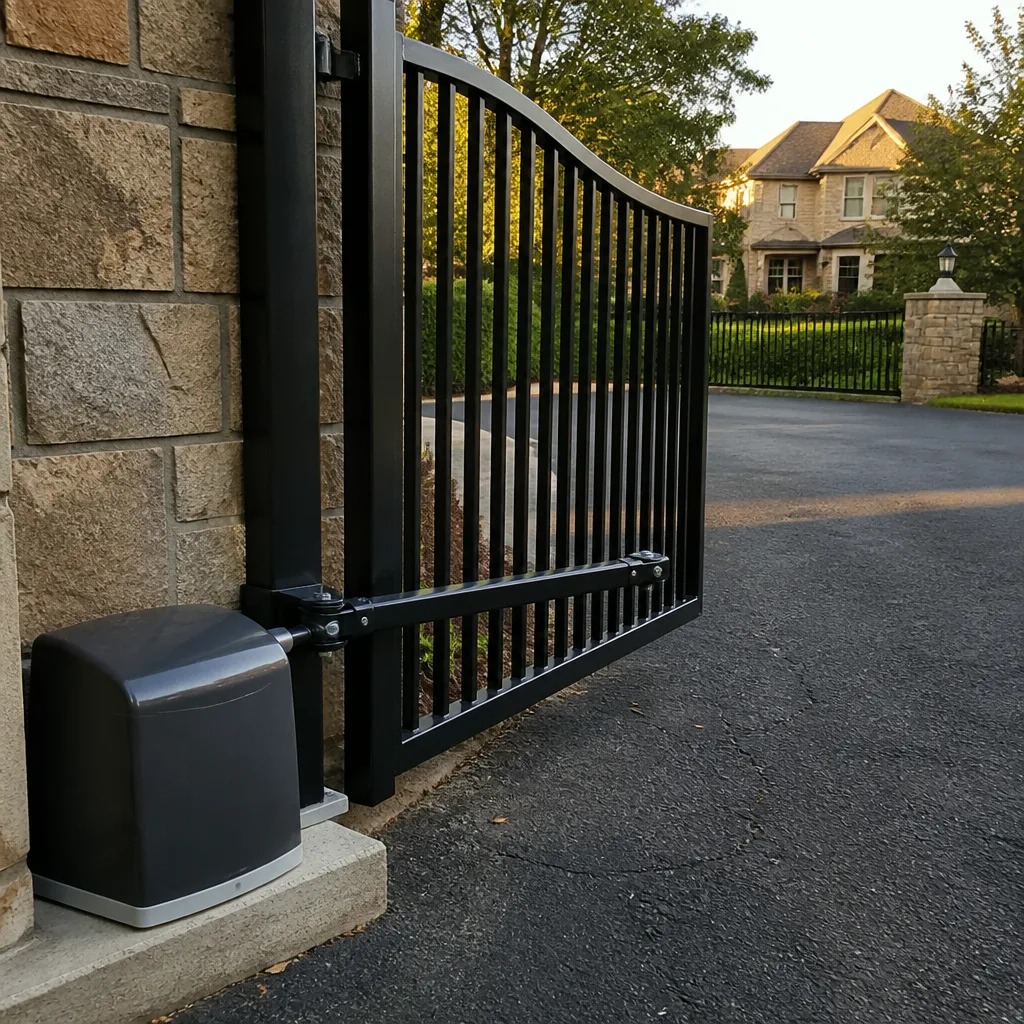 LiftMaster operators
Free on-site gate assessment - hinges, posts, and your LiftMaster or Nice gate operator checked before anything is quoted
The assessment is free and the quote is the invoice.
Get your free estimateDIY vs Professional Gate Repair: The Rowlett Homeowner’s Decision Guide
Here’s a number most Rowlett homeowners never hear: a properly functioning automated gate exerts enough force to lift a small car, and when its safety systems fail, it doesn’t stop because you wish it would. That’s not fearmongering, it’s physics, and it’s the reason the DIY decision on gate repair is fundamentally different from fixing a sticking door or a squeaky hinge. In this guide, you’ll learn exactly which gate repair tasks a competent homeowner can handle with basic tools, which ones carry injury and liability risk, and how to tell the difference before you touch a single bolt. We’ll also cover parts sourcing, warranty implications, and the middle-ground option most guides skip entirely.
Before we get into it, you should know where this comes from: we’re Pinehurst Gate Repair, a dedicated gate specialist serving Rowlett, and we’ve diagnosed thousands of gate failures across Garland, Rockwall, Sachse, and Wylie. What follows is what we tell friends who ask whether they should grab a wrench or pick up the phone.
Styles & brands we work with
Quick Answer
For Rowlett homeowners, gate repair is a reasonable DIY project only when the task is mechanical and non-structural: hinge pin replacement, track lubrication, minor latch alignment, battery swaps in wireless keypads, and basic keypad reprogramming. Anything involving electrical connections, operator internals (motors, control boards, limit switches), loop detectors, or post and hinge resets should be handled by a professional, because automated gates are governed by UL 325 entrapment safety standards and incorrect repairs can cause serious injury, void warranties, and leave your property unsecured. If your gate is manual and the fix is a mechanical adjustment you can see and understand, DIY is realistic; if the gate knows your opener code, call a specialist first.
Table of Contents
- The DIY Band: What’s Actually Safe to Fix Yourself
- The Danger Zone: Repairs That Should Scare You a Little
- UL 325 and the Entrapment Standards Nobody Talks About
- Parts Sourcing: Why You Can’t Buy What the Pros Buy
- Warranty Reality: What DIY Work Actually Voids
- What Gate Repair Actually Costs in Rowlett: DIY vs Pro
- The Middle Ground: Professional Diagnostic, Homeowner Repair
- Common Mistakes to Avoid
- When to Call a Professional
- Frequently Asked Questions
- The Bottom Line
The DIY Band: What’s Actually Safe to Fix Yourself
There is a narrow but real set of gate repairs that a Rowlett homeowner with basic tools and patience can handle without calling anyone. The key distinction: these tasks are all mechanical and visible. You can see the problem, you can touch the part, and if you get it wrong, the worst outcome is a gate that doesn’t close perfectly, not one that closes on a person or vehicle.
Legitimate DIY Gate Repairs
- Hinge pin replacement: If your gate sags and the hinge pin is worn, replacing the pin is a thirty-minute job with a hammer and a punch. This is the single most common manual gate repair in Rowlett, where clay-heavy soil shifts posts over time.
- Lubrication: Manual gate hinges and slide gate rollers need grease twice a year in North Texas. Summer heat bakes out lubrication quickly, and a dry hinge is the leading cause of gate squeal and premature wear.
- Minor latch alignment: If your gate closes but the latch doesn’t catch, adjusting the striker plate or latch position is usually a screwdriver job.
- Battery replacement: Wireless keypads and remote fobs run on alkaline batteries. When the keypad gets sluggish or the remote range drops, swap the batteries before assuming the operator is failing.
- Basic keypad reprogramming: If a tenant or family member changed the code and forgot it, most residential keypads have a documented reset procedure in the owner’s manual. This is a legitimate DIY task as long as you’re following the manufacturer’s instructions, not improvising.
- Track and roller cleaning: Slide gates accumulate dirt, gravel, and grass clippings in the track. Clearing debris and hosing down the track is routine maintenance every homeowner should do.
These tasks share three characteristics: they require no electrical knowledge, they involve no structural components, and the failure mode of a mistake is visible and non-dangerous. If you’re working on a manual gate and you can see exactly what’s wrong, go ahead. We’re not here to bill you for work you don’t need.
One caveat specific to Rowlett: our soil expands and contracts dramatically with moisture levels. A gate that rubs the ground in August may clear it by March. Before you start cutting or shimming, check whether the problem is actually your gate or the ground under it. In our experience serving gate repair in Rowlett, post-shift issues are often misdiagnosed as hinge failures by homeowners.
The Danger Zone: Repairs That Should Scare You a Little
Here’s where the DIY decision stops being about skill and starts being about risk. Automated gates, and even manual gates with certain structural problems, carry consequences that a homeowner’s toolkit is not designed to manage. The dividing line is electricity, weight, and stored energy.
Repairs You Should Not Attempt
- Any repair involving electrical connections: If you have to open a junction box, splice a wire, or test voltage to diagnose the problem, you are now working on a system that can shock you and damage the operator. Gate operators run on 120V or 240V at the panel and low-voltage DC at the control board. Getting them confused is expensive.
- Operator internals: Motors, control boards, limit switches, capacitors, and transformers inside operators from LiftMaster, FAAC, BFT, and Elite are proprietary components with brand-specific specifications. Opening the operator housing and poking around is how small problems become full replacements.
- Loop detectors: Vehicle detection loops are buried in your driveway and connected to the operator. If a loop fails, the gate won’t open for your car or, worse, won’t detect a vehicle and closes on it. Loop replacement requires cutting pavement and re-wiring to the control board. This is not a weekend project.
- Post resetting: A leaning gate post, especially a swing gate post, carries the full weight of the gate. In Rowlett’s expansive clay soil, improperly set posts shift again within a season. Resetting a post requires concrete work, proper depth below the frost line, and bracing while the concrete cures.
- Safety sensor bypass or adjustment: The photo eyes and edge sensors on your automated gate exist to prevent entrapment. Bypassing them because the gate keeps reversing for “no reason” is the single most dangerous decision a homeowner can make. That “no reason” is usually a real obstruction or a sensor alignment issue, and the fix is recalibration, not disconnection.
- Hinge welding: Broken gate hinges on heavy iron or steel gates need welding, and a bad weld on a 400-pound gate creates a failure point that can drop the gate on someone. This is structural work that should be done by someone who welds for a living.
If you’re reading this and feeling relieved because your gate is manual, remember: a 20-foot steel farm gate on a post that’s leaning 15 degrees is dangerous even without a motor attached. Weight doesn’t care whether the gate is automated.
UL 325 and the Entrapment Standards Nobody Talks About
UL 325 is not a government regulation, but it might as well be. It’s the safety standard from Underwriters Laboratories that governs automated gate operators in the United States, and it exists because automated gates have killed people, including children. The standard was strengthened after a series of fatal entrapment incidents in the 1990s and 2000s, and every legitimate operator manufacturer designs to it.
What UL 325 means for a Rowlett homeowner considering DIY operator repair is this: your gate operator has safety systems that were calibrated at installation to meet a specific force threshold. If your gate hits an obstruction, it must reverse before applying enough force to injure someone. That threshold is tested, set, and verified by the installer or technician.
When a homeowner adjusts the force setting because the gate “keeps stopping” or “seems weak,” what they’re actually doing is raising the amount of force the gate applies before reversing. The gate stops working correctly because something is wrong, usually a worn roller, a dry hinge, or a misaligned sensor. Fixing the force setting instead of the underlying problem means the gate now closes with enough force to hurt someone. It’s not a fix; it’s a cover-up, and it’s how UL 325 violations happen on residential gates in Rowlett.
The standard also covers monitoring requirements for safety sensors. If a photo eye or edge sensor is removed, bypassed, or wired incorrectly, the operator may not fail safe, meaning it will continue closing when the sensor is obstructed. The wiring and configuration of these sensors is brand-specific, which is why we maintain factory training on the major operator brands: LiftMaster, FAAC, BFT, Linear, Viking, Ghost Controls, DoorKing, Elite, and Mighty Mule. A homeowner who doesn’t know the DI pin from the CLOSE limit on a Viking board has no business rewiring safety sensors on it.
When a gate technician repairs an automated operator, the repair includes a force test and sensor verification as part of the job. This isn’t optional add-on service; it’s the difference between a gate that opens and a gate that’s safe.
Parts Sourcing: Why You Can’t Buy What the Pros Buy
The most practical barrier to DIY gate operator repair isn’t skill, it’s parts. Homeowners attempting to repair a LiftMaster or FAAC operator quickly discover that the parts they need are not on Amazon, not at any big-box store in the DFW area, and often not available at any retail channel at all.
Operator manufacturers protect their distribution networks. Control boards, limit switch assemblies, gear kits, and safety sensors are sold through authorized distributors to gate companies and professional installers. This is especially true for commercial-grade operators like the LiftMaster CSW24V or FAAC 400 series, which aren’t sold through consumer channels. A Rowlett homeowner with a failed control board has three options: find the part through an unauthorized or used source, replace the entire operator, or call a gate company that already has distributor access.
Used parts are a trap. A control board from an eBay seller may carry the same part number but have hidden damage from a previous lightning strike or water intrusion. Boards that look fine on arrival fail within weeks of installation, and the homeowner is out the money and still has a broken gate. In our experience, we’ve replaced more than a few “new” boards homeowners installed that were actually harvested from storm-damaged units.
Manual gate hardware is more accessible. Hinge pins, latches, and rollers are available at farm and ranch supply stores and hardware retailers throughout the Rowlett area. This accessibility is one reason manual gate maintenance is more DIY-friendly: the parts exist in retail, and the failure mode of a wrong part is visible and correctable on the spot.
The parts-sourcing reality has a strategic implication. Before you invest hours diagnosing an automated gate problem, figure out whether you can even buy the part you’ll likely need. If the answer is no, your DIY budget just became a diagnostic call.
Warranty Reality: What DIY Work Actually Voids
Warranty questions come up constantly in Rowlett gate repair, and most homeowner assumptions are wrong in both directions. Some people think any DIY work voids their warranty; others think warranties are meaningless after a year. Here’s the accurate picture for most residential gate operators.
First, your operator warranty covers manufacturer defects in materials and workmanship, not installation mistakes, power surges, water damage, or normal wear. If your LiftMaster or FAAC operator is under warranty and fails due to a defect, opening the housing to inspect it does not automatically void coverage. However, and this is the part that matters, damage caused by incorrect repair or adjustment is not covered. If you open the operator, miswire something, and damage the control board, the manufacturer will deny a warranty claim because the failure resulted from unauthorized work, not a defect.
Second, most DIY-relevant adjustments fall outside warranty protection anyway. Adjusting force settings, changing limit positions, or replacing a battery is maintenance, not repair. If the operator was fine before and fails after you adjusted it, the manufacturer’s position is that your adjustment caused the failure.
Third, and most importantly for Rowlett homeowners, most gate operators on the ground in this area are out of warranty. Residential operators typically carry one to five years of coverage depending on brand and model. If your gate is five or ten years old, which is common in established Rowlett neighborhoods, the warranty question is moot. Your decision should be based on repair cost versus replacement cost, not on preserving a warranty that expired years ago.
There is one meaningful exception: if you have a new operator installed and have a problem within the first year, do not touch it. Call the installing company. A DIY attempt on a warrantied operator is the fastest way to turn a covered repair into an uncovered one, because the manufacturer will ask the installer what happened, and “the homeowner opened it up and started testing wires” ends the conversation.
What Gate Repair Actually Costs in Rowlett: DIY vs Pro
Understanding what repairs cost helps you decide whether the savings are worth the risk. For a detailed look at pricing, see our Gate Repair Cost Breakdown: The Rowlett Homeowner’s Reference for 2026. Here’s a realistic summary of common gate repairs in the Rowlett market, assuming a standard residential gate.
| Repair Task | DIY Cost (Parts Only) | Professional Cost (Rowlett Range) | Risk Level |
|---|---|---|---|
| Hinge pin replacement | $8 – $20 | $90 – $180 | Low |
| Lube and minor alignment | $10 – $25 | $75 – $120 | Low |
| Keypad battery and reprogram | $5 – $15 | $45 – $90 | Low |
| Slide gate roller replacement | $40 – $85 | $150 – $250 | Moderate |
| Safety sensor (photo eye) replacement | Often unavailable retail | $125 – $250 | High if wired wrong |
| Control board replacement | Often unavailable retail | $300 – $700 | High |
| Post reset (swing gate) | $60 – $150 in materials | $450 – $900 | High |
| Loop detector replacement | Parts inaccessible | $600 – $1,200 | Very high |
These ranges reflect what homeowners in Rowlett, Rockwall, and surrounding communities should expect. The DIY savings on low-risk tasks are real: a hinge pin replacement saves about $100, and lubrication saves a service call entirely. But notice how the savings change as risk rises. A control board replacement saves $300 to $700 in labor, but the part is difficult to source and the probability of installation error is high, which means the homeowner may end up paying for the professional repair anyway plus the cost of whatever they broke while trying.
One number that matters more than any individual line item, and one we cover in our Gate Repair Emergency Preparedness Guide for Rowlett Homes: the cost of a gate that closes on a vehicle because a safety sensor was bypassed. That runs into thousands for body work, and it’s not covered by homeowners insurance if the insurer determines the damage resulted from negligent DIY repair. We don’t say this to scare you; we say it because it’s the cost homeowners never see in YouTube tutorials.
When you call for professional service, ask for the price before work starts. Reputable gate companies in Rowlett quote the repair cost up front and get your approval before proceeding. You should never agree to open-ended labor.
The Middle Ground: Professional Diagnostic, Homeowner Repair
Most DIY-versus-pro discussions pretend there are only two options: do it all yourself or hire someone for everything. There’s a third path that can work well for certain Rowlett homeowners, especially those with some mechanical background who want to save labor costs but don’t want to guess at the diagnosis.
The model is simple: a gate professional comes out, identifies the exact problem, and provides a written scope of work with the specific parts needed and installation steps. The homeowner then decides whether to hire that professional for the complete repair or take the diagnosis and handle the work themselves.
This approach makes sense in limited circumstances:
- Mechanical repairs on manual gates: If the diagnosis reveals a worn roller or hinge pin, the scope is straightforward and parts are locally available.
- Simple part replacements on automated gates: Replacing a battery, a keypad, or even a remote receiver is within reach for a homeowner with basic electrical literacy and good instructions.
- Homeowners with genuine mechanical background: If you’ve worked on cars, small engines, or farm equipment, the mechanical side of gate repair transfers better than you might expect.
This approach does not make sense for operator internals, safety sensor wiring, loop detectors, or structural post work. The diagnostic that matters for those repairs isn’t “what part is bad”; it’s “how should this system be configured after the new part is installed.” That configuration includes force settings, limit positions, sensor alignment, and safety verification. Handing a homeowner a control board and a set of instructions doesn’t transfer the knowledge of how that board should be configured on a Viking versus a BFT operator.
If you’re considering this path, be honest with the gate company up front. Tell them you want a diagnostic and are considering doing the work yourself. A good company will tell you whether the repair is realistically DIY-appropriate for your specific gate. Pinehurst Gate Repair does offer free estimates in Rowlett, and we begin every diagnostic with one question: what’s the gate doing, and what do you want it to do?
Common Mistakes to Avoid
- Adjusting operator force instead of fixing the underlying problem. This is the single most common mistake we see in Rowlett, and it’s dangerous every time. When a gate reverses for no apparent reason, the cause is usually a mechanical issue or sensor misalignment, not a low force setting.
- Buying used control boards online. A board from an unknown seller carries hidden failure risk from lightning damage or water exposure. Homeowners install it, it works for two weeks, and then the gate fails again. The money was wasted.
- Ignoring post lean until the gate won’t hold itself up. Post shift from clay soil happens gradually in Rowlett. The time to address it is when the lean is barely visible, not when the gate is dragging or the post has broken free.
- Using the wrong lubricant. WD-40 is not grease. It’s a solvent, and it washes out the lubricant that was already there. Use a proper lithium or silicone grease on gate hinges and rollers.
- Disconnecting safety sensors to “simplify” the system. We’ve said it before, and we’ll say it again: the sensors are not optional. Disconnecting them is how entrapment injuries happen, and it’s how you end up legally liable if someone gets hurt.
- Focusing on the operator when the problem is the gate. In our experience at electric gate repair in Rowlett, about half of operator “failures” are actually mechanical gate problems that make the operator work harder until it overheats or trips its safety systems.
- Replacing a gate that needed a hinge pin. This is the expense version of the mistake above. A sagging gate doesn’t mean the gate is shot; it usually means a hinge component failed. Hinge repairs cost a fraction of a new gate, which is why we always evaluate whether repair makes sense before recommending gate installation in Rowlett.
When to Call a Professional
Call a gate professional when the repair involves anything you can’t see and touch: wiring, control boards, motors, limit switches, loop detectors, or safety sensors. Call when the gate post is leaning, when the gate has fallen off its hinges, or when the operator makes sounds it didn’t make last month. Call when the gate has hit a vehicle or a person, even gently, because that means the safety systems are not working as they should. And call when you’ve already tried the DIY fix and the gate still isn’t right. A professional can diagnose the whole system, not just the part you focused on. Pinehurst Gate Repair offers free estimates in Rowlett. Call (877) 265-5743 and describe what your gate is doing. We’ll tell you whether it’s a repair you can handle or one you shouldn’t.
You can learn more about what we do on our Pinehurst Gate Repair home page.
Frequently Asked Questions
Most operator repairs are not DIY-appropriate because they involve wiring, control boards, and safety systems governed by UL 325 standards. Battery replacement and keypad reprogramming are exceptions, but anything inside the operator housing should be left to a trained technician.
Professional gate repair in Rowlett typically ranges from $75 for a simple lubrication and alignment visit to $700 or more for a control board replacement. The exact price depends on the problem, the operator brand, and whether parts are readily available. Call (877) 265-5743 for a free estimate on your specific repair.
A homeowner can safely handle hinge pin replacement, lubrication, minor latch alignment, battery replacement in remotes and keypads, and track cleaning on slide gates. These tasks are mechanical, visible, and carry low consequences for mistakes. Anything involving electricity, operator internals, or structural posts should go to a professional.
Look for the simplest explanation first. If the gate sags, rubs the ground, or is hard to move by hand, the problem is mechanical, not electrical. If the gate moves freely by hand but won’t respond to the opener, the problem is in the operator system. A professional diagnostic can settle the question quickly.
Yes. Pinehurst Gate Repair provides diagnostics as a standalone service, and we’re happy to give you a written scope of work so you can decide whether to handle the repair yourself or hire us for the complete job. Free estimates are available in Rowlett.
The answer depends on brand, installation quality, and maintenance, but a properly installed residential operator in the Rowlett area typically lasts seven to twelve years. North Texas heat and lightning exposure shorten operator life compared to milder climates, and gates that receive regular mechanical maintenance outlast neglected ones by several years.
The Bottom Line
The DIY versus professional gate repair decision is not about how handy you are. It’s about which system is broken and what happens when the repair goes wrong. Hinge pins, latches, batteries, and lubrication are legitimate homeowner territory. Control boards, sensors, wiring, and posts are not. In Rowlett specifically, our soil and climate add a layer of complication to post and alignment work that general online guides don’t address. If you’re holding a wrench and feeling confident, make sure the failure mode of your next step is visible and reversible. For additional help, explore more guides & resources on our blog. If it isn’t, call a gate specialist before you cross that line. The money you save on a DIY control board repair can be erased, and then some, by what the gate does after a bad fix.
Written by the team at Pinehurst Gate Repair, serving Rowlett since 2013.
See the difference
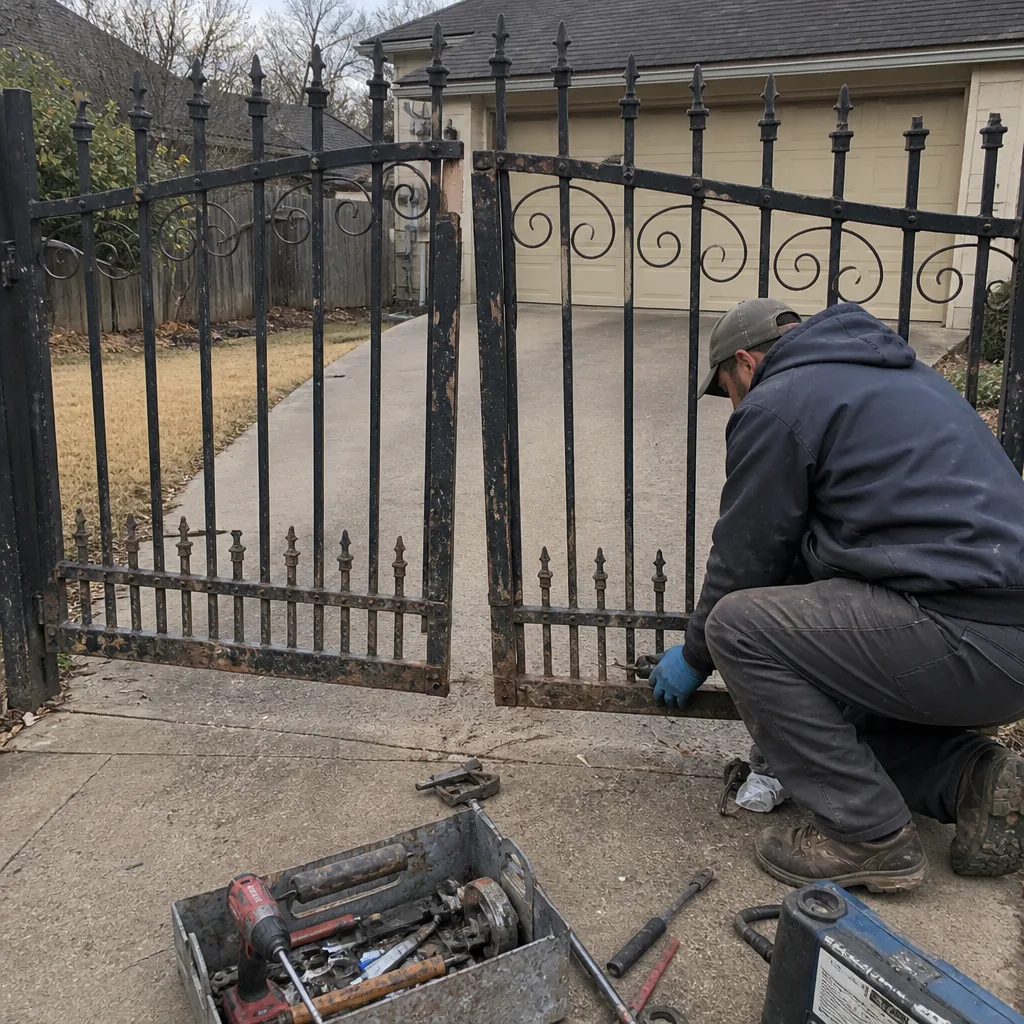
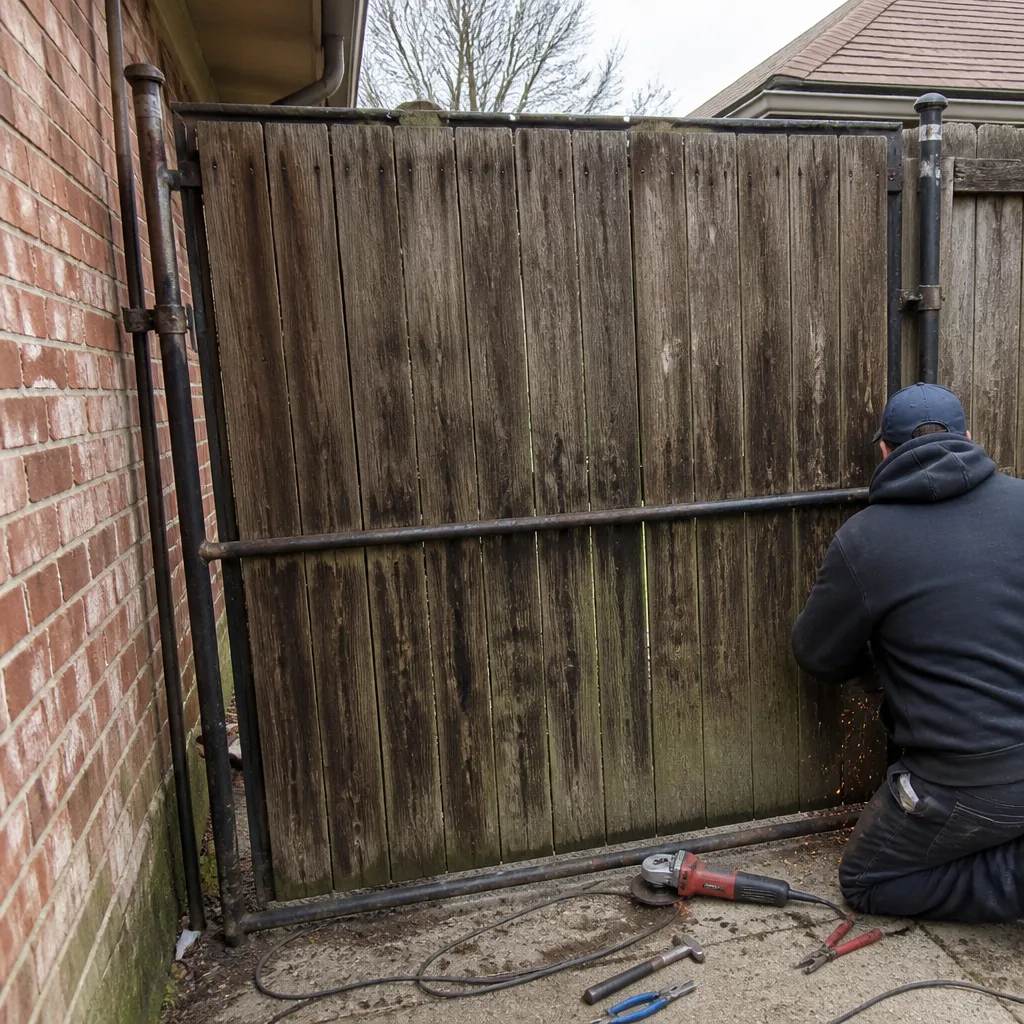 Before
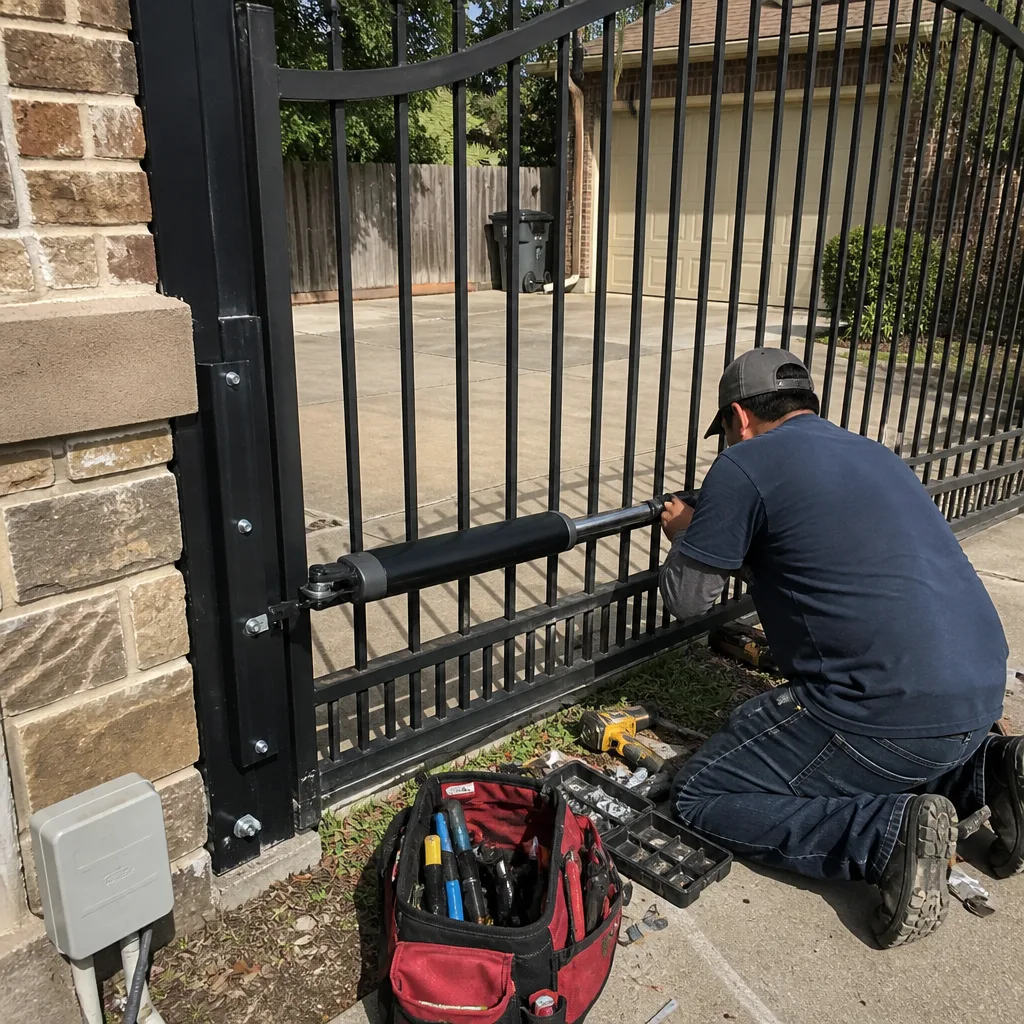
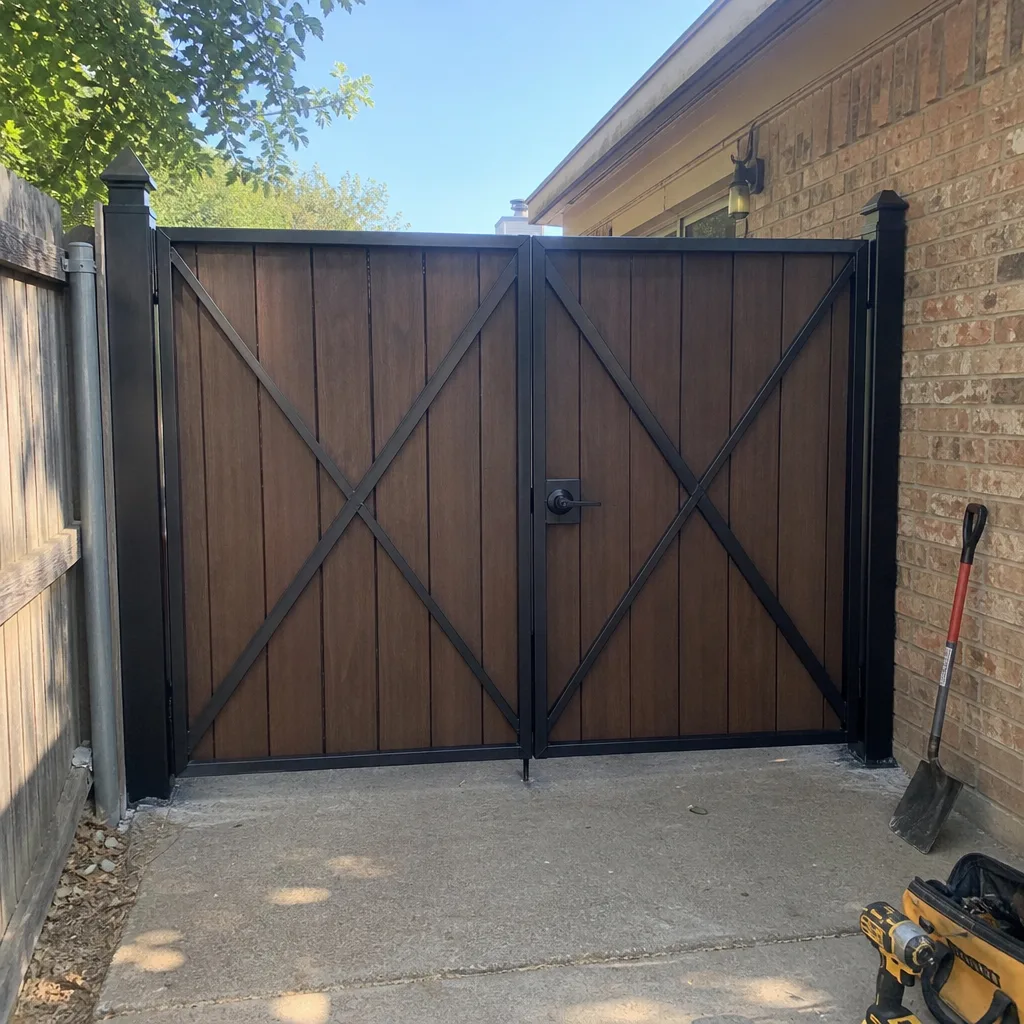 After
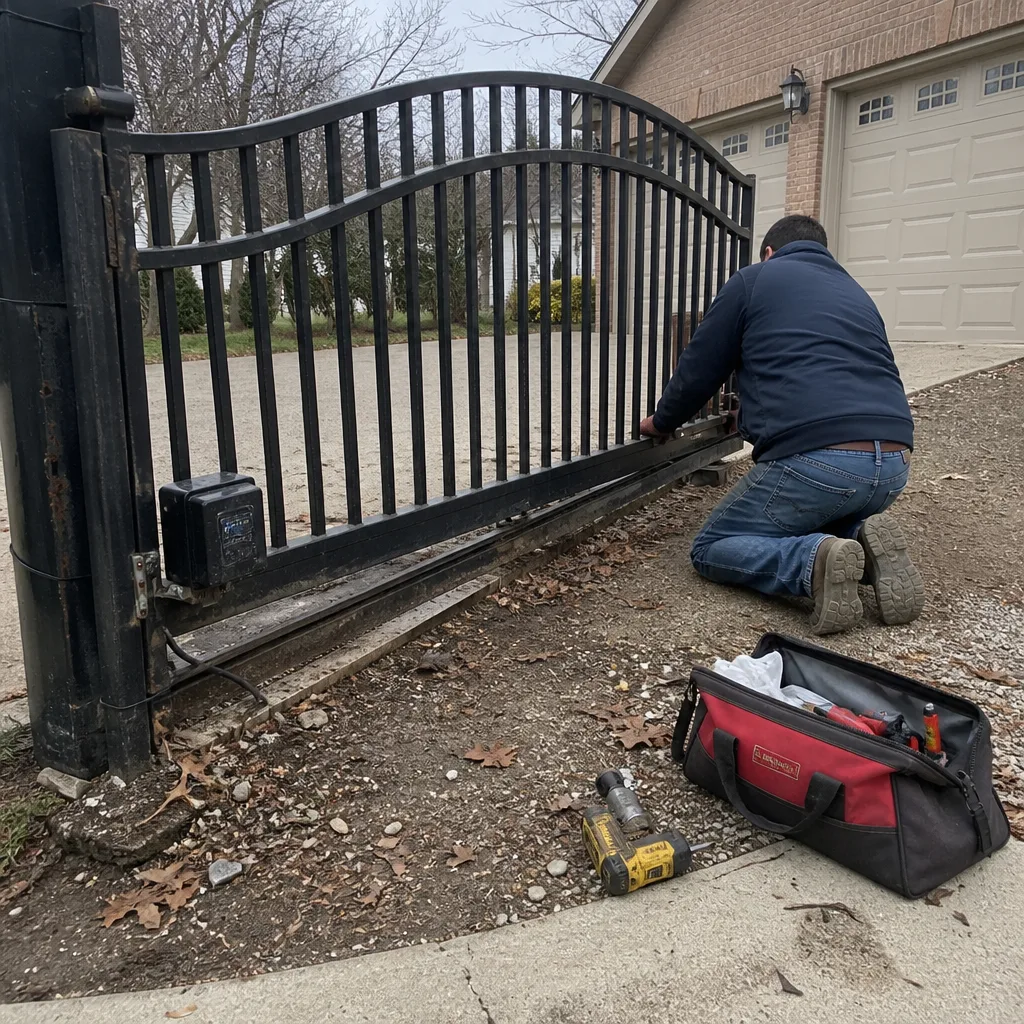 Before
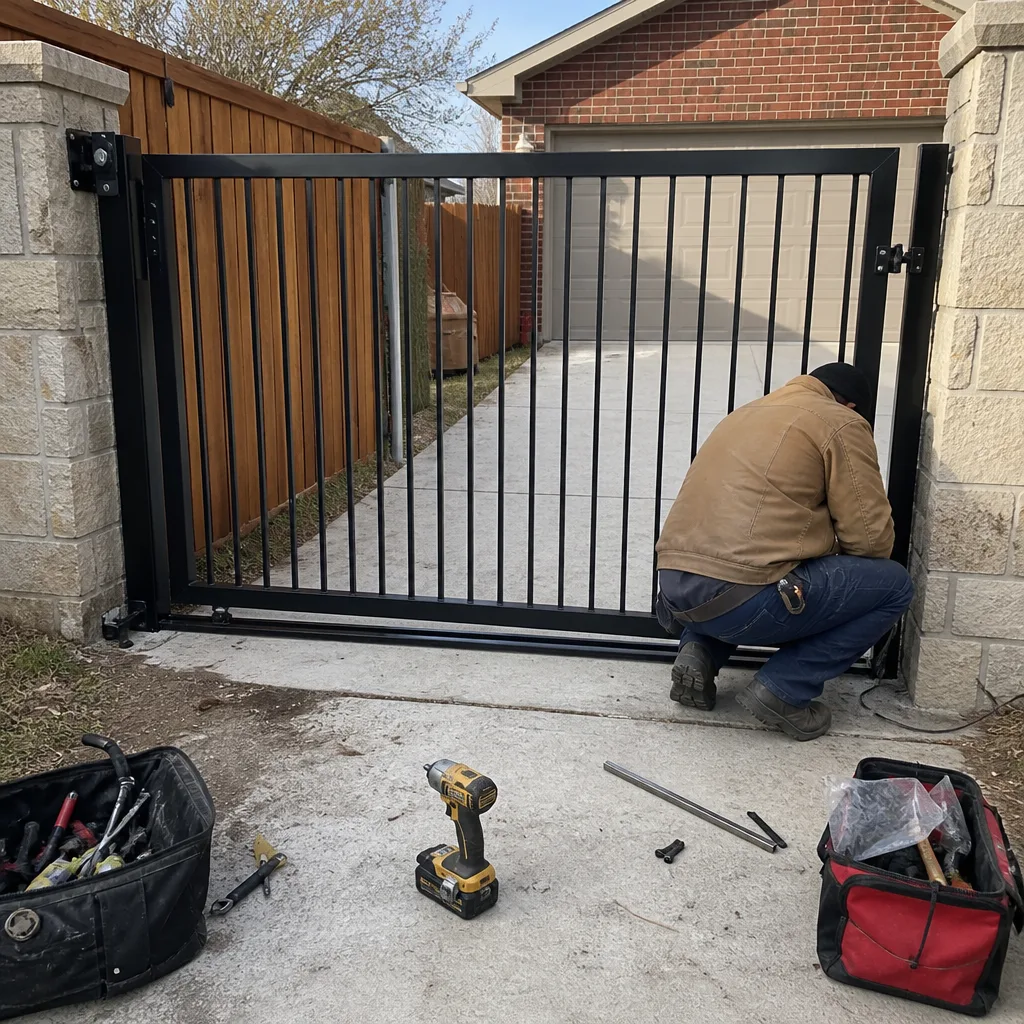 After
 Before
 After