
Last updated October 31, 2026
 Wrought iron
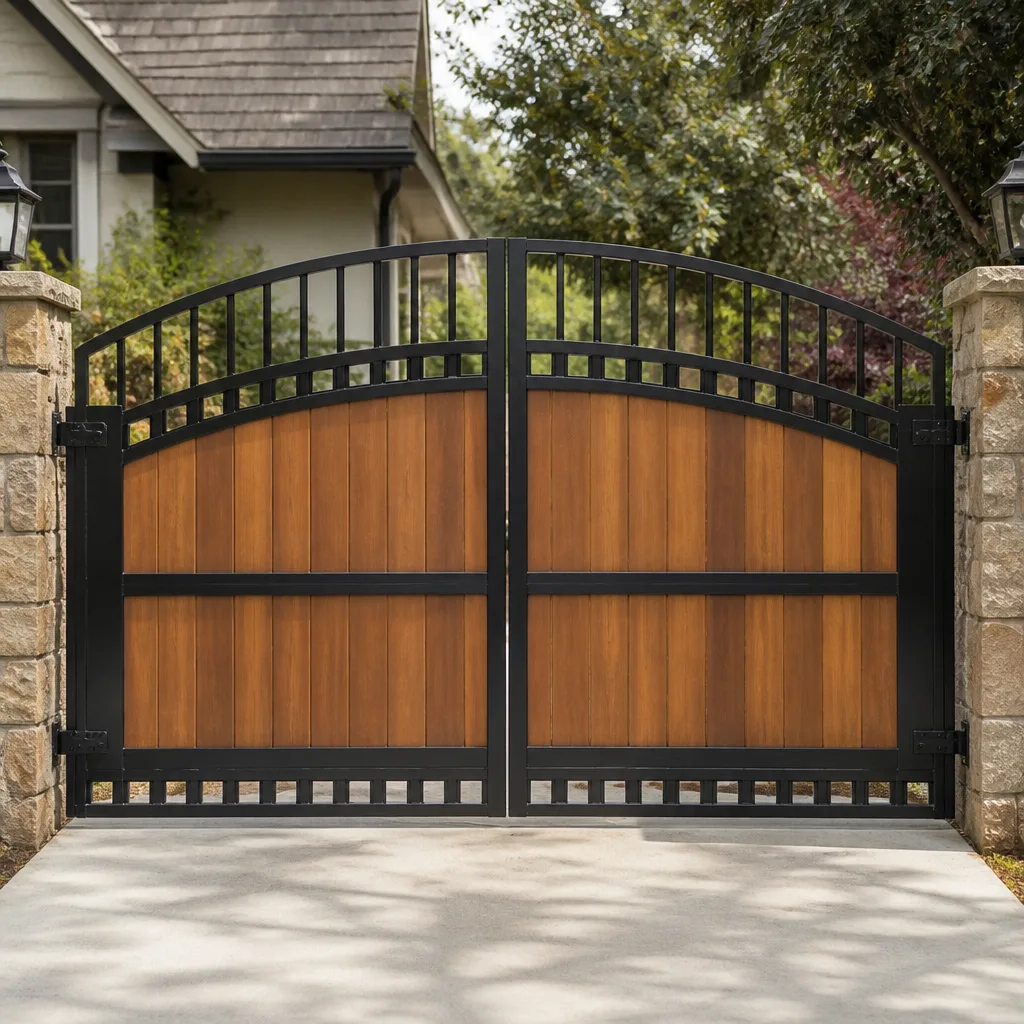 Wood & steel frame
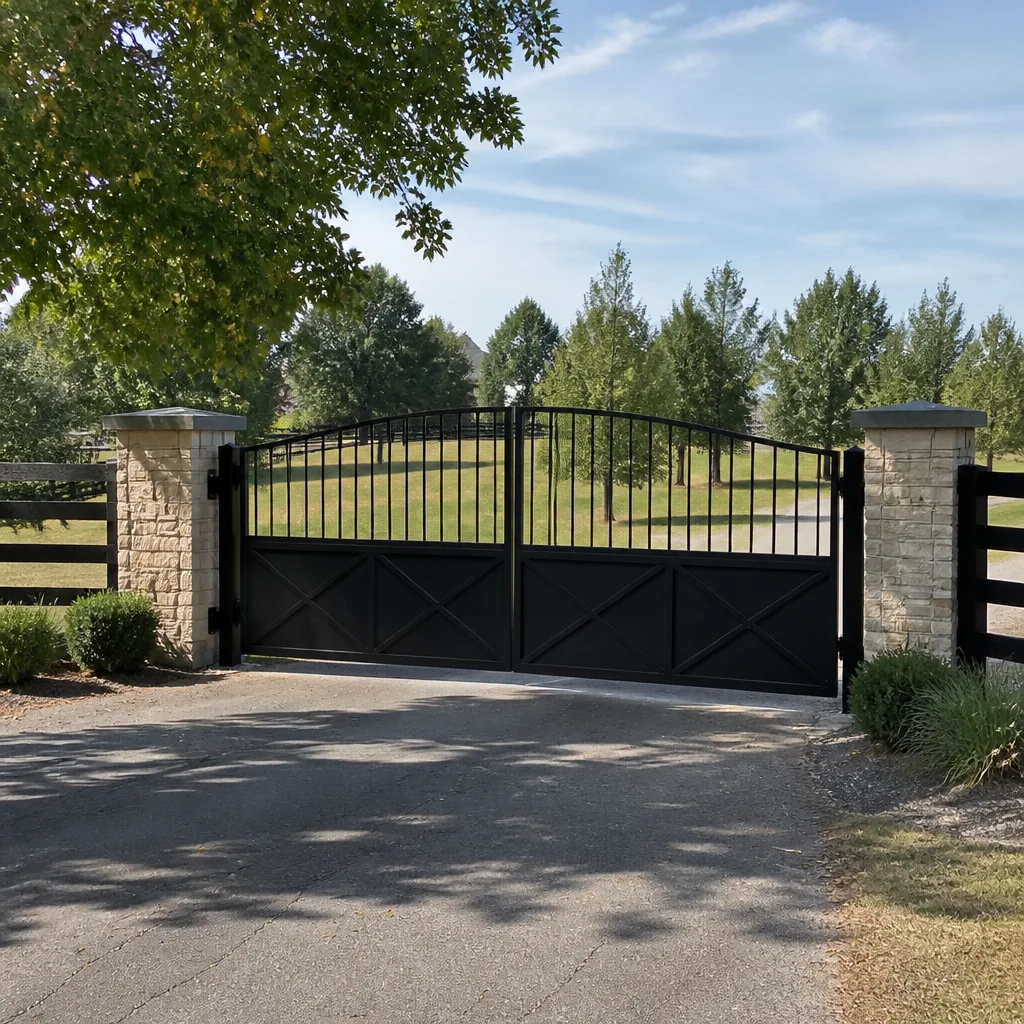 Farm & ranch
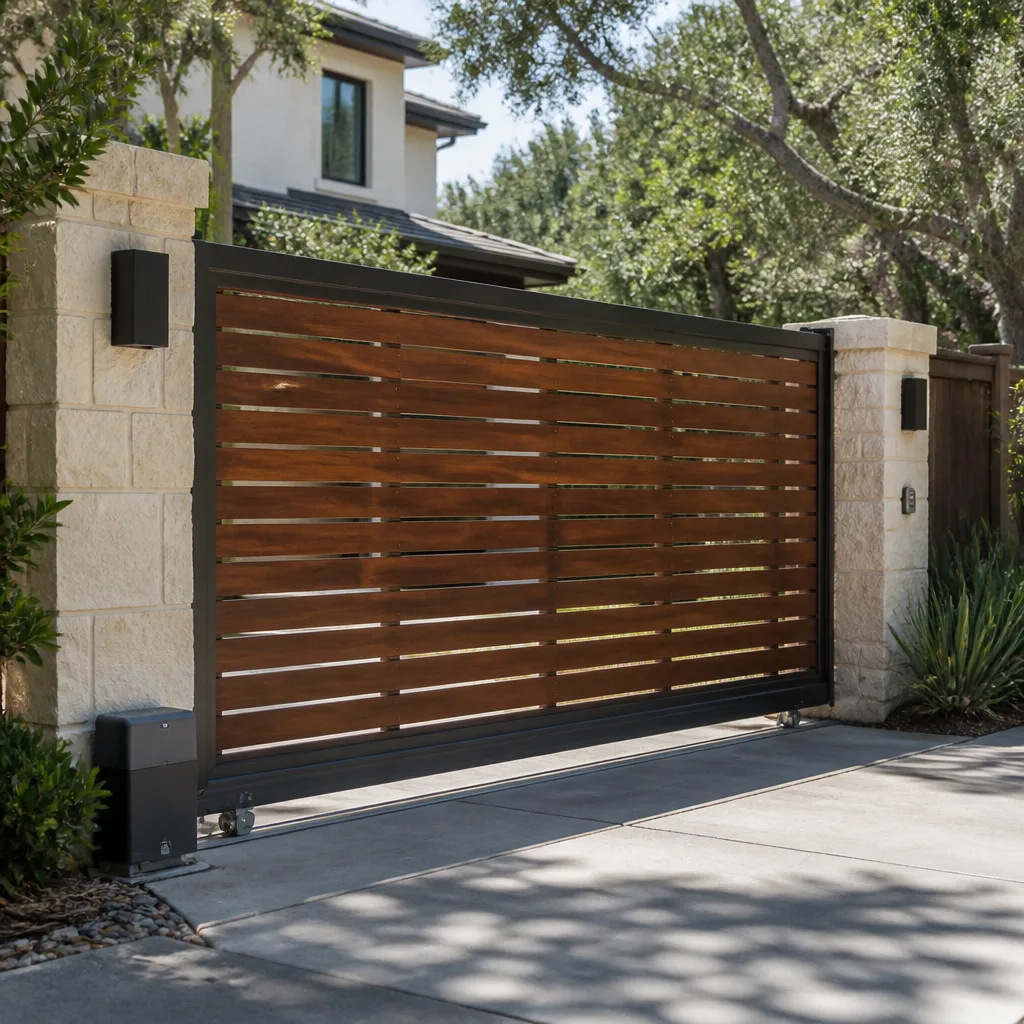 Sliding driveway gates
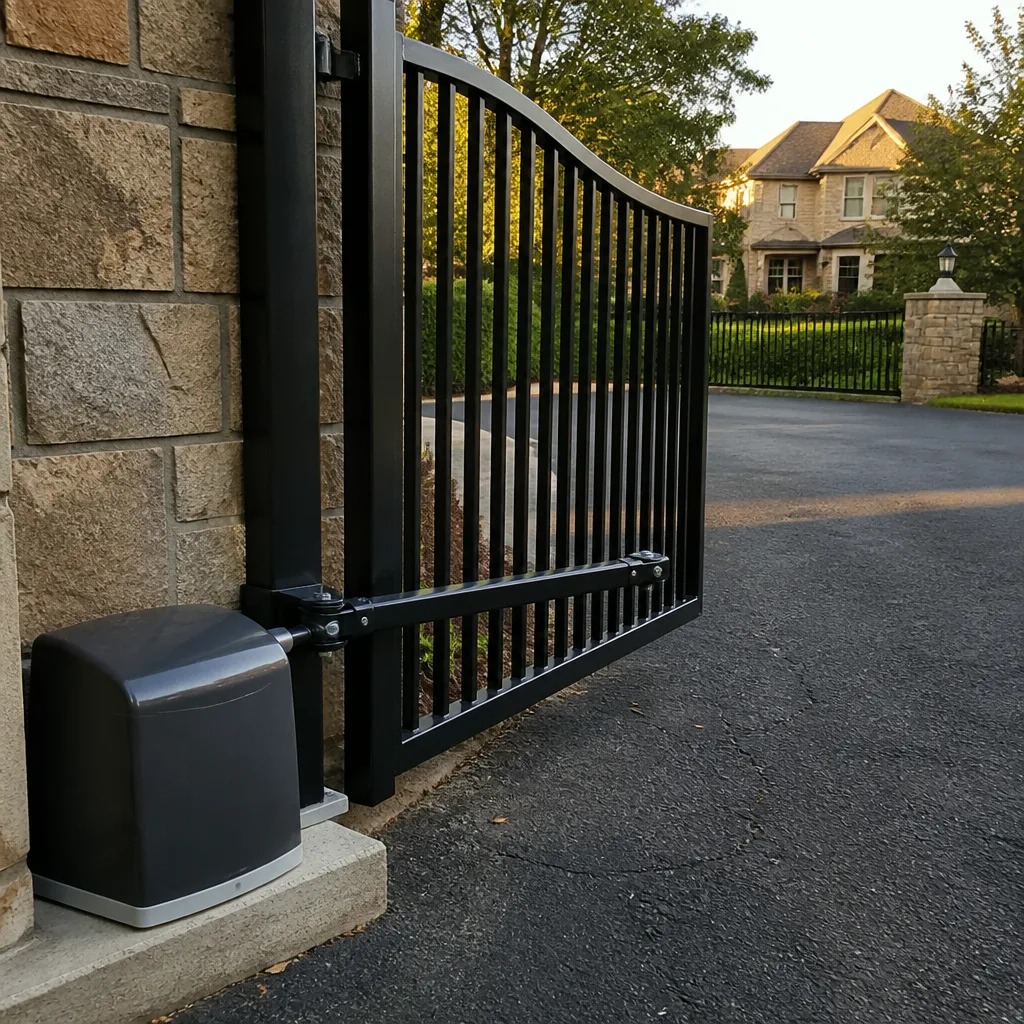 LiftMaster operators
Free on-site gate assessment - hinges, posts, and your LiftMaster or Nice gate operator checked before anything is quoted
The assessment is free and the quote is the invoice.
Get your free estimateGate Repair Emergency Preparedness Guide for Rowlett Homes
The most common gate emergency in Rowlett isn’t a snapped hinge or a burned-out motor. It’s a power outage during one of our Texas thunderstorms that leaves an automated gate stuck closed at 10pm while the homeowner stands in the rain, staring at a keypad that won’t respond, with no idea where the manual release is. Over the years, we’ve seen this exact scenario play out hundreds of times across Rowlett neighborhoods, from Waterview to Springfield Estates. Here’s the counterintuitive part: the homeowners who spend twenty minutes reading their operator’s manual release instructions on a quiet Saturday afternoon are the ones who get back inside in under five minutes during the actual emergency. This guide walks you through everything you need to know to be that homeowner, covering manual releases by brand, power outage protocols, storm damage triage, and the maintenance steps that prevent most after-hours calls in the first place.
Styles & brands we work with
Quick Answer
Gate emergencies in Rowlett break down into three categories: power failures that lock an automated gate in place, mechanical failures from hinges or tracks, and storm damage from high winds or falling debris. The fastest way to resolve any of them is to know your operator brand and where its manual release is located, keep that information written down somewhere accessible outside the gate itself, and have our Gate Repair services number saved for your specific brand before anything goes wrong.
Table of Contents
- Finding Your Manual Release by Operator Brand
- Power Outage Protocol for Rowlett Gates
- Storm Damage Triage: Safe to Operate or Leave It Alone
- What to Have Ready Before You Call for Emergency Service
- The Three Maintenance Items That Prevent Most Emergencies
- Rowlett’s Seasonal Gate Stress Calendar
- Common Mistakes to Avoid
- When to Call a Professional
- Frequently Asked Questions
Finding Your Manual Release by Operator Brand
Every automated gate operator has a manual release mechanism, usually a key, a pull handle, or a lever that disengages the motor from the gate arm so you can push the gate open by hand. The problem is that no two brands put it in the same place, and the instructions printed on the operator housing are often faded to illegibility after a few Rowlett summers of UV exposure. We work on nine major operator brands, so here’s where to look on the ones we see most often in Rowlett.
LiftMaster operators: The manual release on LiftMaster swing and slide operators is typically a keyed bypass on the side of the housing. Look for a small round keyhole near the bottom of the control box. The bypass key ships with the unit and is usually taped to the inside of the control box door. Turn the key a quarter turn and pull the release lever. On LiftMaster slide operators, the release is often a red pull handle on the side of the motor housing that disengages the drive chain.
Linear operators: Linear operators, common on residential swing gates throughout Rowlett, use a mechanical release lever located on the main arm assembly. Look for a T-handle or a small metal lever where the arm meets the operator post. Pull it outward and hold it while you swing the gate manually. Linear’s residential units also have a keyed emergency release on the side of the housing on older models.
BFT and FAAC operators: These Italian-made operators are popular on custom iron gates in Rowlett’s newer developments. The manual release is typically a small triangular or square key inserted into a socket on the bottom of the operator housing. Rotate the key counterclockwise until you feel the gear disengage. BFT units sometimes have a red plastic pull cord on the underside instead.
Viking and Ghost Controls operators: Ghost Controls swing operators use a distinctive red pull handle on the side of the motor. Pull it firmly and the drive disengages with an audible click. Viking operators, which we see on both residential and light commercial gates in Rowlett, use a lever located where the drive arm connects to the gate bracket. Push the lever down to release tension, then move the gate by hand.
Elite and DoorKing operators: These brands dominate the commercial and larger residential slide gate market. Elite/GTO units have a metal release lever on the side of the gearbox housing. DoorKing slide operators use a lever on the front of the motor that lifts up to disengage the chain. Both require some physical effort to pull the gate manually, so plan for that if you have a heavy iron slide gate.
One safety note that applies to every brand: when you disengage an automated gate, the gate is no longer under motor control. A heavy gate can drift or swing suddenly, especially on a slope. Keep your body clear of the gate’s path and never stand downhill of a swing gate. If you’re unsure about your specific operator model, check our Gate Repair Maintenance Checklist for Rowlett Homeowners or call us during business hours before an emergency happens. Five minutes on the phone now beats standing in the dark later.
Power Outage Protocol for Rowlett Gates
Rowlett’s location in the Dallas-Fort Worth metroplex means we get our share of severe thunderstorms, and power outages are a fact of life here. When the power goes out, your automated gate loses its primary power source. What happens next depends on whether your operator has a battery backup and whether that battery still holds a charge.
Here’s the step-by-step protocol to follow when the power goes out and your gate won’t open:
- Check the keypad and remote. Confirm the power is actually out at the operator, not just at the keypad. If nearby streetlights or house lights are also out, it’s an area outage. If your house has power but the gate doesn’t respond, you have a different problem: a tripped breaker, failed transformer, or dead operator board.
- Check for battery backup operation. Many LiftMaster and DoorKing operators installed in Rowlett in the last decade include battery backup. If your gate opens more slowly than usual or the operator makes a different sound, the backup battery is working. If nothing happens at all, the battery is either absent, depleted, or failed.
- Locate your manual release. Use the brand-specific instructions from the section above. This is where preparation pays off. If you’ve practiced this once, you’ll be inside in two minutes.
- Operate the gate manually. Push or pull the gate slowly and evenly. Most residential swing gates weigh between 300 and 800 pounds, so use your legs and keep your back straight. For slide gates, remove any debris from the track first.
- Secure the gate in the open or closed position. A disengaged gate will move freely, which means wind can swing it into your car or a person. Use the gate’s drop pin, a chain, or a sturdy block to hold it in place until power returns.
- Re-engage the operator when power returns. Move the gate back to its normal closed position, activate the manual release lever back to the engaged position, and test the operator. If the gate moves erratically or won’t respond, the power surge may have damaged the control board. This is one of the most common reasons we get calls from Rowlett homeowners the morning after a storm.
For extended outages lasting more than a few hours, manually operating the gate is fine, but keep the operator disengaged the whole time. A power surge when service is restored can damage a connected control board. If your battery backup is more than three years old and you rely on the gate for daily access, test it quarterly using the test button on most operators. A battery that fails silently is the reason so many Rowlett homeowners discover their backup doesn’t work during the exact moment they need it most.
Storm Damage Triage: Safe to Operate or Leave It Alone
After a severe weather event in Rowlett, whether it’s a straight-line wind event or a tornado warning that had everyone in the closet, the first instinct is to check whether the gate still works. Our advice: check from a distance first. Storm damage to gates falls into two categories: damage you can safely work around and damage that requires professional attention before anyone touches the gate. See Gate Repair Permits, Codes & Inspections in TX: What You Need to Know if structural repairs are needed.
Safe to operate (with caution):
- Branches or leaves blocking the gate’s path or track. Clear them carefully, check for downed power lines first, and test the gate.
- Minor misalignment where the gate still moves but scrapes or drags. Operate it manually to avoid stressing the motor.
- Cosmetic damage to pickets or decorative elements that doesn’t affect the gate’s structural frame.
- A tripped GFCI outlet or breaker. Reset it once and test. If it trips again, stop and call for service.
Leave it in place and call a professional:
- The gate post is leaning or shifted out of plumb. A leaning post means the gate’s weight distribution has changed, and operating the motor under that load can destroy the operator.
- The gate is off its track or hanging at an angle. Continuing to run a slide gate on a damaged track can derail it completely, and a derailed slide gate can fall on a car or person.
- Visible damage to the operator arm, drive chain, or control housing. Exposed wiring is an electrical hazard.
- Water is pooling around the operator base or control box. Moisture intrusion into a control board causes shorts that can destroy the board before you know there’s a problem.
- The gate moves on its own, opens partially and stops, or makes grinding noises. These are symptoms of internal gear damage from wind forcing the gate against the operator.
One Rowlett-specific factor worth knowing: our soil here is mostly clay-heavy, and after heavy rain it swells and shifts. Gates that were perfectly aligned before a storm can become misaligned afterward, not because the wind damaged them, but because the ground under the post moved. If your gate worked perfectly before the storm and binds up afterward, this is often the reason. The fix is usually a post adjustment or hinge shim, not a new gate. We handle gate repair in Rowlett cases like this regularly, and they’re typically faster and less expensive than homeowners expect.
What to Have Ready Before You Call for Emergency Service
When you call a gate company at 9pm because you can’t get into your own driveway, the last thing you want is a long intake process. But here’s what actually happens: a technician arrives, spends twenty minutes identifying the operator model, measuring the gate, and asking questions, when that information could have been gathered on the phone. Being prepared cuts that time dramatically.
Keep this information written down somewhere accessible, ideally in your phone’s notes app or taped inside a garage cabinet:
- Operator brand and model number. The model number is usually on a sticker on the side of the control box or motor housing. Common models in Rowlett include the LiftMaster LA400 and LA500, Linear OSCO units, Viking F1 and X9, and DoorKing 9150 and 9100. Knowing the model lets us bring the right parts on the first trip.
- Gate type and dimensions. Is it a swing gate or slide gate? How wide is the opening, roughly? How tall? A double swing gate of two ten-foot leaves weighs vastly more than a single six-foot leaf, and heavier gates need different repair approaches.
- Symptom description in plain language. “The gate opens halfway and reverses” tells us one thing. “The gate is dead, no response from anything” tells us another. Write down exactly what the gate does when you press the remote, use the keypad, or try to open it manually.
- When the problem started. Did it happen suddenly during the storm last night? Has the gate been acting up for weeks and finally quit? The timeline matters more than most people realize.
- Any recent work done on the gate or surrounding area. Did a landscaper recently dig near the gate? Did a tree removal crew work nearby? Did you recently replace the keypad or remote? Recent changes are often the culprit.
- Access details. Is there a pedestrian gate? A secondary entrance? Where is the operator located relative to the driveway? This helps us plan the service approach, especially for after-hours calls.
If you can’t identify the brand right now, take a clear photo of the operator from a few angles today and save it to your phone. When the emergency happens, you can send the photo immediately. We provide electric gate repair in Rowlett across all nine major brands we service, so we’ll know your system whether it’s a BFT hydraulic operator or a Viking swing arm, but having the model number saves diagnostic time every single time.
The Three Maintenance Items That Prevent Most Emergencies
In our experience working on gates throughout Rowlett, roughly eight out of ten emergency calls trace back to one of three maintenance items that were skipped. None of them are expensive. None of them take more than thirty minutes. All of them are routinely ignored until the gate fails at the worst possible moment.
1. Hinge lubrication and tightening
Swing gates hang on hinges that carry hundreds of pounds of weight through every open and close cycle. In Rowlett’s clay soil, the ground shifts seasonally, putting uneven stress on those hinges. When the hinges dry out, the gate drags, the motor works harder, and eventually the hinge pins wear oval and the gate sags. A sagging gate pulls the operator arm out of alignment, which strips gears and burns out motors. Lubricate hinge pins with a lithium or silicone spray every six months, and check the hinge bolts for tightness at the same time. If the gate sags visibly, the fix is hinge replacement or shimming, not just more grease.
2. Limit switch and reversing sensor adjustment
Every automated gate has limit switches that tell the motor when to stop. When they drift out of adjustment, the gate over-travels, slamming into the stop or the post. That impact force travels back through the operator and damages internal gears. It’s a slow-motion failure: each slam takes a little more life off the operator until one day the gear strips completely and the gate won’t move at all. Checking and adjusting limit switches is a fifteen-minute job for someone who knows the operator, but it’s the maintenance item we find skipped most often in Rowlett. The same goes for reversing sensors. If the sensors are misaligned or blocked by overgrown landscaping, the gate may reverse mid-cycle or refuse to close at all, symptoms that often get misdiagnosed as motor failure.
3. Track cleaning and alignment for slide gates
Rowlett’s wind deposits leaves, dirt, and debris into slide gate tracks constantly. A slide gate with a blocked track works harder, pulls more current, and eventually trips its breaker or burns out its capacitor. Clean the track regularly, especially after storms and during fall leaf drop, and check that the track is still level. A track that has shifted due to soil movement will cause the gate to bind even if the track is clean. Slide gates are common on larger Rowlett properties and on commercial sites managed by HOAs, and track neglect is the leading cause of slide gate failures we see.
These three items are the difference between a gate that lasts fifteen years and a gate that fails at seven. If you’re unsure how to check any of them on your specific system, a quick inspection call now costs far less than an emergency call later. We also handle gate installation in Rowlett when a gate has reached the point where repair no longer makes sense, but most of the time, maintenance handles the problem before replacement ever enters the conversation.
Rowlett’s Seasonal Gate Stress Calendar
Gate failures in Rowlett follow a seasonal pattern, and knowing the pattern helps you prepare ahead of time instead of reacting after the fact. Here’s what we see month by month.
Late spring (May through June): This is when Rowlett’s severe weather season peaks, bringing high winds, hail, and power outages. We see a surge of calls during these months from storm damage: wind-forced gates stripping gears, lightning strikes frying control boards, and water intrusion from horizontal rain. The gates that survive these months best are the ones whose owners checked the limit switches and lubricated the hinges in April.
Peak summer (July through August): Rowlett’s brutal heat takes its toll on electronic components. Control boards and capacitors fail more often during heat waves, and gate operators that sit in direct afternoon sun on west-facing installations are particularly vulnerable. Battery backups also degrade faster in sustained heat. If your operator cabinet is in full sun during the afternoon, consider a shade structure or at least an operator cover designed for your model.
Fall (October through November): Leaf drop and acorn season in Rowlett means slide gate tracks clog up faster than ever. We see a rise in slide gate failures during these months that could have been prevented with regular track cleaning. This is also the best time of year in Rowlett to have a full gate inspection done before winter arrives.
Winter (December through February): Freeze events are less frequent in Rowlett than further north, but they happen often enough to matter. Metal contracts in freezing temperatures, which can cause gates that were marginal in their alignment to bind completely. Ice on the track or on the gate’s pivot points can also prevent operation even when the gate itself is fine. The gates that fail in the freeze are almost always the ones that were already misaligned or under-lubricated going into it.
The pattern is the same every year: the gates that have had routine maintenance survive the seasonal spikes. The ones that haven’t create the after-hours emergency calls. Knowing how your gate responds to Rowlett’s seasonal stress is part of being prepared, and it’s something you can plan around rather than being surprised by.
Common Mistakes to Avoid
- Not knowing where the manual release is until the power is already out. This is the single most common emergency call we get in Rowlett. The manual release doesn’t require any special tools on most operators, but finding it in the dark, in the rain, with no instructions, is a miserable experience. Learn it today.
- Forcing a gate open that’s bound by a mechanical problem. When a gate resists manual operation, it’s tempting to push harder. Forcing a bound gate can bend the operator arm, strip gears, or pull a post out of plumb. If it won’t move with steady, firm pressure, stop and call for service.
- Resetting a tripped breaker repeatedly. If the breaker for your gate trips once after a storm, reset it and see what happens. If it trips a second time, that’s a symptom of a short or overload, not a fluke. Every reset risks further damage to the control board.
- Lubricating the wrong parts. Some homeowners spray WD-40 on everything, including the operator’s internal gears and the control board housing. The wrong lubricant on a drive chain attracts dirt and accelerates wear. Use lithium grease on chains and gears, silicone spray on hinge pins and rollers, and nothing on electronics.
- Ignoring a slow gate or a new noise. A gate that suddenly moves slower than before, or makes a grinding or whining sound it didn’t make before, is telling you something. Those are early failure symptoms that are almost always cheaper to fix now than to fix after the complete failure.
- Assuming a new gate needs no maintenance. Brand-new gate installations in Rowlett’s newer developments still need periodic lubrication, limit checks, and track cleaning. Age isn’t the only factor; environmental stress affects new gates just as much as old ones.
- Writing down the operator model number somewhere you can’t access during an emergency. If the gate is the thing keeping you out, and the information about the gate is inside the property, the information is useless. Keep operator details in your phone, not in a drawer in the house behind the gate.
When to Call a Professional
Some gate problems are safe and reasonable to handle on your own: clearing debris, tightening visible bolts, lubricating hinge pins, resetting a single tripped breaker. Others require training, proper tools, and knowledge of proprietary control systems. Call a professional when the gate has come off its track, when a post is leaning, when the operator makes grinding or popping noises, when you see exposed or burned wiring, or when the gate opens and closes on its own. If you’ve checked everything you can check and the gate still won’t operate, it’s time. Most importantly, if you’re ever unsure whether the gate is stable, treat it as unstable and leave it alone. Heavy gates cause serious injuries when they fall or swing unexpectedly.
Pinehurst Gate Repair offers free estimates in Rowlett. Call (877) 265-5743 and we’ll help you figure out whether this is a problem you can handle on your own or one that needs a technician. We work on the brands already installed across Rowlett, from LiftMaster to BFT to Viking, and we’re gate specialists, not generalists. That means when you describe a symptom, we know what it means without a long discovery process.
Frequently Asked Questions
First, confirm the power outage is the cause by checking whether other nearby lights are out. If the outage is the cause, use the manual release on your operator to disengage the motor and push the gate open by hand. The release location depends on your operator brand: LiftMaster uses a keyed bypass or red pull handle, Linear uses a T-handle on the arm, Viking uses a lever at the gate bracket, and Ghost Controls uses a red pull handle on the motor. Once the power returns, re-engage the operator and test it. If the gate still won’t operate, the control board may have been damaged by a power surge, and you should call (877) 265-5743 for a diagnostic visit.
Most operators with battery backup have a test button on the control board, often labeled “battery test” or indicated in the manual. Press it while the operator is connected to AC power, and the operator should run briefly on battery. If it doesn’t, or if the battery is more than three years old, it’s probably time to replace it. Rowlett’s summer heat shortens battery life, so checking annually is a good practice. If you’re unsure how to test your specific model, we can check it during any service visit.
If you’re comfortable with low-voltage electrical work and you’re replacing an operator with the exact same model, it’s possible to do this yourself. However, most operator replacements involve more than swapping the box: you’ll need to adjust limit switches, program remotes and keypads, and potentially modify the mounting. A mismatch between operator capacity and gate weight is one of the most common causes of premature failure we see. If you’re considering replacement, call us for an assessment first. We provide gate installation in Rowlett with operators matched to your specific gate’s size and weight.
Emergency gate repair costs vary depending on the problem, the operator brand, and the time of call. After-hours calls typically include a trip or dispatch fee on top of the repair cost, which is standard across the industry. Parts prices range from under $50 for simple items like remotes and capacitors to several hundred dollars for control boards or operator arms. The best way to get an accurate quote is to call (877) 265-5743 and describe the symptoms. We’ll give you a realistic price range before a technician ever arrives, and the final price is quoted and agreed before any work starts.
For heavy iron swing gates, we typically recommend linear-screw or hydraulic operators from LiftMaster’s higher-capacity lines, Viking’s heavy-duty models, or BFT’s hydraulic swing operators depending on the gate’s weight and cycle frequency. For heavy slide gates, DoorKing and Elite both make commercial-grade operators that hold up well to Rowlett’s wind and heat. The right choice depends on gate weight, opening width, daily cycle count, and whether the gate is residential or commercial. We work on all of these brands, so we can recommend based on your actual gate rather than a generic chart.
Yes. We work with HOA managers and property managers throughout Rowlett on both residential and common-area gates, including slide gates on entry drives and swing gates at pedestrian access points. We service the full range of operator brands found on Rowlett HOA properties, including DoorKing, Elite, Viking, Linear, and LiftMaster, and we’re able to handle both urgent repair calls and planned maintenance programs. Call (877) 265-5743 to discuss your community’s gate inventory and we’ll help you build a plan that fits.
The Bottom Line
Gate emergencies in Rowlett are mostly preventable, and the ones that aren’t preventable are manageable if you’ve done the preparation work. Know your operator brand. Know where the manual release is. Keep your operator information on your phone. Lubricate your hinges, clean your slide track, and check your safety sensors. When something goes wrong that you can’t fix safely, call a gate specialist who works on your brand rather than a generalist who’ll have to figure it out on-site. That preparation turns a potential four-hour ordeal into a brief inconvenience, and that’s the entire point of this guide. For more guides & resources, visit our blog.
If you’re in Rowlett and you want a gate system that’s inspected, maintained, and ready for whatever our Texas weather throws at it, Pinehurst Gate Repair is the place to start. We repair, maintain, and install gates across all the major brands, and we’re happy to walk you through anything in this guide that applies to your specific setup. Call (877) 265-5743 or visit our Pinehurst Gate Repair home page to learn more about what we do.
Written by the team at Pinehurst Gate Repair, serving Rowlett since 2013.
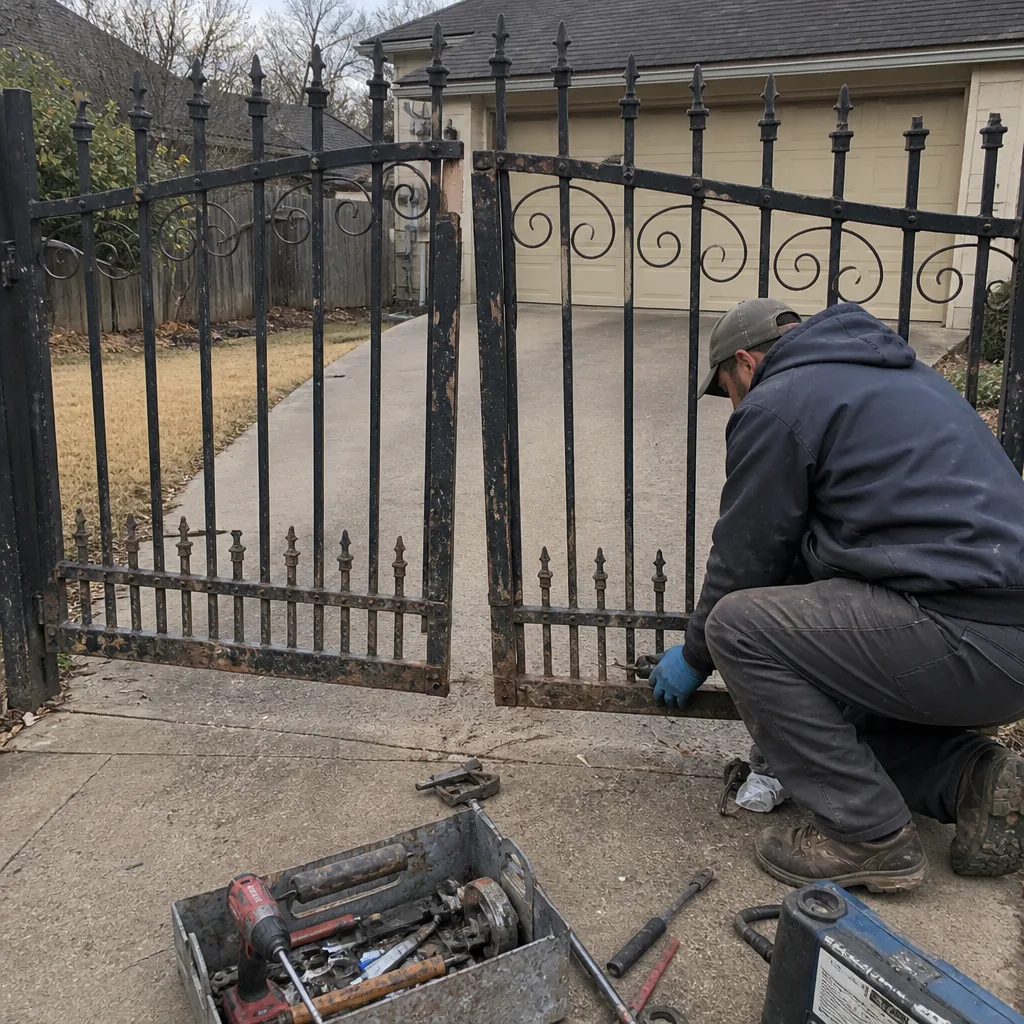
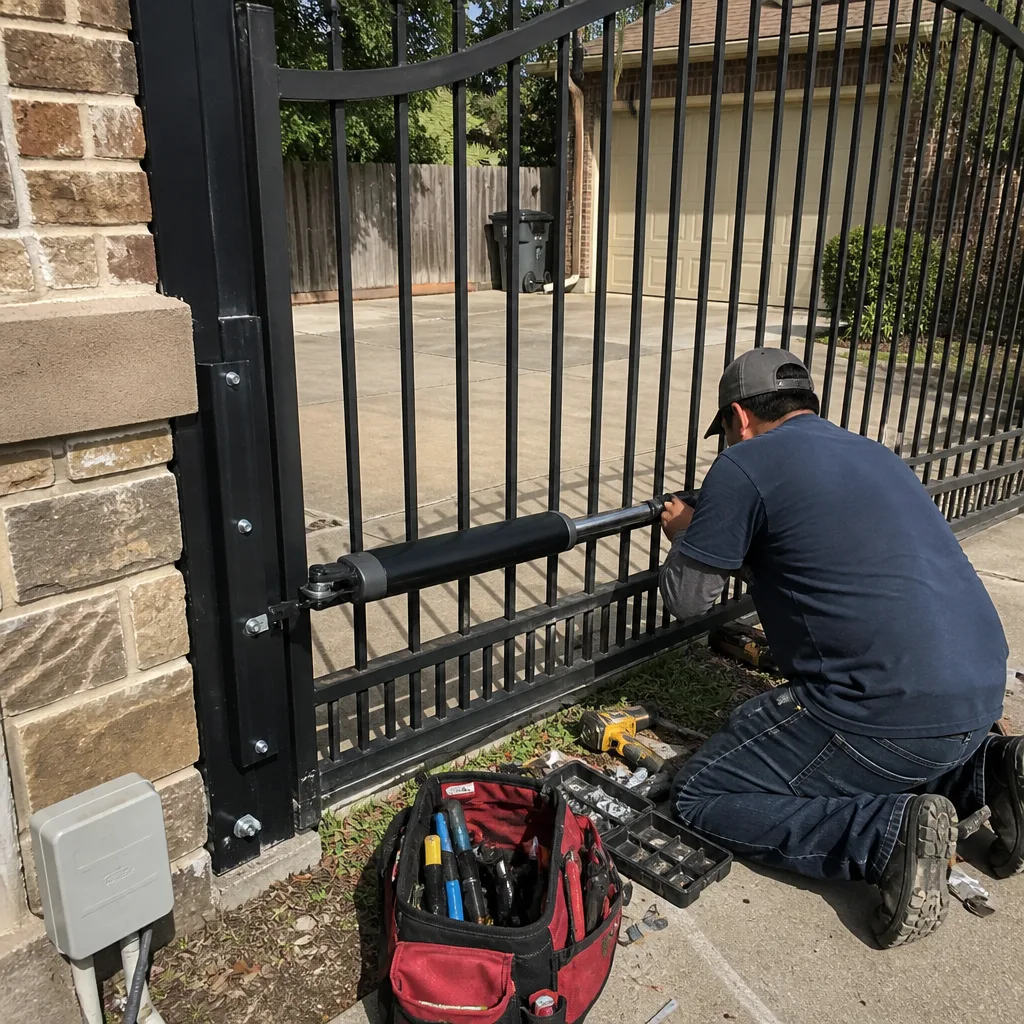
See the difference
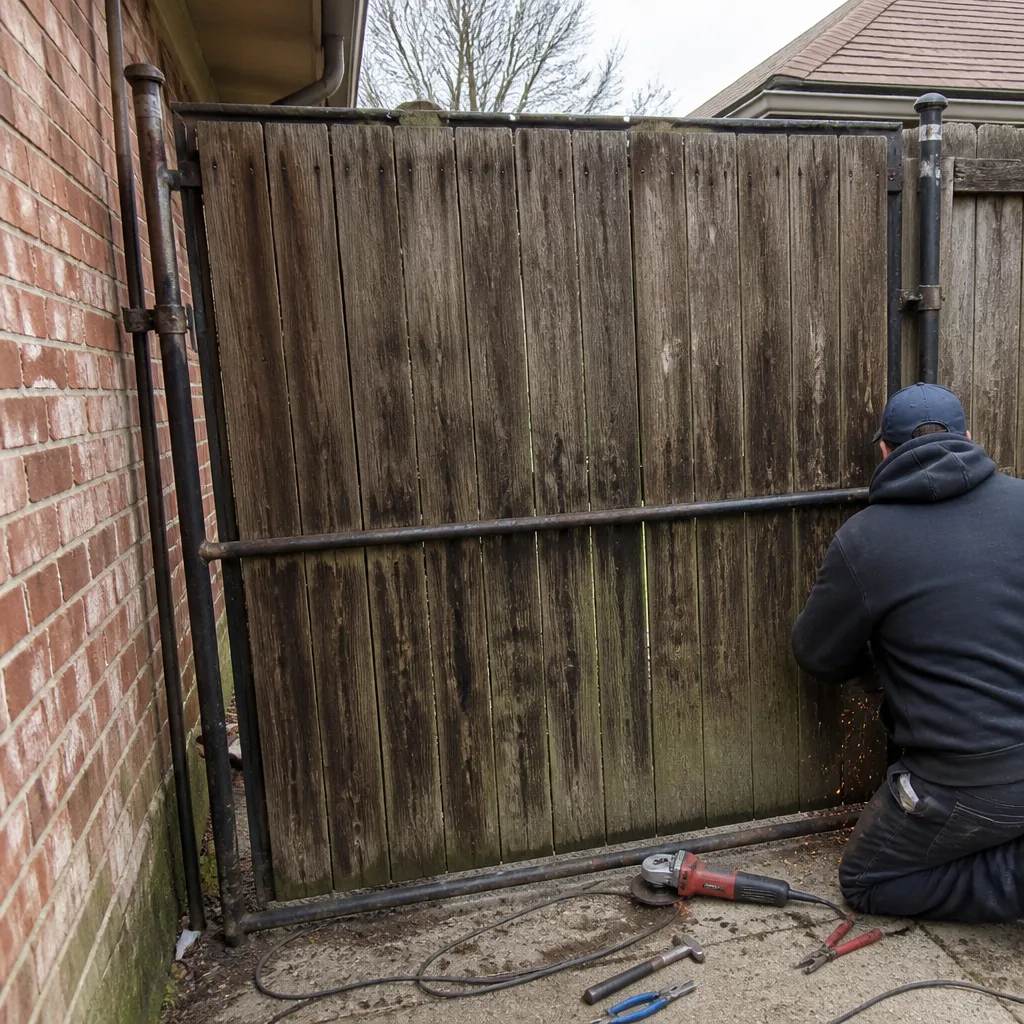 Before
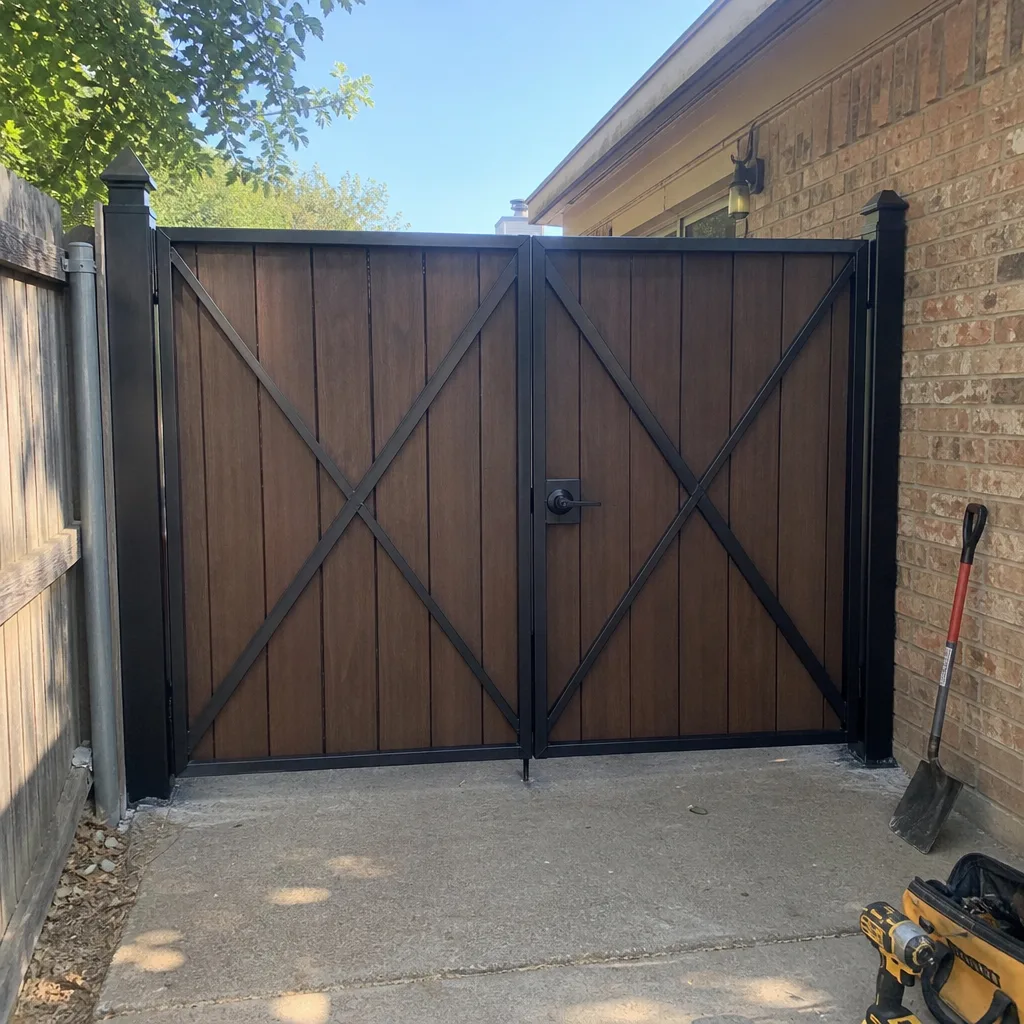 After
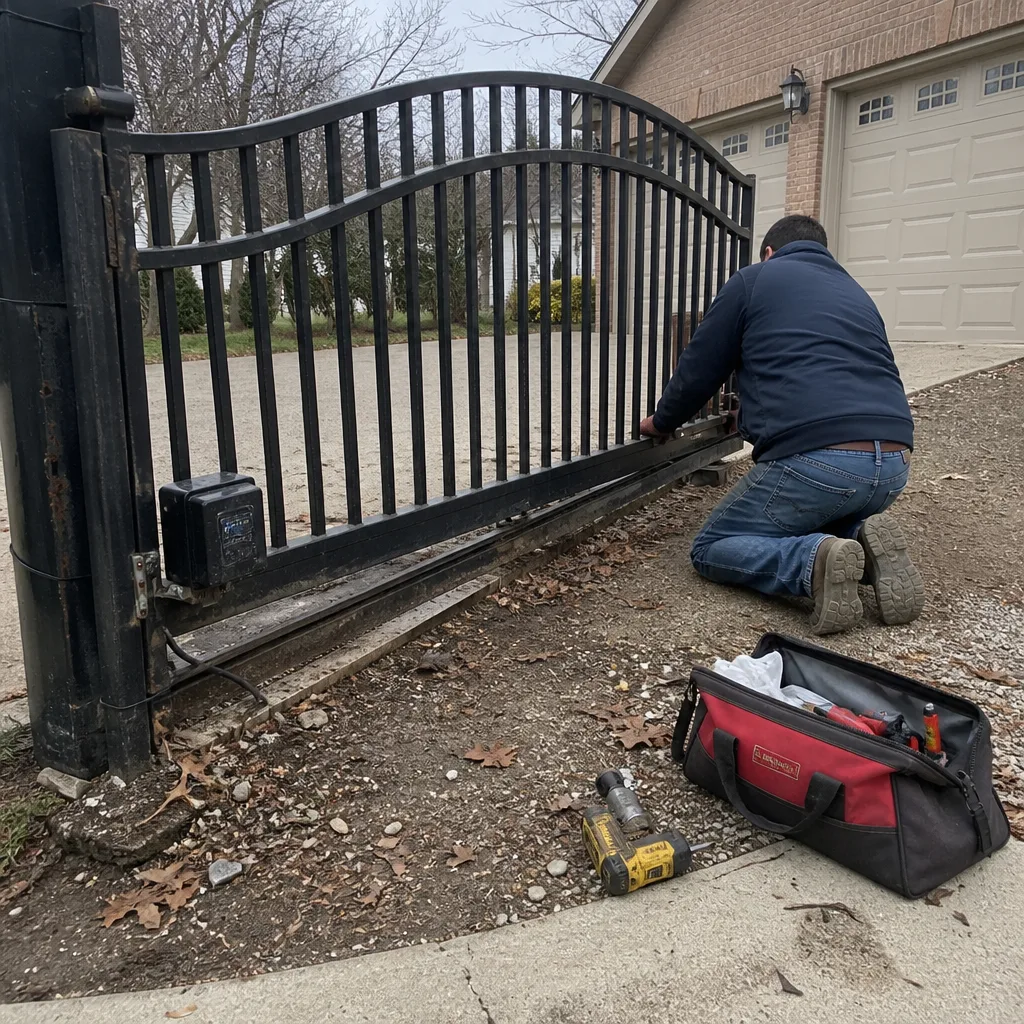 Before
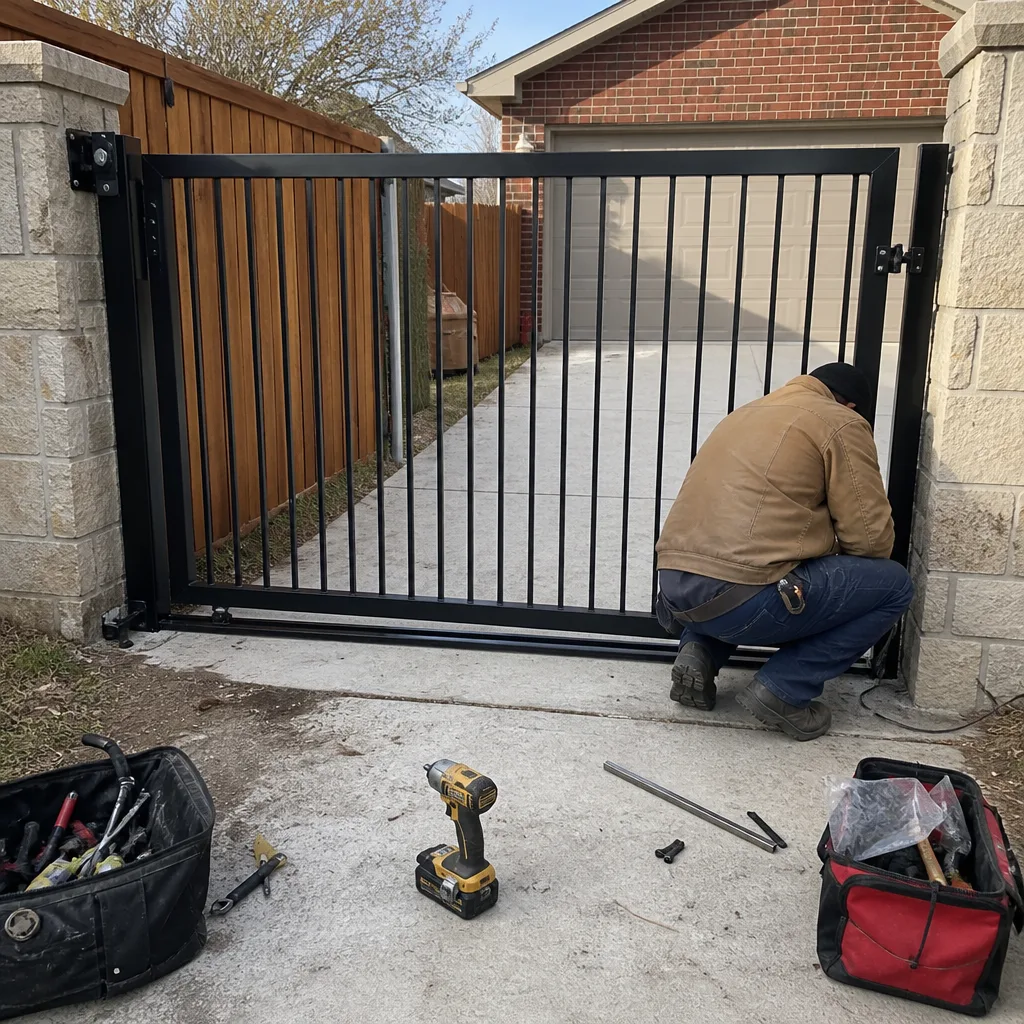 After
 Before
 After