
Last updated October 31, 2026
 Wrought iron
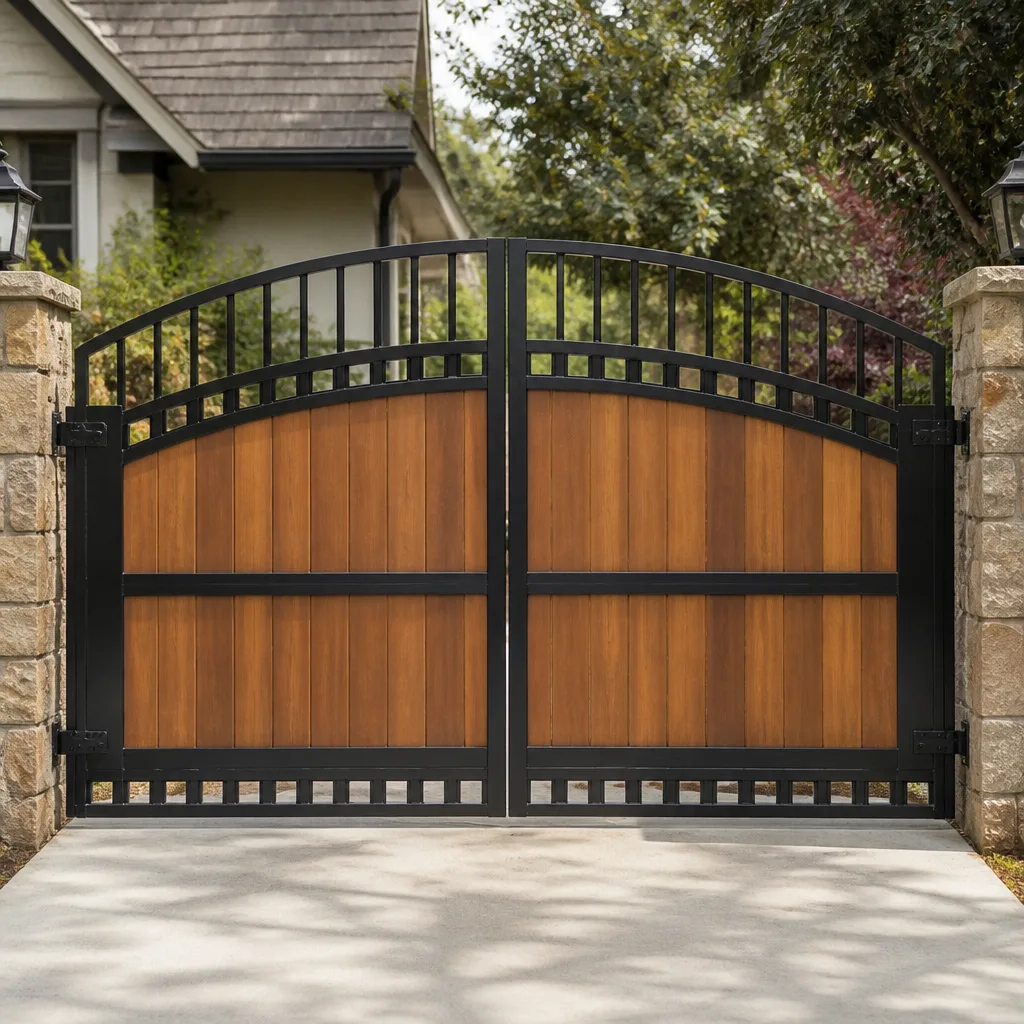 Wood & steel frame
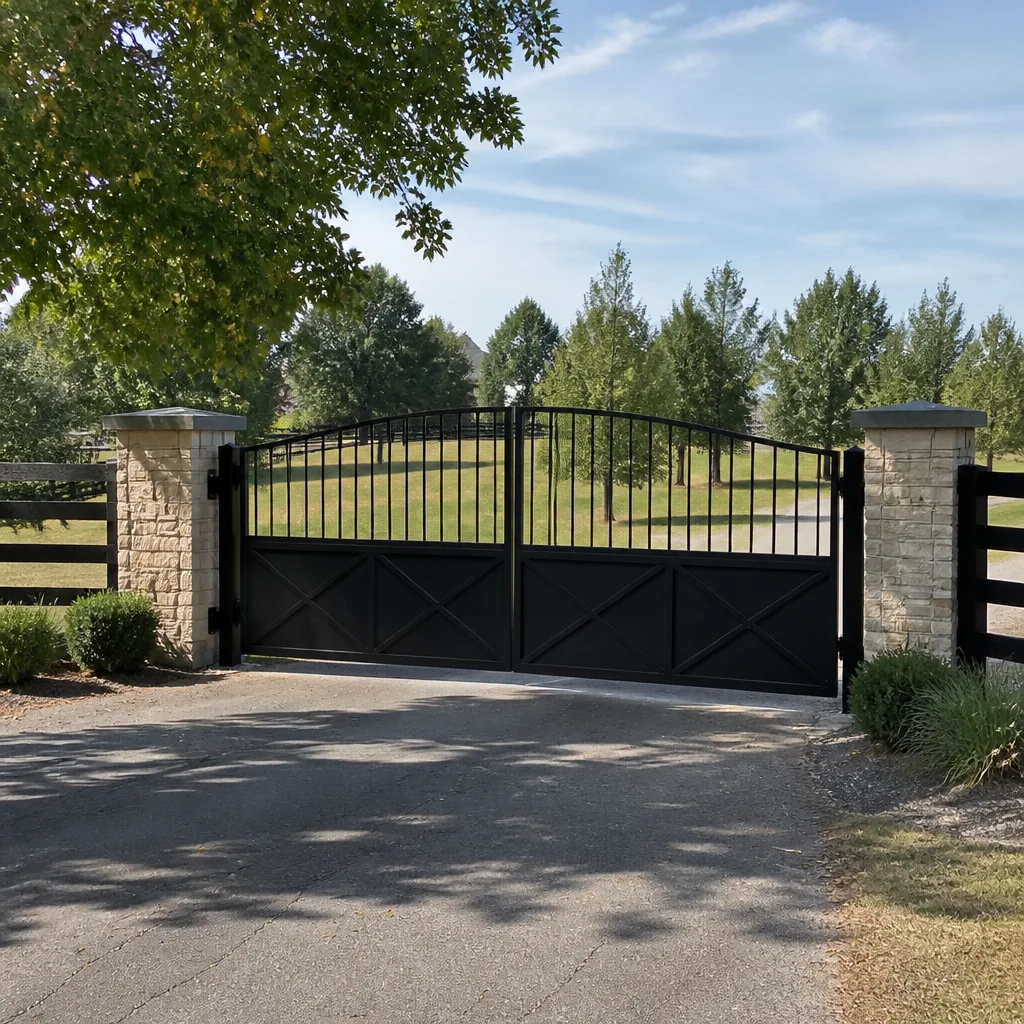 Farm & ranch
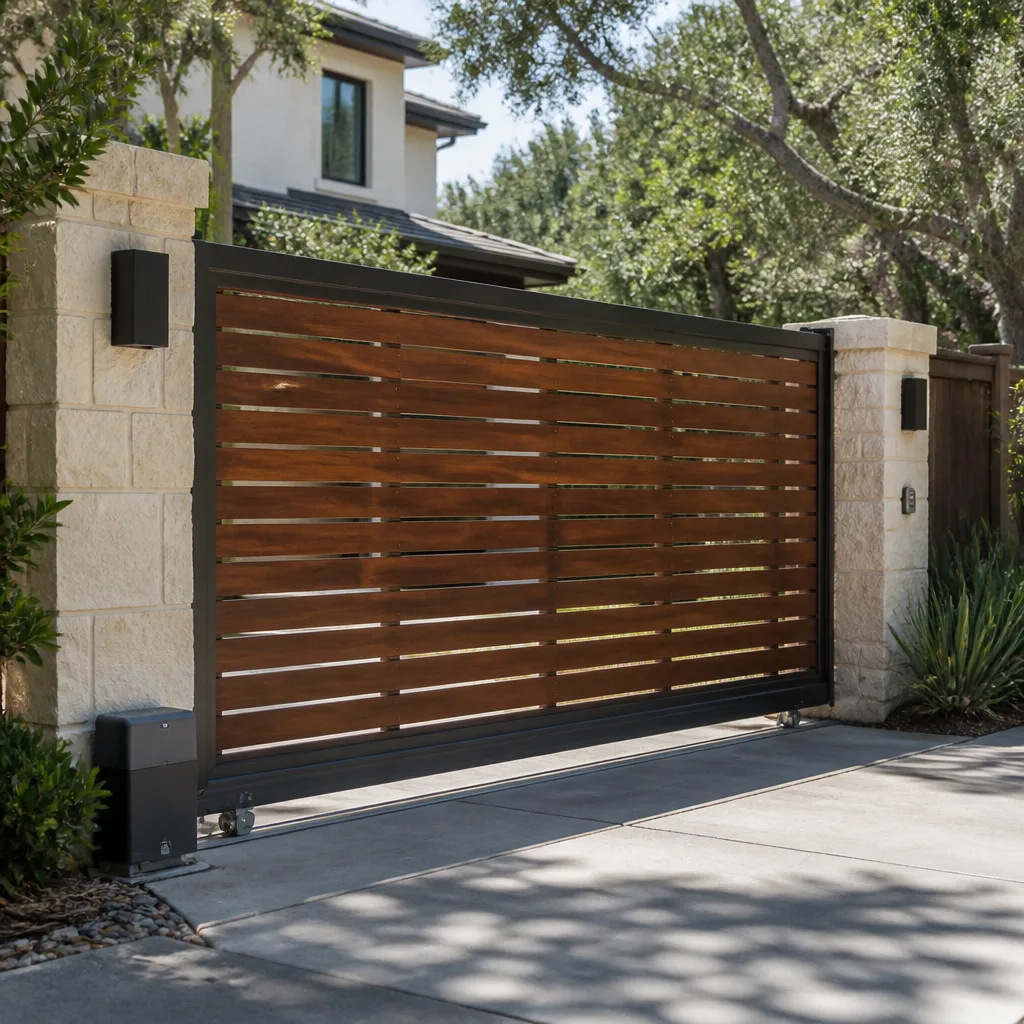 Sliding driveway gates
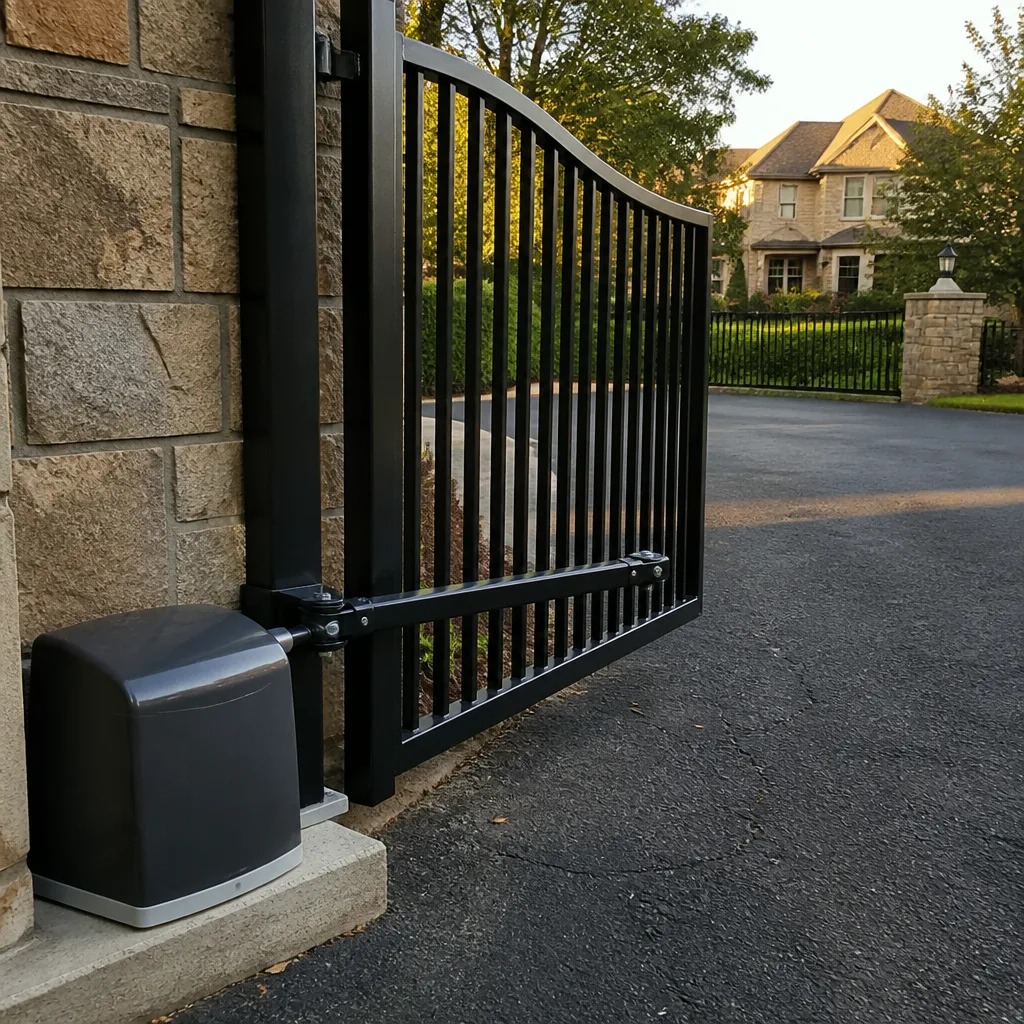 LiftMaster operators
Free on-site gate assessment - hinges, posts, and your LiftMaster or Nice gate operator checked before anything is quoted
The assessment is free and the quote is the invoice.
Get your free estimateThe Complete Guide to Gate Repair in Rowlett
Drive through any Rowlett neighborhood long enough and you’ll notice something: a surprising number of electric gates are stuck half-open, sagging on their hinges, or sitting dead while the homeowner uses the pedestrian door instead. Most people assume the gate is just old. The reality is that a finite set of failure patterns accounts for the overwhelming majority of broken gates in this city, and most repairs fail because nobody diagnosed which pattern was actually at work. This guide maps out those patterns, ties them to Rowlett’s specific soil and weather conditions, and shows you how to tell a permanent fix from a temporary patch before you spend a dime.
Quick Answer
Gate repair in Rowlett typically falls into one of four root-cause categories: post lean from clay soil movement, hinge and hardware fatigue from heat cycling, electrical failure in the operator or control board, or misalignment between the gate leaf and its opening. Identifying which category you’re dealing with determines whether the repair is mechanical, electrical, or both. In most cases, a gate specialist can diagnose the exact failure in a single visit and repair it without replacing the entire system.
Styles & brands we work with
Why Most Gate Problems in Rowlett Share a Common Origin
Before we get into specific failure modes, it’s worth understanding what makes Rowlett unique. The soil here is expansive clay, which swells when wet and shrinks when dry. Over the course of a year, the ground under your gate posts moves measurably, sometimes by an inch or more in a single season. Add to that the summer heat, which hits triple digits for weeks at a stretch and bakes the metal hardware until it expands and contracts on a daily cycle, and you have a recipe for slow, cumulative gate damage. None of this is exotic. It’s just the local environment doing what it does. A repair strategy that doesn’t account for it will fail again, usually within two seasons.
Table of Contents
- The Four Root Causes of Gate Failure in Rowlett
- Clay Soil and Post Lean: The Problem Nobody Fixes First
- Manual Gate Failures vs. Electric Gate Failures
- Brand-Specific Repair Patterns: BFT, Linear, Viking, Ghost Controls
- Permanent Fix or Temporary Patch: How to Tell Before You Pay
- When Repair Makes Sense and When Replacement Is the Smarter Call
- Why a Gate Specialist Sees What a Fence Company Misses
- Common Mistakes to Avoid
- When to Call a Professional
- Frequently Asked Questions
The Four Root Causes of Gate Failure in Rowlett
When we arrive at a gate repair call in Rowlett, the first thing we do is look for which of four patterns is present. Most gate failures fall into one of these categories, or occasionally a combination of two:
1. Post Movement from Expansive Clay Soil
The post that holds the hinges shifts. Maybe it leans a few degrees. Maybe it’s settled half an inch. Either way, the gate leaf no longer lines up with the latch, the operator, or the opening. The symptom might be a gate that drags on the ground, binds at the latch, or won’t close fully far enough to trigger the safety sensor.
2. Hinge and Hardware Fatigue from Heat Cycling
Gate hinges in Rowlett go through brutal thermal cycles. Steel expands in the afternoon sun and contracts overnight. Over several years, this works hinge pins loose, stresses weld points, and creates small stress fractures in the metal around the hinge barrels. The gate starts to sag, and the problem compounds as weight shifts to hardware that was never meant to carry it alone.
3. Electrical and Control Board Failure
Automated gates add a layer of complexity: circuit boards, capacitors, limit switches, safety sensors, and motors. Rowlett’s storm season brings power surges that cook these components, and the summer heat shortens the lifespan of capacitors and solder joints on control boards. A gate that worked yesterday and is dead this morning is usually an electrical problem, not a structural one.
4. Misalignment Between Gate Leaf and Opening
Sometimes the post is fine and the hardware is fine, but the gate leaf itself has warped, twisted, or been knocked out of alignment by wind or an impact. This is especially common on wide drive gates that catch a lot of wind surface area. The gate still swings, but it no longer meets the latch, the closer, or the stop cleanly.
The diagnostic starting point is different for each. Guess wrong, and you’ll spend money fixing the wrong layer of the problem. Get it right, and the repair is usually straightforward.
Clay Soil and Post Lean: The Problem Nobody Fixes First
Here’s a scenario we see regularly in Rowlett. A homeowner calls because their gate drags on the driveway. The previous repair person adjusted the hinges, maybe shimmed the latch, and declared the gate fixed. Six months later, the gate drags again. What actually happened is that the gate post is leaning, pulled out of position by moving clay soil. The hinge adjustment treated the symptom, not the cause.
Resetting a gate post in expansive clay is more involved than just digging it deeper. The soil will continue to move, so the post needs to be set with a method that resists heave: a larger diameter footing, gravel drainage around the base, and sometimes a steel post anchor below grade. In some cases, a properly installed post in Rowlett soil will still need occasional re-leveling, but a reset done right should hold for years rather than months.
The key question to ask when a repair quote includes hinge adjustment but no post inspection: is the post actually plumb, or has it moved? A gate that sags at the latch end but closes cleanly near the hinges almost always points to post movement. Fix the post first. Then adjust the hinges. Do it the other way around and you’ll be back in the same situation before the next big rain.
Manual Gate Failures vs. Electric Gate Failures
Not all gate repair is the same. A manual gate swings on hinges and latches. An automated gate adds an operator, control board, safety devices, and remote receivers. The failure modes are different enough that they require different diagnostic approaches.
Manual Gate Failure Modes
- Structural: The gate frame is bent, rusted through, or cracked. Common on older welded steel gates where water has found its way inside the frame and rusted from within.
- Hardware: Hinges are worn, loose, or seized. Latch plates are misaligned. Hinge pins have sheared or backed out.
- Alignment: The gate leaf has moved relative to the post or the opening, causing binding, dragging, or latch failure.
Automated Gate Failure Modes
- Electrical: Power supply issues, blown fuses, failed capacitors, dead control boards, or wiring that has chafed through.
- Mechanical: The operator’s internal gears, belts, or drive shaft have worn or broken. This often presents as a motor that runs but the gate doesn’t move, or a gate that runs rough and noisy.
- Operator: The limit switches are misadjusted, the motor bearings are failing, or the operator is the wrong capacity for the gate it’s driving.
The diagnostic starting point for a manual gate is physical: look at the post, the hinges, the latch, the frame. The diagnostic starting point for an automated gate is often the control board: check power, check error codes, check sensor inputs. A company that only does manual gates will be lost on the electrical side. A company that only does electric operators will overlook a bent hinge that’s forcing the operator to work harder than it should. Gate repair in Rowlett often involves both disciplines in a single visit because the mechanical and electrical systems are interacting.
Brand-Specific Repair Patterns: BFT, Linear, Viking, Ghost Controls
We work on the brand you already have. That’s a foundational point for us, because different gate operators fail in different ways, and knowing the brand’s quirks means a faster, more accurate diagnosis. Here are four brands we service regularly and see in Rowlett installations:
BFT
BFT operators are common on Italian-made slide gates and some swing installs. The control boards on older BFT units are sensitive to power surges, which Rowlett storms deliver regularly. The most common failure we see is a board that has lost its programming after a surge, or a capacitor that has failed and causes the gate to start slow and stall under load. BFT parts are still widely available, and most board failures are repairable without replacing the entire operator.
Linear
Linear operators are heavily used in residential and light commercial swing gates across Rowlett. The most frequent failure pattern we see is gear wear inside the operator arm – the gate moves, but it’s sluggish and makes a grinding or chattering sound. Limit switch drift is also common: the gate stops a few inches short of fully open or closed, which trips the auto-close function or triggers a safety fault. Both are repair jobs, not replacement jobs, when caught early.
Viking
Viking operators are built for heavy-duty use, which means they’re often found on commercial and HOA gates in Rowlett. The weak point is rarely the motor itself; it’s usually the connections and the external controls. Underground wiring from the loop detector wears out, or the radio receiver stops responding to remotes. Viking units also have robust diagnostic systems on newer models, which makes troubleshooting faster when you know how to read the codes.
Ghost Controls
Ghost Controls operators are a popular choice for DIY-installed swing gates, which means we often see them on newer Rowlett builds or recent installations. The common failure points are install-related: a gate leaf that’s too heavy for the operator’s torque rating, an arm that wasn’t mounted at the correct geometry, or a solar panel that isn’t getting enough sun in a shaded yard. The operator itself is usually fine, but it’s being asked to do a job it wasn’t set up to do.
These are just four of the brands we service. The full list includes LiftMaster, FAAC, DoorKing, Elite, and Mighty Mule as well. Manual or electric, swing or slide, we work on the gate you already have.
Permanent Fix or Temporary Patch: How to Tell Before You Pay
This is the section that saves people money. Not every repair quote is equal. Some repairs are permanent fixes that address the root cause. Some are temporary patches that will hold for 12 to 18 months before the same problem returns, usually worse. Here’s how to tell the difference before you approve the work:
Ask These Three Questions
- Does the diagnosis name the root cause? A real diagnosis says something like “the post has shifted because the clay soil expanded, which threw the hinges out of alignment.” A patch says “we adjusted the hinges and got it closing again.” If there’s no root cause named, you’re buying a patch.
- Does the quote address the underlying condition? If the post is leaning and the quote doesn’t include any post work, the gate will sag again. If the control board is fried and the quote replaces the capacitor but not the surge protection, the next storm will do the same thing.
- Is the repair scoped to the actual failure, or the visible symptom? A bent hinge is a symptom. The cause might be a warped gate leaf that bent the hinge, or a moving post that torqued it. Fix the symptom without the cause and the repair is temporary by definition.
A general rule: if the gate was working fine for years and then failed suddenly, you’re usually looking at a discrete failure that can be fixed permanently – a burned-out capacitor, a snapped hinge pin, a sheared gear. If the gate has been slowly degrading over months, the problem is usually systemic: soil movement, frame fatigue, or operator undersizing. Systemic problems require addressing the system, not just the part that finally gave out.
When Repair Makes Sense and When Replacement Is the Smarter Call
Repair is almost always cheaper than replacement in the short term. But short-term savings can be a trap. Here’s the math we run with customers who are deciding whether to repair an existing gate or replace it entirely:
Repair Makes Sense When:
- The gate frame is structurally sound and the posts are stable
- The operator is a current model with parts readily available
- The failure is isolated to a single component: a board, a hinge, a sensor, a gear
- The gate has been reliable for years and this is the first significant problem
- The total repair cost is less than about half the cost of a full replacement
Replacement Makes More Sense When:
- The gate frame is rusted through or the welds are failing in multiple places
- The posts are so compromised that resetting them costs more than new posts and labor combined
- The operator is discontinued and parts are only available used or aftermarket
- The gate is too heavy for the operator that’s been driving it, and the correct operator costs nearly as much as a complete new system
- Multiple components have failed in the same year, signaling systemic end-of-life
When a customer calls for a repair and we find the gate is beyond saving, we can handle the full gate installation in Rowlett as well. That’s the single-call advantage: you don’t have to start over with a different contractor.
Why a Gate Specialist Sees What a Fence Company Misses
Rowlett has plenty of fence companies and garage door companies. Both are perfectly competent at what they do. But a gate is not a fence, and a gate operator is not a garage door opener. Here’s what gets missed when a gate problem is handled by a generalist:
A fence company sees the structure: the posts, the frame, the hinges. They’ll fix a sagging gate by adjusting or replacing hardware. But if the gate is powered, they may never think to check whether the new hinge placement changes the travel distance the operator is calibrated for. The gate swings again, but now the operator slams it into the stop, or the limit switches are off, or the auto-close never initiates. The structure is fixed and the system is broken.
A garage door company sees the operator: they know motors, limits, and sensors. But a gate operator operates in an outdoor environment with different wind loads, duty cycles, and safety requirements than an indoor door opener. And when the problem is a post that’s moved because the soil shifted, an operator-only technician won’t see it, because that’s not where they’re looking.
Gate specialists, not generalists. That’s the entire reason we exist. When the problem involves both the operator and the structure, you need someone who can diagnose both layers in the same visit. Electric gate repair in Rowlett is more than swapping parts; it’s understanding how the mechanical and electrical systems interact.
Common Mistakes to Avoid
- Adjusting hinges without checking the post. If the post has moved, adjusting the hinges treats the symptom. The gate will sag again. Check the post’s plumb line first.
- Replacing the operator without addressing gate weight. If the gate is too heavy for its operator, a new operator of the same model will fail the same way. Match the operator to the gate, not the old operator’s spec.
- Ignoring surge protection on automated gates. Rowlett’s storm season brings power surges that destroy control boards. Install surge protection before the next storm, not after the board is already fried.
- Lubricating a worn-out hinge instead of replacing it. Grease hides the sound but doesn’t undo the wear. A hinge with play in its pin will continue to wear and eventually fail.
- Buying a replacement board from a used-parts source without testing it. We’ve seen too many customers install a used board that was dead on arrival. Test it before you bolt it in.
- Using a gate that is dragging as the fix takes hold. Every cycle on a dragging gate wears out the operator, the hinges, and the frame faster. Stop using it until the repair is complete.
When to Call a Professional
Call a professional when the gate is popping a breaker, when the operator runs but the gate doesn’t move, when the gate has visibly shifted on its post, or when you hear grinding, squealing, or chattering that wasn’t there before. These are failure signals that won’t resolve on their own, and running the gate to “test” it often makes the damage worse. High-tension springs, heavy gate leaves, and live electrical components make DIY repair genuinely dangerous – a gate can weigh hundreds of pounds, and a sudden release of stored energy in a spring or operator arm causes serious injury every year. If you’re in Rowlett and your gate is misbehaving, Pinehurst Gate Repair offers free estimates. Call (877) 265-5743 and describe what the gate is doing.
Frequently Asked Questions
Gate repair in Rowlett typically runs between $185 and $700 depending on the scope: a hinge or latch fix is on the lower end, a control board replacement or operator gear repair is mid-range, and a full post reset with welding runs higher. The exact number depends on your gate’s brand, size, and what actually failed. Call (877) 265-5743 for a precise quote after a quick on-site diagnosis.
We work on the gate you already have, and we’ll tell you honestly when a repair is the right call versus when replacement makes more sense. Most gates can be saved; we only recommend replacement when the frame is rusted through, the posts are beyond resetting, or the operator is discontinued and unserviceable.
Manual gates are absolutely within scope. We repair manual gate hardware of all types: hinges, latches, posts, frame repair, and alignment work. Whether the call is for a gate repair in Rowlett on a manual driveway gate or an electric system, the diagnosis starts the same way: find the root cause. Call us at (877) 265-5743 for a free estimate on manual or electric systems alike.
Yes. We handle slide gates, barrier arms, and heavy swing gates for Rowlett HOAs and commercial properties. Viking, DoorKing, and BFT commercial operators are all within our service range, and we handle loop detectors, radio receivers, and access control integration.
We service nine major gate and operator brands: LiftMaster, FAAC, BFT, Linear, Viking, Ghost Controls, DoorKing, Elite, and Mighty Mule. That coverage spans residential swing gates to commercial slide operators, so you probably won’t need to find a second contractor for a different brand.
We schedule as quickly as our route allows, and many Rowlett calls are handled within one business day. Call (877) 265-5743 and tell us what the gate is doing; we’ll give you a straight answer on timing and get a specialist on the way.
Need an exact quote? Call (877) 265-5743. Estimates are free, and the price is quoted and agreed before any work starts.
The Bottom Line
Gate repair in Rowlett succeeds when you diagnose the root cause, not the visible symptom. The soil here moves, the heat cycles are brutal, and the storms spike the power – which means your gate’s failure is rarely random. It’s one of a predictable set of patterns, and each pattern has a specific fix. Whether you need a hinge rebuilt, a post reset, a control board replaced, or an entire gate installation redone from scratch, the right approach is the same: identify the pattern, then fix it correctly the first time. That’s what a dedicated gate specialist does, and that’s the difference between a repair that lasts a season and one that lasts a decade.
Written by the team at Pinehurst Gate Repair, serving Rowlett since 2013.
See the difference
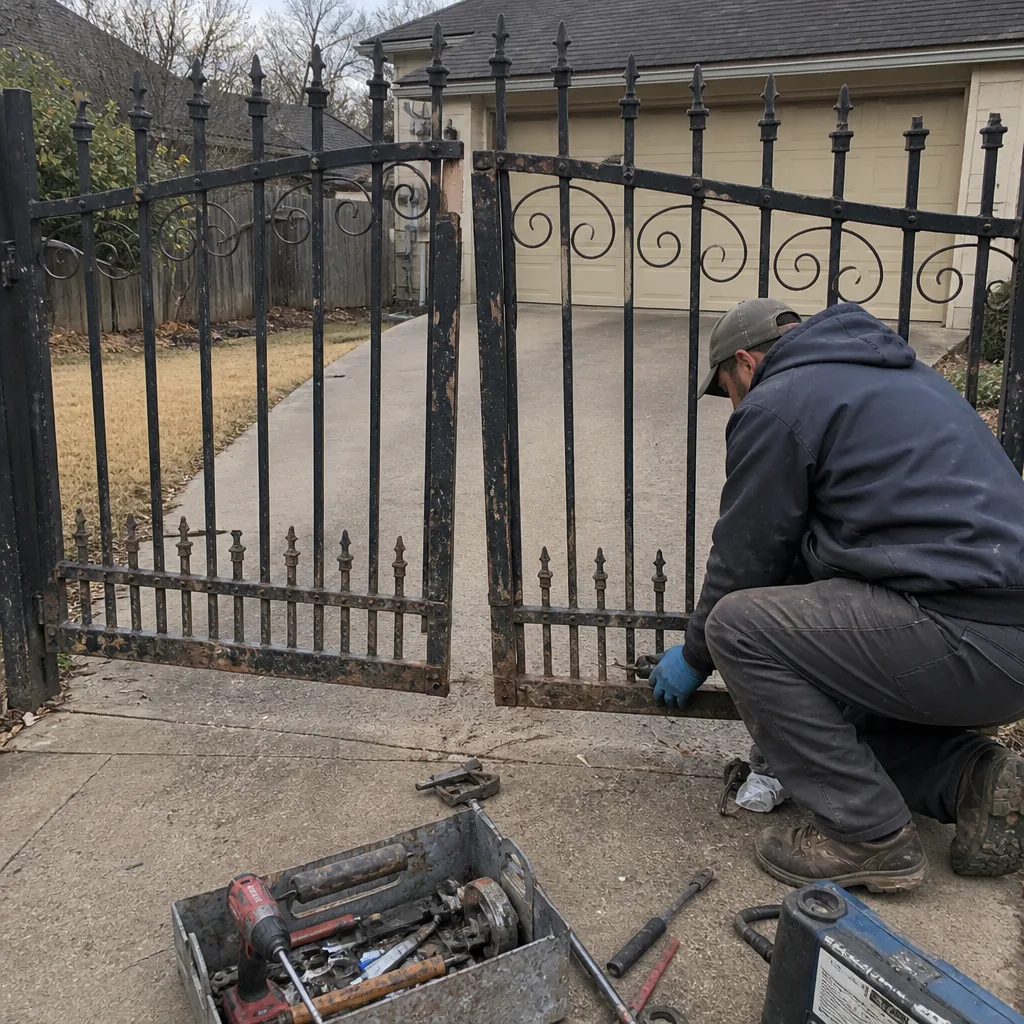
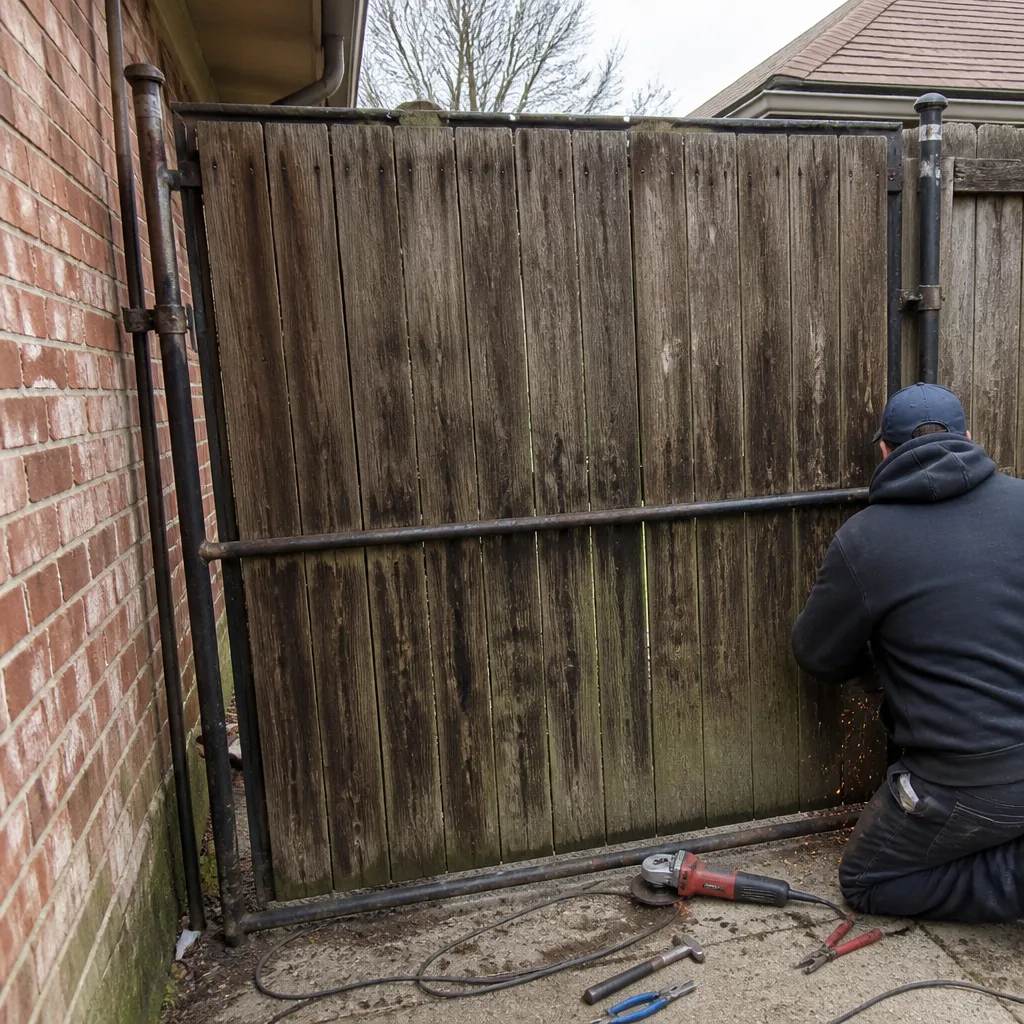 Before
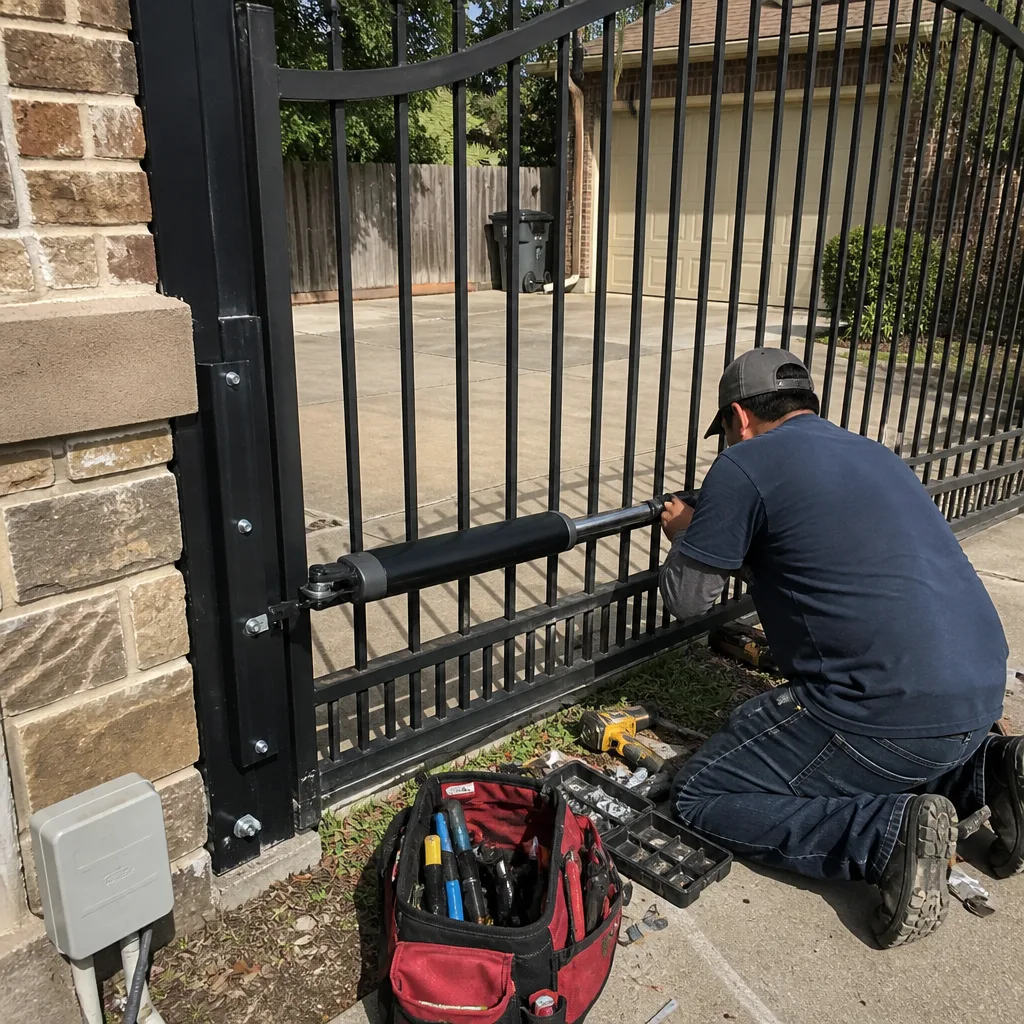
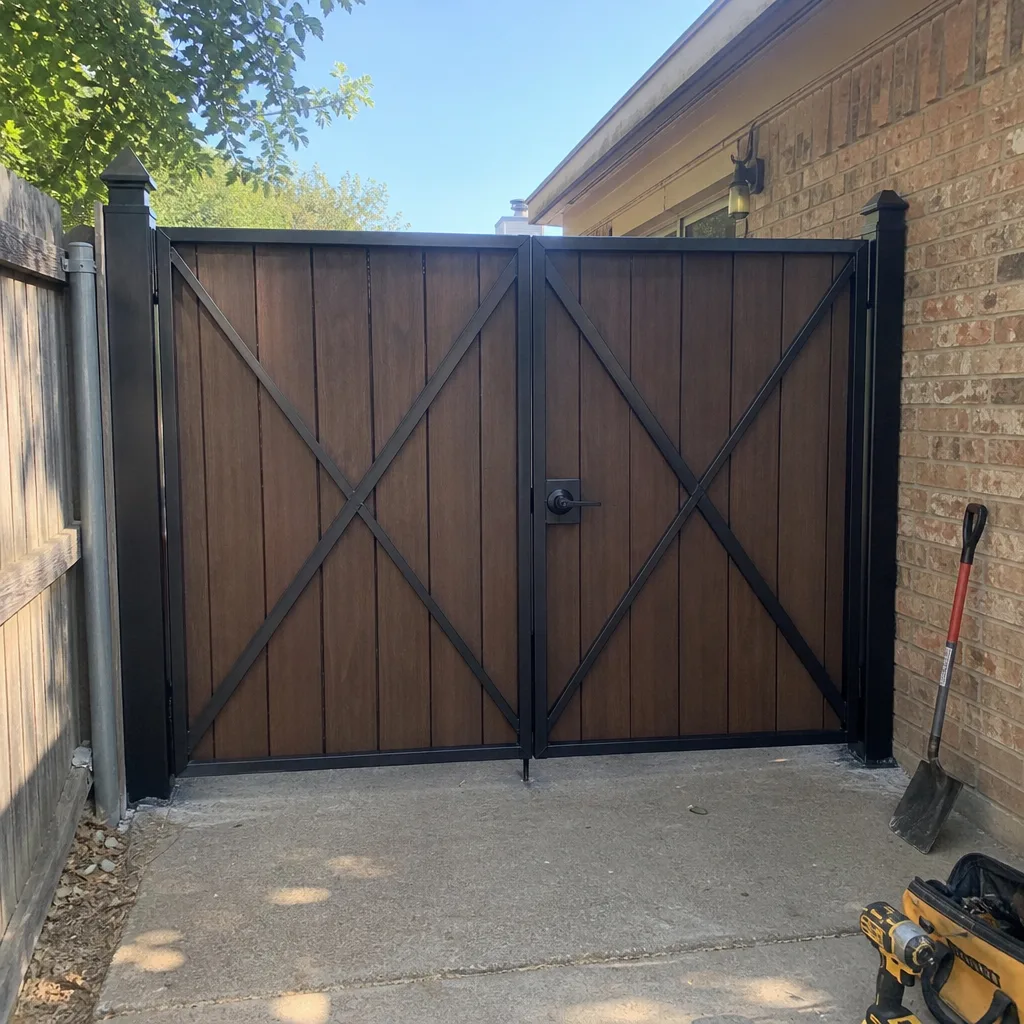 After
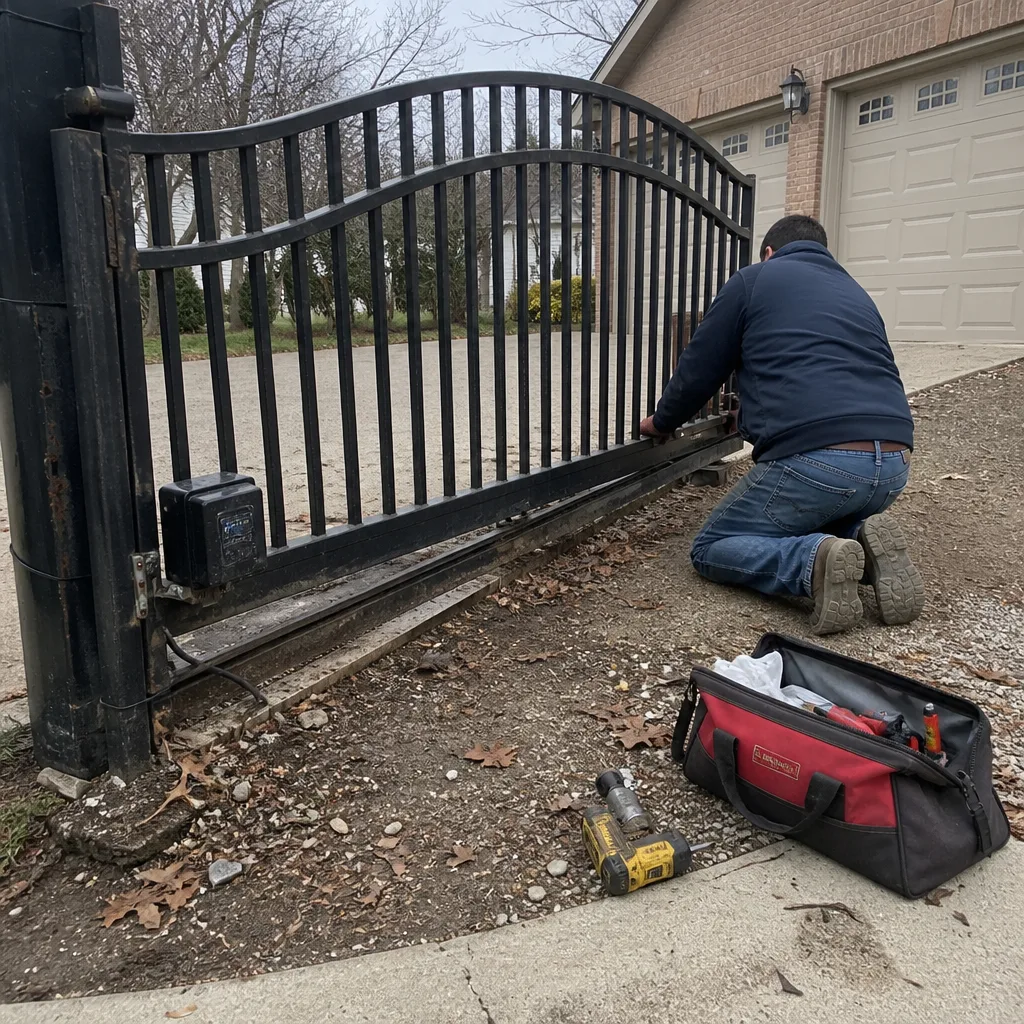 Before
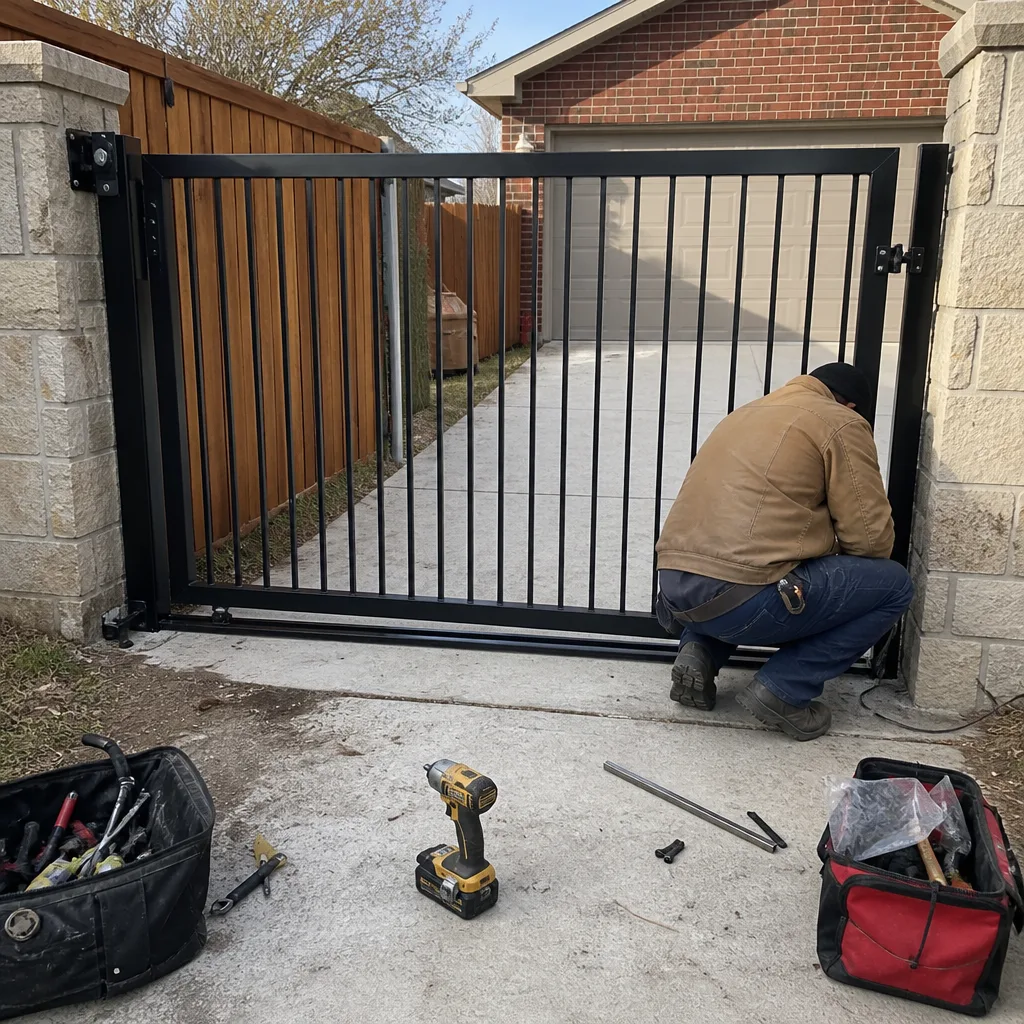 After
 Before
 After