
Last updated October 31, 2026
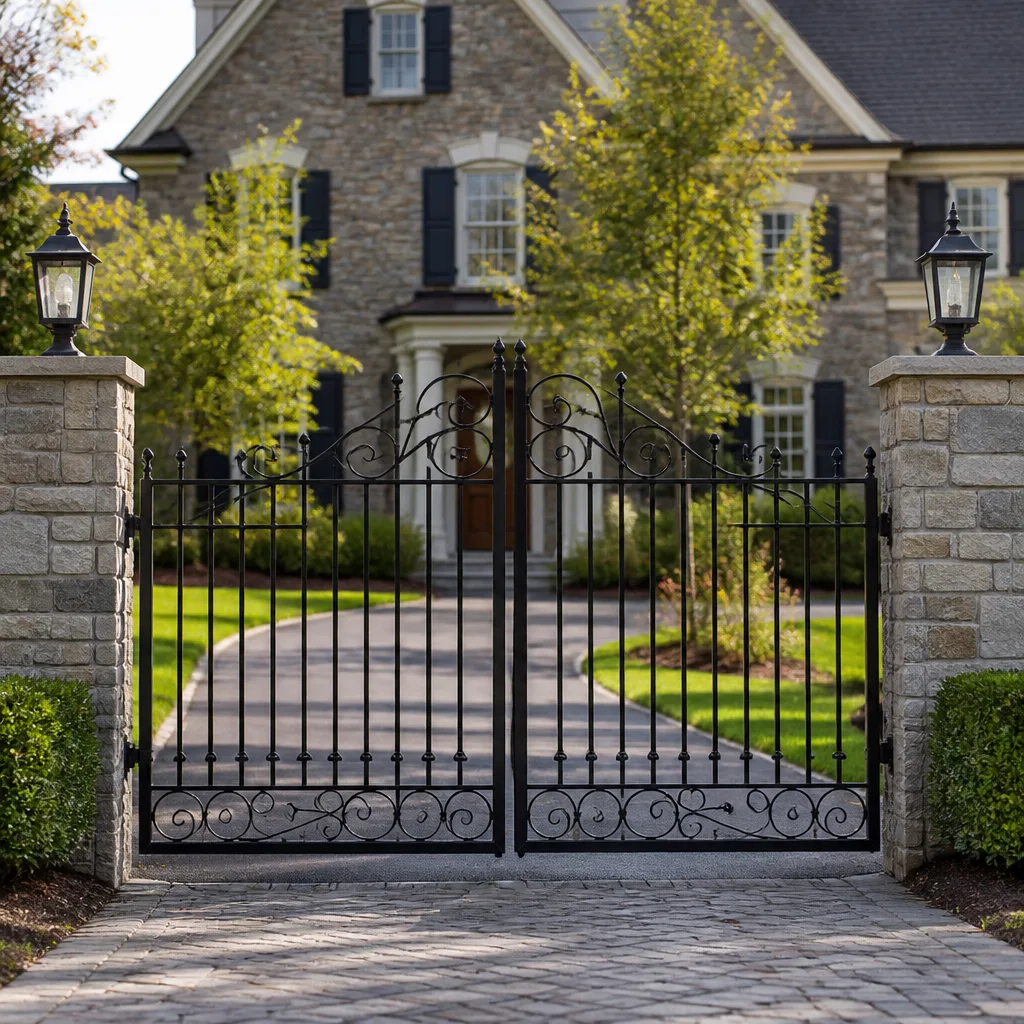 Wrought iron
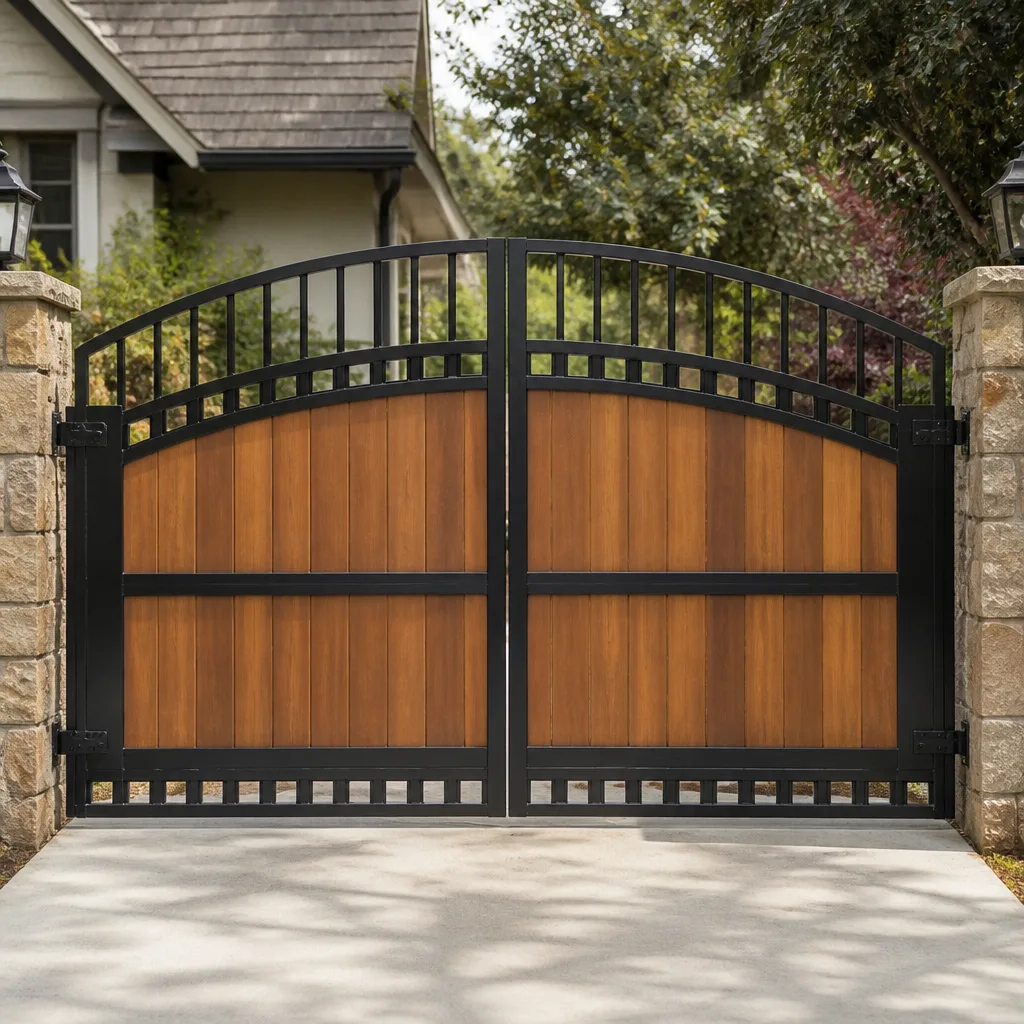 Wood & steel frame
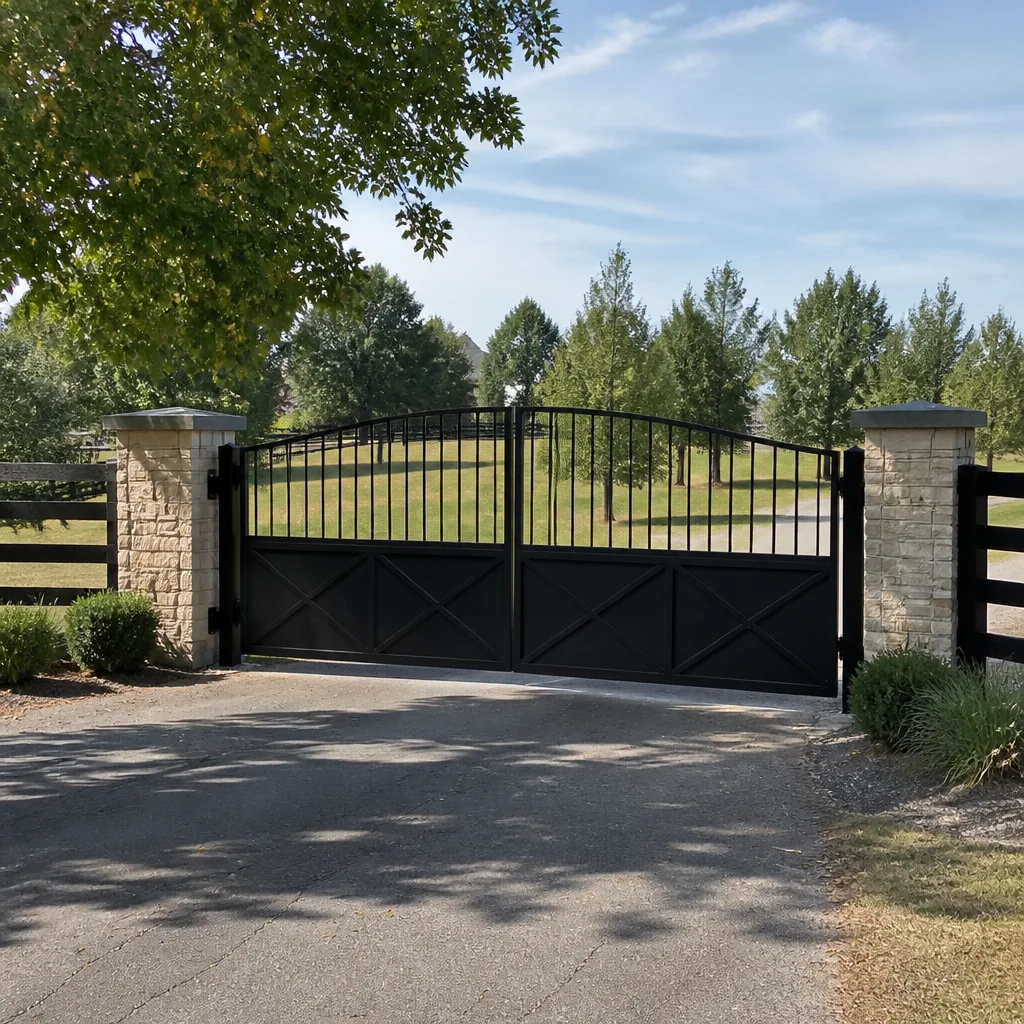 Farm & ranch
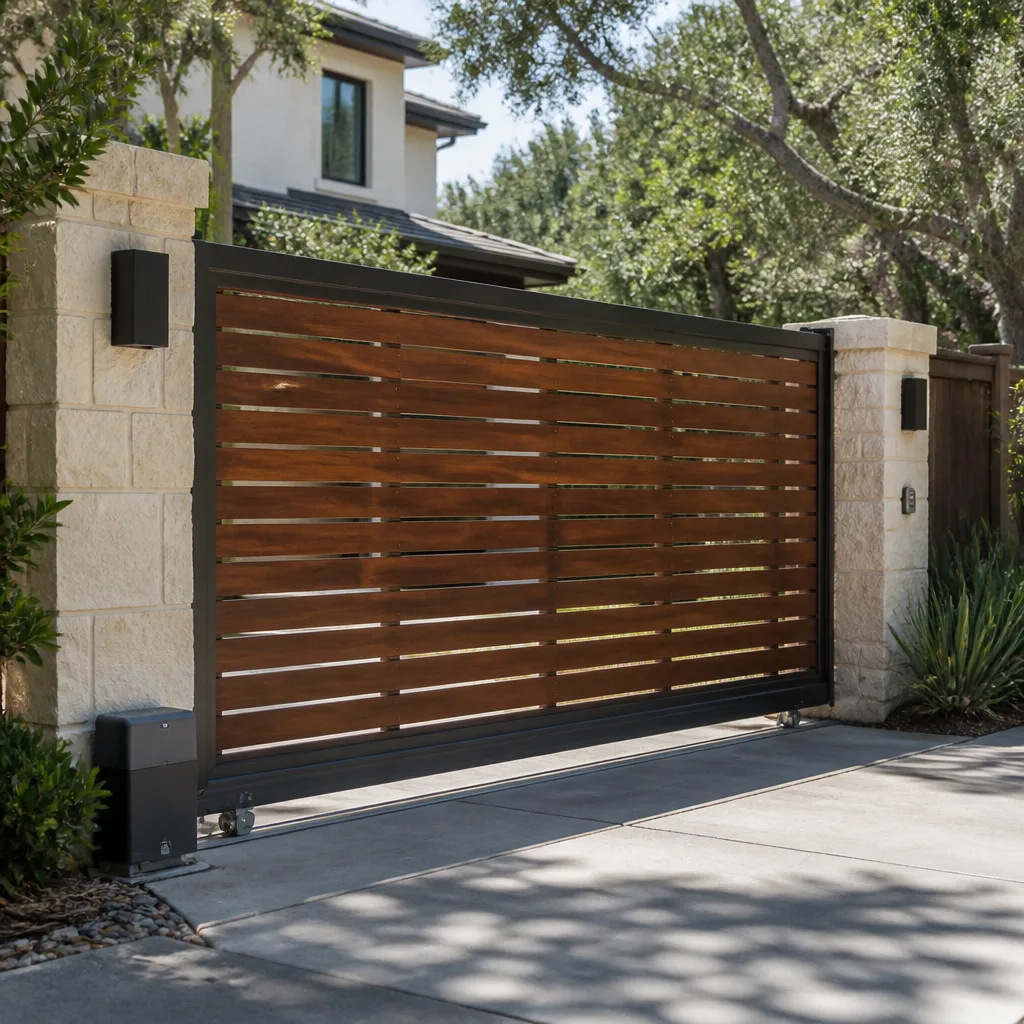 Sliding driveway gates
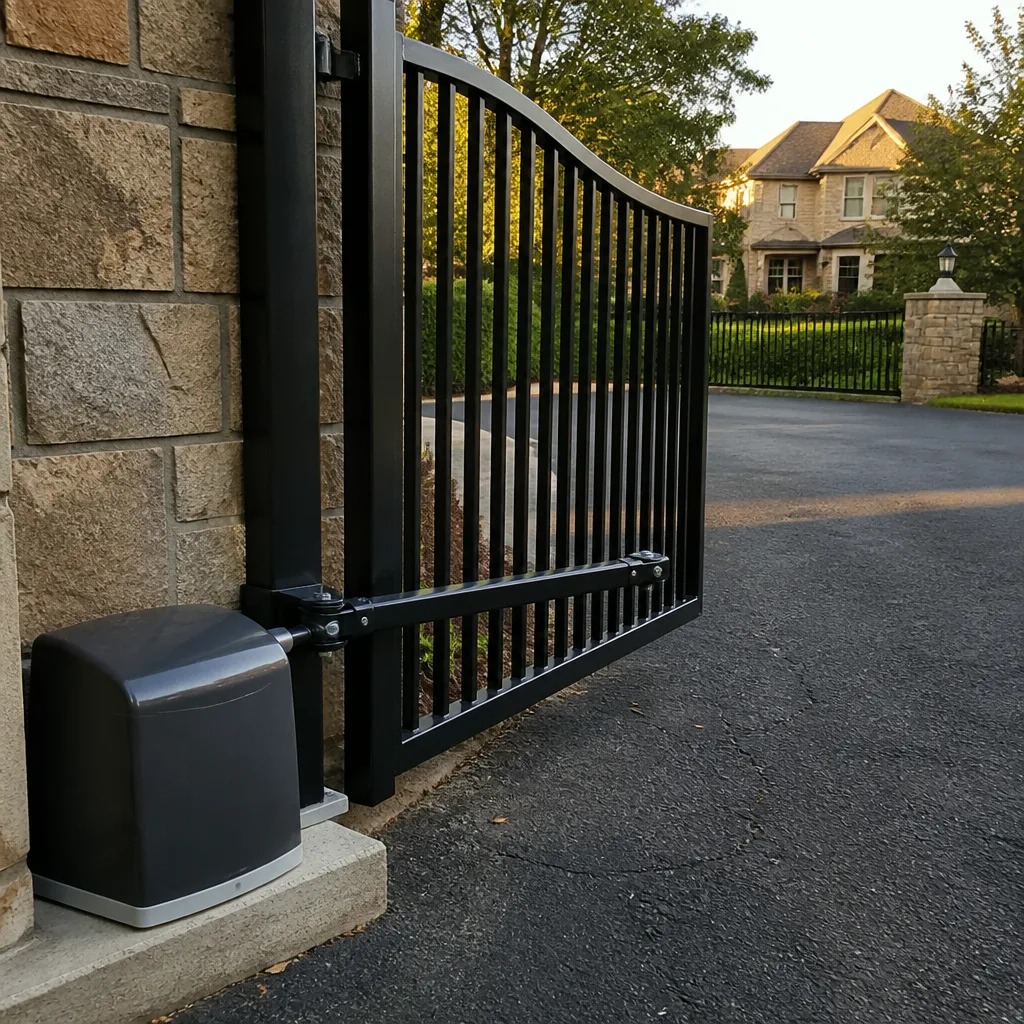 LiftMaster operators
Free on-site gate assessment - hinges, posts, and your LiftMaster or Nice gate operator checked before anything is quoted
The assessment is free and the quote is the invoice.
Get your free estimateChoosing the Right Gate Repair Brand: A Buyer’s Guide for Rowlett
The gate operator brand that’s easiest to buy in Rowlett is not necessarily the easiest to get parts for two years later – and that gap between purchase convenience and long-term serviceability is where most brand regret comes from. Owners across the Dallas-Fort Worth metroplex learn this the hard way when a control board fails in July, the motor burns out in August, and suddenly they’re waiting three weeks on a part that nobody stocks locally. Our Gate Repair services exist to close that gap. We’ll walk through the brands that hold up in Rowlett’s climate, what replacement parts actually cost when things go wrong, and how to match an operator to your gate’s real weight and usage cycle instead of whatever came up first in a search.
Quick Answer
The right gate repair brand for a Rowlett property depends on three factors: parts availability in the North Texas market, how the operator handles sustained heat and sun exposure, and whether the brand’s motor class matches your gate’s weight and daily cycles. For residential swing gates in Rowlett, LiftMaster and Linear tend to offer the strongest combination of local parts access and proven heat tolerance, while FAAC remains a solid choice for heavier ornamental iron gates. The most expensive mistake is pairing a quality brand with an undersized operator for your specific gate.
Styles & brands we work with
Table of Contents
- Brand-by-Brand Comparison for Rowlett Homes
- Gate Weight and Cycle Frequency: Why Undersized Operators Fail
- The Solar Question: What Actually Works in North Texas
- Brand Discontinuation Risk and Parts Ecosystem Stability
- What “Compatible With My Existing System” Actually Means
- What Replacement Parts Cost in Rowlett
- How to Choose: A Step-by-Step Decision Path
- Common Mistakes to Avoid
- When to Call a Professional
- Frequently Asked Questions
Brand-by-Brand Comparison for Rowlett Homes
We work on the brand you already have. That’s the starting point for any honest conversation about gate operators, because Rowlett homes run everything from builder-grade Mighty Mule units to commercial-spec FAAC systems on estate properties near the lake. The question is never “which brand is best” in the abstract. It’s “which brand is best for your gate configuration, your usage pattern, and your tolerance for downtime when something breaks.” Here’s how the five residential brands we see most often in Rowlett actually perform.
LiftMaster
LiftMaster dominates the Rowlett residential market for a reason. Parts are the easiest to source in North Texas because of the brand’s massive installer network, and the CSW and LA500 series handle heat reasonably well when properly ventilated. We see fewer failed control boards on LiftMaster than on most competitors, though the plastic housing on older models does get brittle after five or six years of direct Texas sun. Repair costs run moderate because replacement boards and limit switches are widely stocked. If you want the lowest-friction ownership experience in Rowlett, this is usually the safest starting point.
Linear
The Linear OSCO line is the quiet workhorse of the group. These operators tend to have simpler electromechanical designs than LiftMaster, which means fewer proprietary components and more opportunities for field repair rather than board replacement. In Rowlett’s climate, Linear’s metal enclosures hold up better than some plastic-housed competitors. Parts access is solid but slightly more limited than LiftMaster for residential models, and we occasionally wait longer on specialty limit switches. For mid-weight swing gates on larger lots, Linear is a defensible choice, especially if you value simplicity over smart-home integration.
FAAC
FAAC earns its reputation on heavy gates. If your Rowlett property has an ornamental iron driveway gate weighing 800 pounds or more, FAAC hydraulic and electromechanical operators are built for exactly that duty cycle. The trade-off is parts cost and repair labor time. FAAC components are premium-priced, and while Houston and Dallas distributors carry the common boards, less-common seals and hydraulic components can take a week to arrive. For homes near Lake Ray Hubbard with custom ironwork, FAAC is frequently the right call. For a standard 300-pound suburban gate, you’re paying for capacity you’ll never use.
Elite/GTO
Honest assessment: the older GTO/Elite product line, especially the Mighty Mule units, was built to hit a price point, and that shows in the failure patterns. Control boards are sensitive to power surges and heat, both of which Rowlett summers deliver in abundance. Repair economics are tricky: labor to diagnose and replace a GTO board often approaches the cost of the unit itself. Newer Elite swing openers are better, but local parts availability remains inconsistent. We still service a significant number of these because so many were sold, but if you’re replacing out of a failed GTO, it’s worth considering other brands rather than re-upping on the same platform.
US Automatic
US Automatic is the sleeper pick. Made in Texas, which matters more than most people think. The company is based in Lewisville, and their support infrastructure is genuinely responsive to North Texas installers. Parts for their Patriot and Sentinel series are available quickly in Rowlett, often same-week without freight delays. The operators are utilitarian and solar-friendly, which makes them a strong candidate for rural or lakeside properties where running line voltage to the gate would be expensive. We’re seeing more of these installed in eastern Rowlett and the unincorporated areas heading toward Rockwall.
Gate Weight and Cycle Frequency: Why Undersized Operators Fail
The single most common cause of premature gate operator failure in Rowlett has nothing to do with brand quality. It’s an operator that was undersized for the gate at installation, or a gate that got heavier over time without the motor being re-evaluated. Here’s the mechanical reality: an operator rated for 300 pounds pulling a 450-pound gate works twice as hard on every cycle, generates more heat in the motor windings, and burns out control components years ahead of schedule. Rowlett’s summer heat accelerates this process because the operator is already starting from a higher baseline temperature before it does any work at all.
Step-by-Step: Matching Operator Class to Your Gate
- Determine actual gate weight. Don’t guess. A standard 16-foot aluminum driveway gate weighs 200-350 pounds. The same size in ornamental iron can run 500-900 pounds. Heavier steel gates with wood infill can exceed 1,000 pounds. Weighing estimates from the gate fabricator are the most reliable source.
- Count real daily cycles. A gate that opens twice a day for the homeowner’s car is a vastly different workload than a gate serving a four-house shared driveway on a Rowlett cul-de-sac. Count every open-close as one cycle. More than 20 cycles per day is commercial-grade usage.
- Apply the duty cycle rating. Every operator has a documented duty cycle, usually expressed as “cycles per hour” or “continuous duty” for hydraulic units. If you’re exceeding even half the rated duty cycle during peak usage times, move up a class.
- Factor in wind load. Gates in Rowlett’s more open areas, especially east of Dalrock Road, catch significant wind across the flat terrain. A solid panel gate acts like a sail. Add roughly 20% effective weight to a solid gate if the operator is exposed to sustained crosswinds.
- Build in a 25% buffer. Whatever weight you land on after steps 1-4, choose an operator rated for at least 25% more. This is what separates a system that lasts 15 years from one that fails in four.
In our experience, this undersizing problem is pervasive in Rowlett because builders often install the least expensive operator that will technically move the gate on day one. By year three, when hinges have sagged slightly and the gate no longer swings as freely, that marginal operator is now genuinely overloaded. A gate repair in Rowlett call at that point typically reveals a motor cooked by treating a 600-pound gate and a 400-pound operator as an acceptable pairing.
The Solar Question: What Actually Works in North Texas
Rowlett gets approximately 232 sunny days per year, which makes solar operators conceptually appealing, especially for properties where running conduit from the house to the gate would mean trenching under a driveway or across a long side yard. But solar gate operators in North Texas have a specific failure mode related to heat, not sun. The panels themselves do fine. The problem is battery systems cooking inside metal enclosures that reach 140 degrees Fahrenheit on August afternoons. Here’s what we know from field performance.
US Automatic has the most proven solar program of any brand we service. Their solar packages are engineered as a system, with appropriately sized panels, charge controllers, and battery enclosures that account for high ambient temperatures. LiftMaster solar kits work, but only correctly on lighter gates under 300 pounds. The power draw of heavier mechanical operators exceeds what a practical panel array can replenish during Rowlett’s comparatively short winter days. FAAC solar options exist for heavy gates but the cost curve is steep. Linear’s solar solutions are adequate for light duty but their charge controller is more sensitive to heat, and we’ve replaced more Linear solar controllers than any other single component.
Here’s the number to remember: a residential solar operator’s usable capacity under North Texas summer conditions is realistically about 60-70% of its brochure rating. If the manufacturer says a solar kit supports 20 cycles per day on a 400-pound gate, assume 12-14 cycles. If that still meets your usage, solar is viable. If not, pay for the electrical trench once, or choose a lighter gate design. A dedicated gate specialist who services both manual and electric configurations can run the actual numbers for your lot, gate, and access pattern before you commit.
Brand Discontinuation Risk and Parts Ecosystem Stability
When an established operator brand discontinues a product line or exits the residential market entirely, the person left holding the hardware is the property owner. We saw this play out in North Texas with the older Ramset and All-O-Matic residential lines. These were competent operators in their day, but as the manufacturers shifted focus or consolidated, parts supply dried up over a period of two to four years. In some cases, a single proprietary gear assembly went from three-day availability to six-week special order to simply unavailable. When that final stock runs out, the only option is a complete operator replacement.
- Track product-line introduction dates. If a specific operator model has been on the market for 8+ years without a revision, it’s either a mature, stable design or a candidate for phase-out. Check whether new accessories are still being released for it.
- Look at installer traffic. If you can’t find recent forum posts, YouTube videos, or distributor listings for a specific model, the ecosystem is contracting. Active installers generate content even without knowing it.
- Ask about parts lead times before buying. Call a Rowlett gate specialist and ask how long it takes to source a replacement control board for the specific model you’re considering. If the answer is measured in weeks rather than days, that’s your future downtime.
- Prefer brands with a broad installer base. LiftMaster, Linear, and FAAC have hundreds of active dealers in Texas. Viking and BFT are narrower in the Rowlett market but still viable. The smaller the dealer network, the more exposed you are to a single distributor’s inventory decisions.
- Consider buying a spare board. For critical access gates where downtime isn’t acceptable, some owners purchase and store a spare control board. The cost is $150-$400 for most residential units, which is cheap insurance against a board that becomes unavailable.
Viking operators are a good example of a brand with strong engineering but a narrower North Texas support footprint. The products are legitimate, especially for heavier slide gates, but when a Viking board fails, the part often ships from out of state. Ghost Controls represents the opposite profile: newer brand, growing installer base, but the long-term parts commitment is still being proven. Neither is a wrong choice categorically; the risk profile just differs depending on how much downtime you can tolerate.
What “Compatible With My Existing System” Actually Means
When you replace just the operator on an existing Rowlett gate, compatibility is more than matching voltage. The operator needs to work with your existing safety edges, photo eyes, keypad, intercom, and the physical mounting locations already present on the gate and post. Some of these are brand-agnostic and fine to mix. Others are proprietary and create hidden costs.
Safety edges and photoelectric sensors are generally universal across brands because they communicate through simple dry-contact relay signals. Your existing LiftMaster photo eyes will function correctly with a replacement Linear operator in most cases. Keypads and intercom systems are more variable. Older telephone-entry systems with proprietary wiring harnesses may need a new control interface card, adding $80-$200 to the job. The physical mounting bracket on the gate post is another common sticking point: a new operator from a different brand sometimes needs a new steel mounting plate welded or bolted on. None of these are deal-breakers, but they add labor cost that’s easy to miss when comparing bids.
There’s also the question of control boards and BFT compatibility. BFT operators use their own encoder and limit system, which means mixing a BFT board with a non-BFT motor generally doesn’t work and usually isn’t worth attempting. The same holds for some newer LiftMaster models with integrated MyQ boards. Ghost Controls keeps their smartphone control closed to non-Ghost operators. When we assess a replacement for a electric gate repair in Rowlett, we evaluate the whole signal path from keypad to motor, not just the motor itself.
When It’s Worth Standardizing on One Brand
If your property has multiple gates (front driveway gate plus rear service gate, or a community entrance with separated pedestrian gate), standardizing on a single operator brand reduces the number of different parts you need to understand and stock. One spare control board potentially serves as a backup for two or three gates. It also simplifies troubleshooting because we’re not switching between diagnostic protocols. For most single-gate Rowlett residences, this matters less. For HOA communities with three-plus automated gates, standardizing on LiftMaster or Linear systems is operationally smarter.
What Replacement Parts Cost in Rowlett
Repair cost history varies significantly by brand, and the difference shows up most clearly on control boards, which are the most commonly failed component in Rowlett’s climate. Here’s what current replacement part costs typically look like across the brands we service.
- LiftMaster control board: $120-$280 for residential swing/slide models. Widely stocked in DFW, typically same-day or next-day availability.
- Linear control board: $100-$250. Readily available but less ubiquitous than LiftMaster in local distributor stock.
- FAAC control board: $200-$450. Premium components; common boards ship from Houston or DFW distributors, specialty items take longer.
- US Automatic control board: $90-$200. Short lead times because the manufacturer is in Lewisville, Texas.
- Elite/GTO (Mighty Mule) board: $60-$150. Cheap parts, but frequent enough failures that total cost of ownership over 10 years often exceeds the premium brands.
- Viking control board: $180-$380. Legitimate quality, but parts typically ship from out-of-state distributors.
Labor is the variable you control by choosing a specialist. A technician who services nine gate brands and recognizes the failure pattern on sight will diagnose faster and replace correctly the first time. That’s the difference between a $300 board replacement and a $700 misdiagnosis that involves replacing parts that weren’t actually bad. For a gate that has failed outright, a gate installation in Rowlett specialist can give you the repair-versus-replace economics in plain numbers, based on what the parts actually cost today.
How to Choose: A Step-by-Step Decision Path
Here’s the sequence we walk through with Rowlett homeowners when they’re standing at the decision point: repair the old operator, replace with a known brand, or upgrade the entire gate entry.
- Assess current hardware. Is the existing gate itself in good structural shape? If the gate is rusted, sagging, or dragging, no operator brand will fix that. Address the gate mechanics first.
- Identify the failure point. A failed control board on a 3-year-old gate usually justifies a board replacement. A failed motor on a 12-year-old gate warrants a full operator replacement. Don’t chase repairs on an obsolete platform.
- Determine gate weight and cycles. Use the matching process from earlier in this guide. If the existing operator was undersized, correcting that error is worth more than brand loyalty.
- Evaluate parts availability. For the brands you’re considering, ask a Rowlett gate repair company how quickly they can get a control board and a motor for that specific model. This is the number that predicts your future downtime.
- Consider power source. If the gate location doesn’t have line voltage, solar capability becomes a primary filter. Only US Automatic and Light-duty LiftMaster are realistic solar options in North Texas.
- Decide on ecosystem. Single gate with basic keypad: brand choice is low-stakes. Multi-gate property or smart-home integration: standardize for simpler maintenance and spare parts.
- Get two quotes. One from a multi-trade company, one from a dedicated gate specialist. Compare not just the price but the specificity of the diagnosis. The specialist’s quote will identify the actual failure mode rather than proposing a generic replacement.
Common Mistakes to Avoid
- Buying the heaviest-duty operator you can afford without checking gate weight. An operator rated for 1,000 pounds is not inherently more reliable on a 300-pound gate. It’s just more expensive, and in some cases, the stronger motor over-torques lighter gate hardware.
- Ignoring the duty cycle rating. A Rowlett shared driveway gate that cycles 30 times a day will destroy a residential operator rated for 10 cycles per hour, regardless of brand quality.
- Choosing an obscure brand for a niche feature. The low-price operator with a specific smart-home integration you like is a liability if the control board is special-order only when it fails.
- Skimping on the phone-entry or safety-edge integration. Replacing an operator but reusing a 15-year-old intercom that doesn’t communicate cleanly with the new board creates phantom failures that no brand upgrade solves.
- Neglecting gate maintenance after installation. Hinges, wheels, and tracks need attention regardless of brand. A binding gate destroys even a properly sized operator over time.
- Waiting until the gate fails to research replacement options. Decision-making under pressure leads to ordering whatever is available fastest, not what’s right for the gate. If your operator is aging, start the evaluation before it dies.
When to Call a Professional
Gate operators mix line voltage, low-voltage control wiring, and mechanical systems under tension. When a gate won’t open, a motor runs but the arm doesn’t move, or a control board shows no power, the safest and most cost-effective move is to get a trained tech on site. Attempting to jumper a control board or manually force an automatic gate creates real injury risk. If you’re not sure whether the problem is the operator, the gate hardware, or the power supply, that uncertainty is itself the answer: call someone who diagnoses gate systems every day. Pinehurst Gate Repair offers free estimates in Rowlett – call (877) 265-5743 and we’ll tell you what’s actually wrong before any work is quoted or scheduled.
Frequently Asked Questions
LiftMaster and Linear have the strongest track record for residential reliability in Rowlett’s climate, primarily because their parts are locally available and their control boards tolerate heat reasonably well. FAAC is equally reliable but only cost-justified on heavier gates. Choose based on gate weight and parts access, not brand reputation alone. Call (877) 265-5743 for a recommendation specific to your gate and usage pattern.
A residential swing gate operator replacement in Rowlett typically runs $1,100 to $3,400 installed, depending on brand, gate weight, and whether control accessories like keypads and photo eyes are also being replaced. The operator itself is $600-$1,800; labor and integration work account for the rest. Get a written quote that includes the specific operator model before work begins.
In most cases, a failed operator can be repaired rather than replaced, provided the motor itself hasn’t burned out and the model isn’t obsolete. Control boards, limit switches, and capacitors are routinely replaceable parts. If you share the brand and model with us, we can tell you quickly whether the specific failure you’re experiencing is economically repairable.
Solar operators do work in Rowlett, but the heat degrades battery performance and reduces practical capacity by 30-40% compared to manufacturer ratings. US Automatic builds the most heat-resilient solar package we service. For heavier gates, line voltage is almost always the more reliable long-term choice. The viability of solar depends on your gate weight and daily cycle count, which are the two numbers that matter most.
Both brands have largely exited or contracted their residential product lines, and parts availability for older installations has become inconsistent, with certain components now effectively unavailable. Property owners with these operators increasingly face full replacement rather than repair. The lesson for buyers is to research whether a brand’s parts ecosystem is growing or shrinking before committing.
Most safety edges and photo eyes are brand-agnostic and will work with a replacement operator from a different brand. Keypads and intercoms are more likely to be proprietary, especially older telephone-entry systems. A site assessment tells you definitively which existing components integrate cleanly with the new operator and which require replacement hardware. For an assessment, call (877) 265-5743 to schedule.
The Bottom Line
Brand matters, but context matters more. The right gate operator for a Rowlett property is the one that matches the gate’s actual weight, handles the climate’s heat load, and has parts you can actually get when it fails. LiftMaster and Linear dominate the local residential landscape for good reason. FAAC earns its premium on heavy gates. US Automatic is the solar and Texas-logistics play. For more guidance on gate repair in Rowlett, avoid the trap of buying on features alone or replacing with whatever’s on sale. Match the machine to the real job, choose a brand with a healthy parts ecosystem, and you’ll get the service life the manufacturer’s brochure assumes you’re starting with.
Written by the team at Pinehurst Gate Repair, serving Rowlett since 2013. Explore more guides & resources on our blog.
See the difference
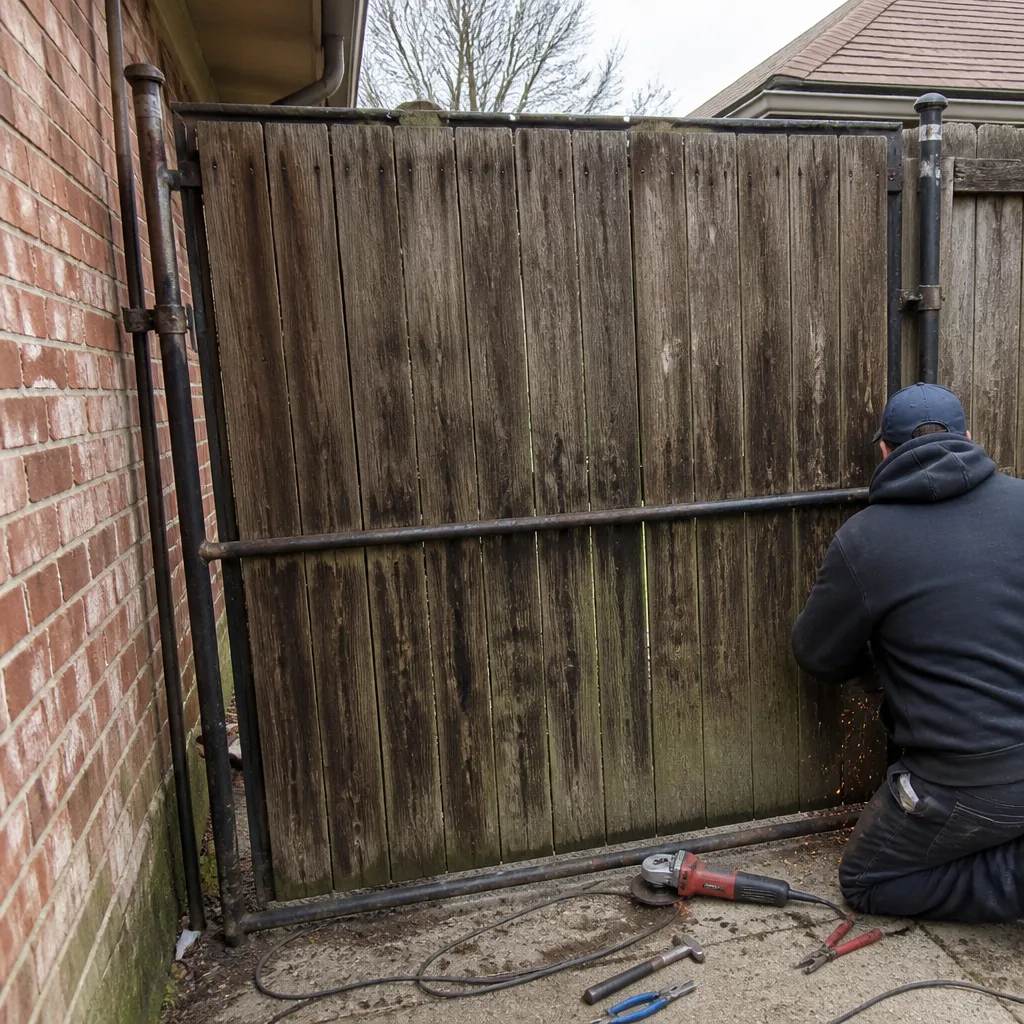 Before
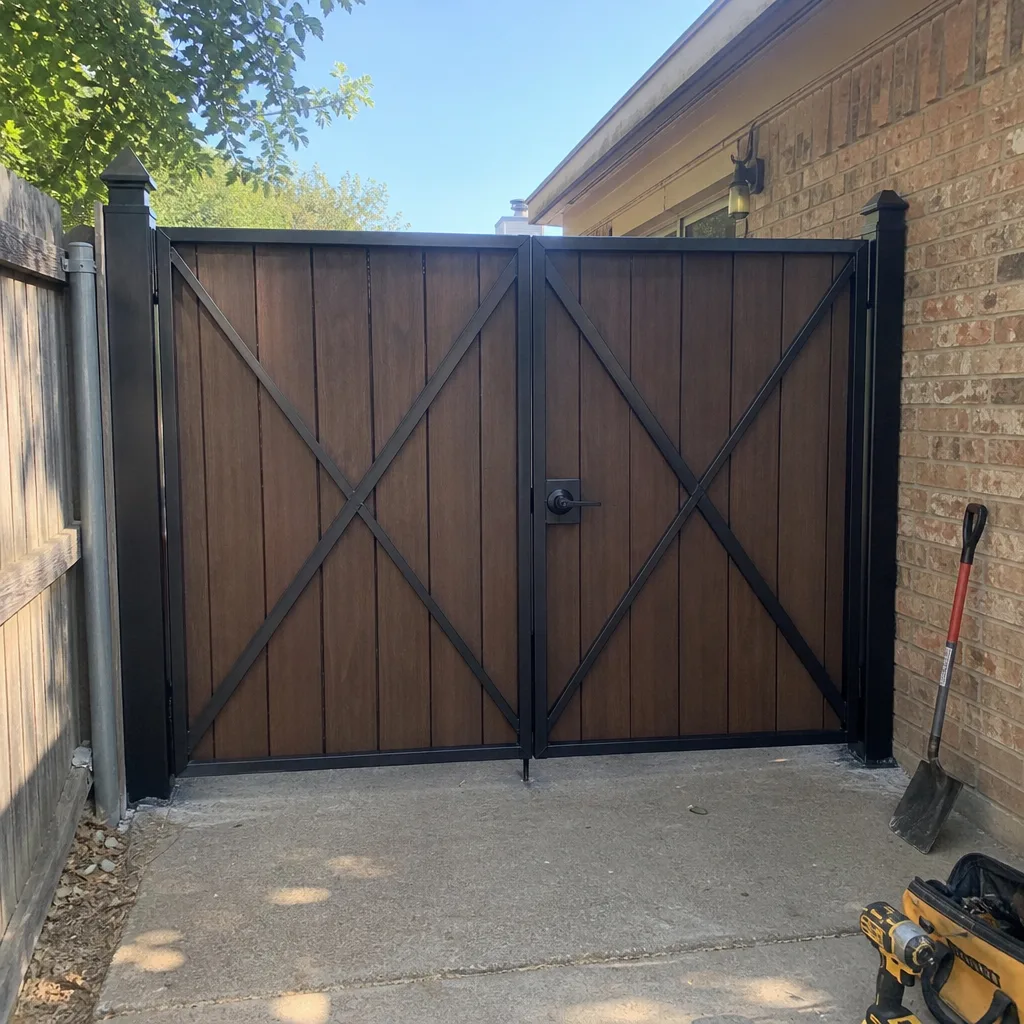 After
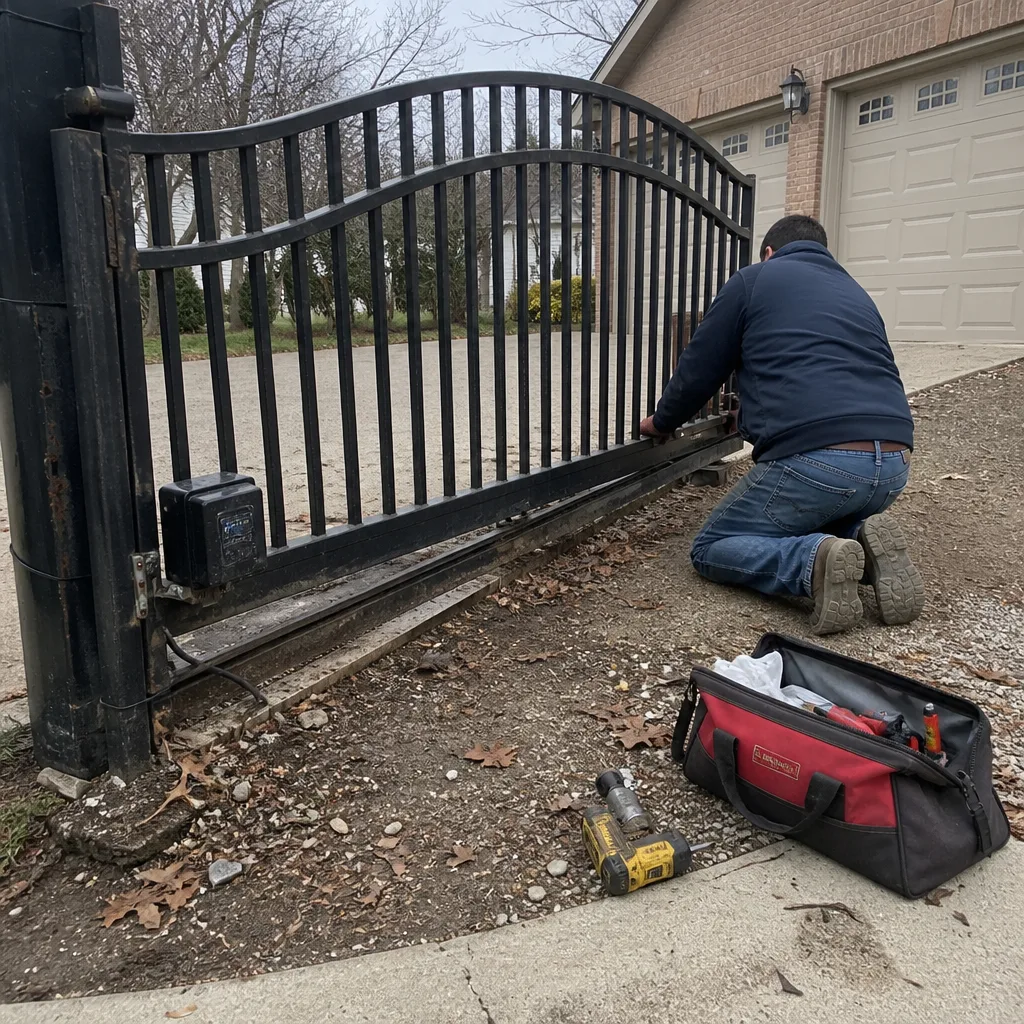 Before
 After
 Before
 After