
Last updated October 31, 2026
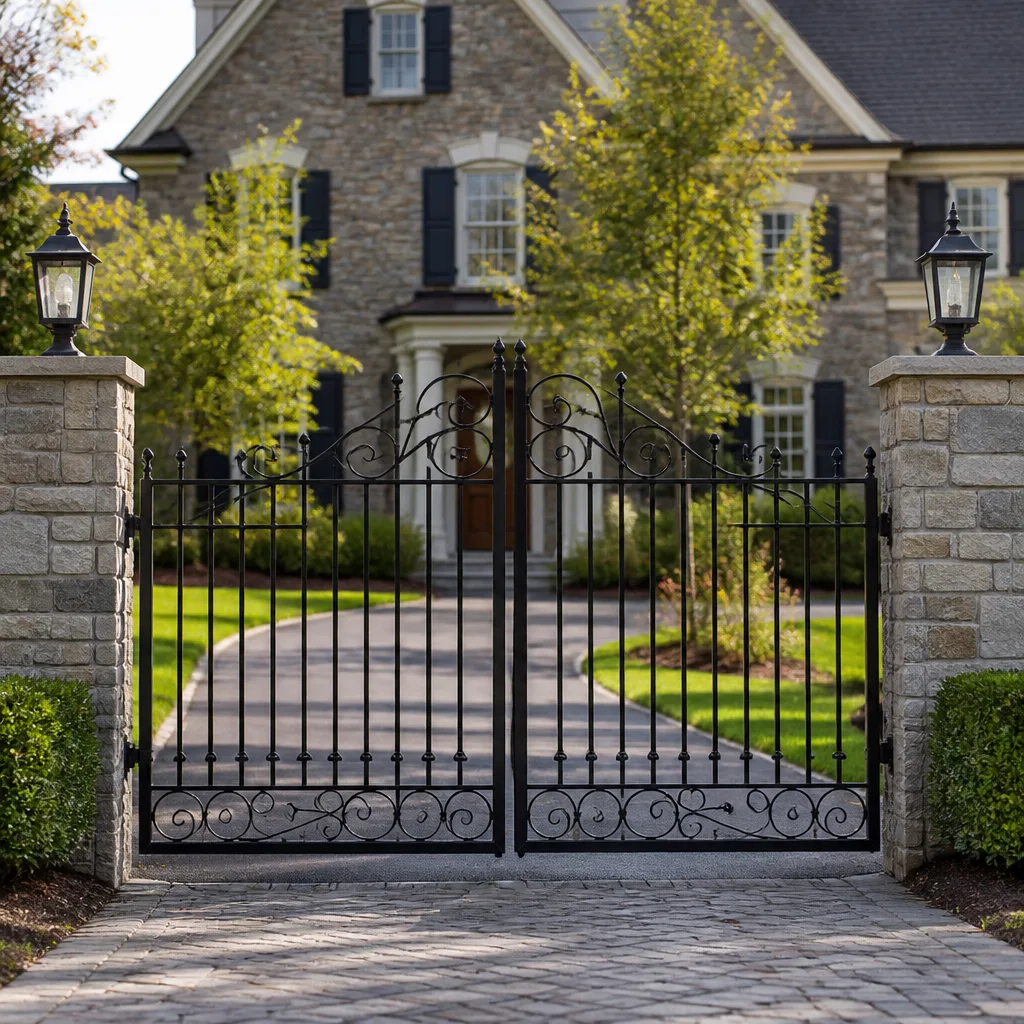 Wrought iron
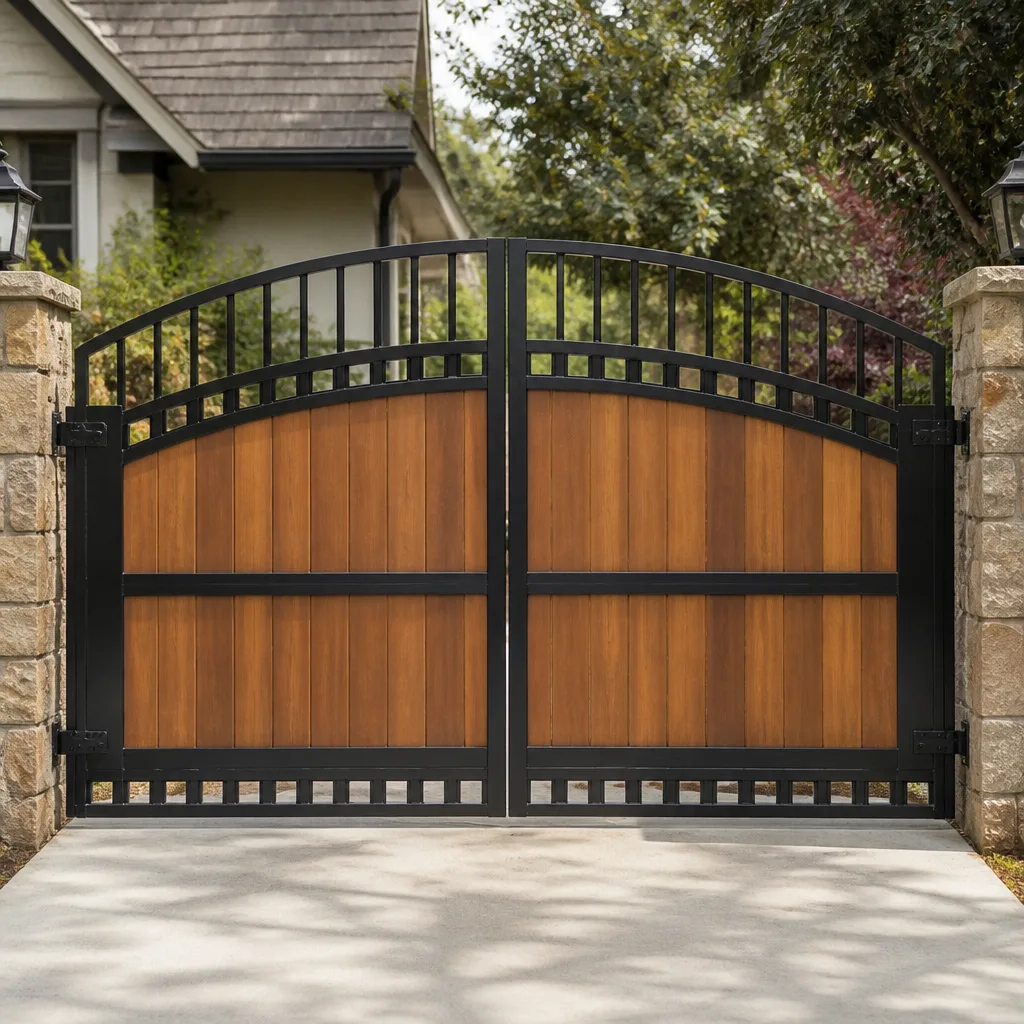 Wood & steel frame
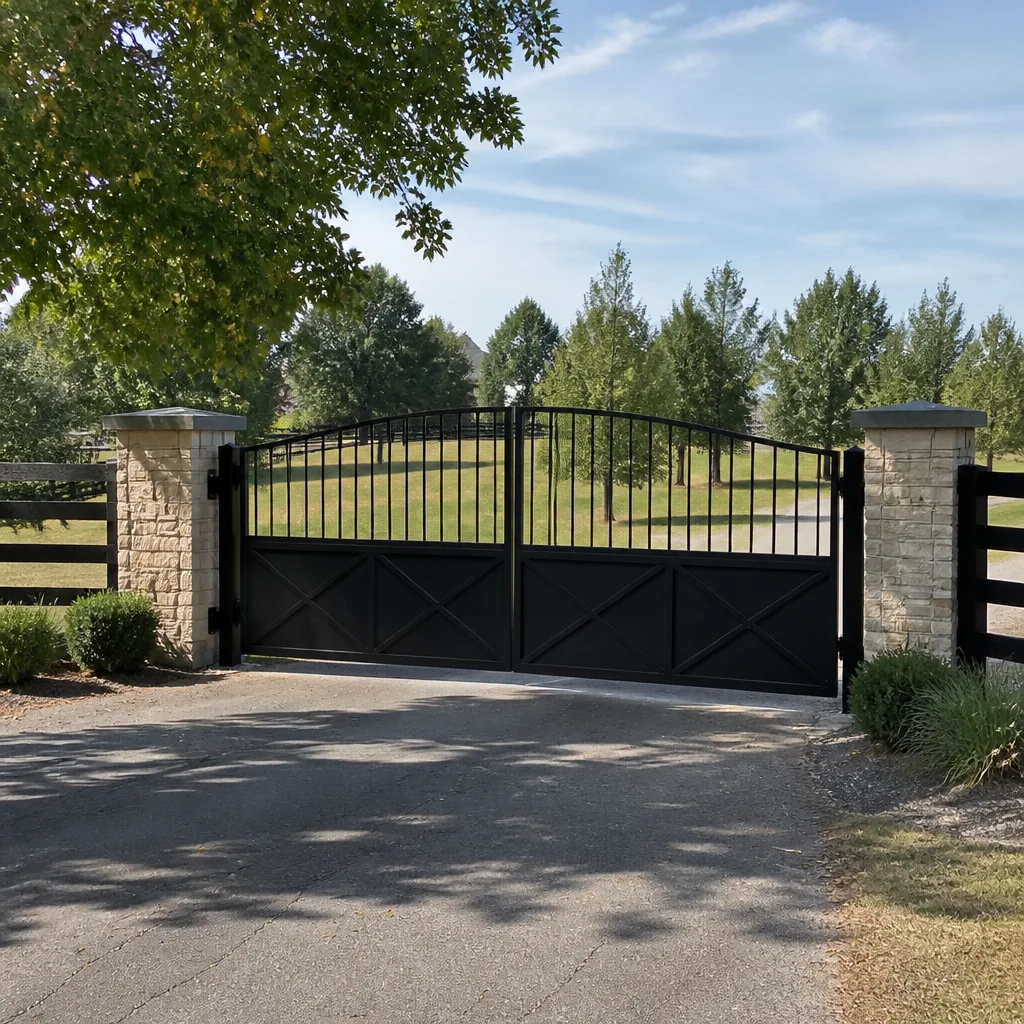 Farm & ranch
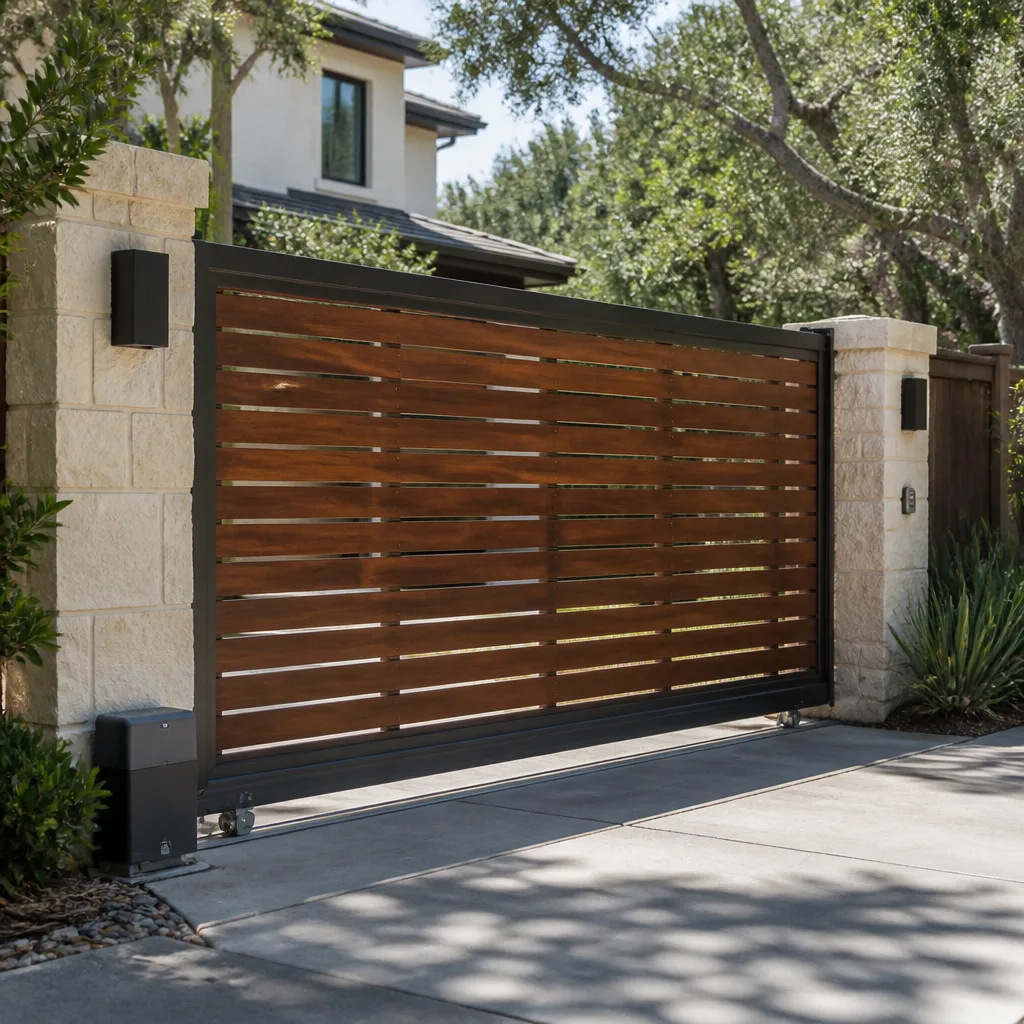 Sliding driveway gates
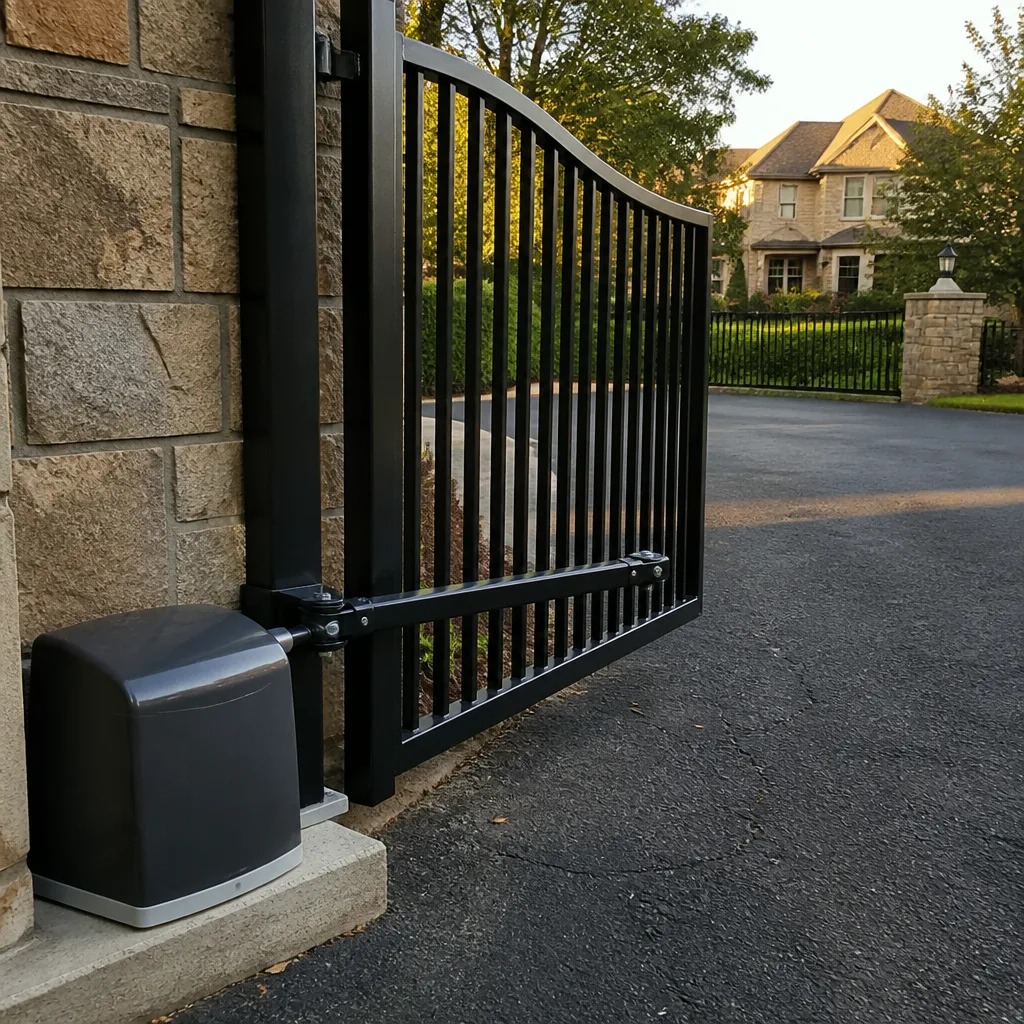 LiftMaster operators
Free on-site gate assessment - hinges, posts, and your LiftMaster or Nice gate operator checked before anything is quoted
The assessment is free and the quote is the invoice.
Get your free estimateGate Repair Permits, Codes & Inspections in TX: What You Need to Know
Most Texas homeowners never think about gate permits until someone asks a question they can’t answer. The inspector at the door, the HOA manager sending a violation notice, or the buyer’s agent during a home sale. Here’s the reality: a basic hinge replacement on a manual driveway gate almost never requires a permit in Rowlett, but adding an automatic operator to that same gate can. The line between “repair” and “installation” is not where most people assume it is, and it’s drawn by electrical code, not by the size of the project. This guide walks through the permits, codes, and inspection requirements that govern gate work in Texas, with specific attention to how Rowlett enforces them.
Styles & brands we work with
Quick Answer
Most gate repairs in Texas do not require a permit, but installing a new automated gate operator, running new electrical wiring to a gate, or constructing a gate structure that exceeds height and setback limits typically does. In Rowlett, electrical permits are required for new operator installations, and UL 325 compliant safety sensors are mandatory on all automated gates. HOAs can impose additional restrictions beyond city code.
Table of Contents
- Repair vs. Installation: Where Texas Draws the Line
- Electrical Permits for Automated Gate Operators
- Rowlett Code Requirements: Height, Setback, and Setbacks
- UL 325 and Safety Sensors: What the Law Actually Requires
- The HOA Overlay: When Private Rules Beat City Code
- Unpermitted Gate Work and Home Sales: The Liability You Don’t See Coming
- How to Verify Your Contractor Pulled the Right Permits
- Common Mistakes to Avoid
- When to Call a Professional
- Frequently Asked Questions
- The Bottom Line
Repair vs. Installation: Where Texas Draws the Line
The State of Texas does not license gate contractors the way it licenses electricians or plumbers. There is no “gate repair license” issued by the Texas Department of Licensing and Regulation. What exists instead is a patchwork of local code adoption, electrical permitting requirements, and HOA enforcement that varies from one municipality to the next. For a Rowlett homeowner, the practical question is rarely “is this legal” and usually “does this need a permit” which is a different question with a different answer depending on the scope of work.
Here is the working rule of thumb we apply to gate work in Rowlett and across the Dallas metro:
- Repairs that do not require a permit: Replacing hinges, welding a broken weld, replacing gate rollers, adjusting a sagging gate, replacing a lock or latch, installing a new keypad that uses existing wiring, and replacing a failed operator control board where the electrical connection is unchanged.
- Work that typically requires a permit: Installing a new automatic gate operator where none existed before, running a new electrical circuit from the main panel to the gate, adding a subpanel at the gate location, and building a new gate structure that exceeds the city’s height or setback allowances.
- The gray zone: Replacing an existing operator with a comparable unit on the same circuit. Some inspectors treat this as a repair. Others consider any operator swap a “new installation” because the UL 325 safety requirements must be re-verified. Rowlett has historically treated operator replacement as new installation for inspection purposes, which means the permit is required.
The threshold that matters is electrical. If the work touches the electrical supply feeding the gate – even moving a junction box – the National Electrical Code applies, and Rowlett’s building services department wants eyes on it. Manual gate hardware replacement, by contrast, falls under general property maintenance and rarely triggers any review beyond the HOA’s architectural committee.
In our experience working on Viking and Ghost Controls systems in Rowlett, the most common permit surprise happens when a homeowner replaces an old manual gate with an automated one and assumes the operator is the whole project. The operator needs power. The power run needs a permit. The permit needs an inspection. Skipping any one of those steps creates a document gap that follows the property.
Electrical Permits for Automated Gate Operators
An automated gate operator is a hardwired electrical appliance. It pulls 120V from a dedicated circuit, converts it through a transformer or control board, and distributes low-voltage power to sensors, keypads, and the motor itself. In Rowlett, that electrical connection is regulated by the city’s adopted electrical code, and the permit for the work is pulled by the contractor doing the installation. It is not optional, and it is not the homeowner’s responsibility to arrange on their own – though it becomes the homeowner’s problem if it never gets done.
What an electrical permit for gate work covers in Rowlett:
- Circuit verification: The inspector confirms the gate circuit is properly sized, properly grounded, and protected by the correct breaker or GFCI where required.
- Wiring method: Underground conduit from the house to the gate must meet burial depth requirements. Direct-burial cable without conduit is a common shortcut that fails inspection.
- Junction box placement: Any splice between the house and the gate must occur in an accessible, weatherproof enclosure. Buried splices are a code violation and a future failure point.
- Operator grounding: Metal gate frames and operator enclosures must be bonded to the equipment grounding conductor.
- Low-voltage separation: The low-voltage wiring for sensors and keypads must be separated from line-voltage conductors by a listed barrier or conduit divider.
The permit itself costs less than most people expect – often under $100 for a residential gate electrical connection – but the inspection is where the real value lies. A failed inspection costs time and rework. A skipped inspection costs more: any future home sale that reveals unpermitted electrical work becomes a negotiation point against the seller.
For DoorKing and Elite commercial slide operators in particular, we see permit requirements expand because the operators draw more current and often require a separate disconnect switch within sight of the operator. That disconnect is a code requirement, not a suggestion, and it exists so that anyone servicing the gate can kill power without walking back to a main panel that might be 300 feet away.
If you are planning gate work in Rowlett that involves new electrical, call the Rowlett Building Inspection Division before the trench is dug. They will tell you exactly what they need to see, and the conversation takes ten minutes. Learn more about the full scope of electric gate repair in Rowlett and what a proper electrical connection includes.
Rowlett Code Requirements: Height, Setback, and Setbacks
Rowlett enforces zoning standards that govern what can be built at the property line and how tall it can stand. These apply to fences, walls, and gates alike, and they surprise homeowners who assume a gate is just a moving fence panel with no additional rules.
Height limits vary by zoning district and by where the gate sits relative to the street:
- Front yard gates: Typically limited to 4 to 6 feet in height depending on the zone. A gate that exceeds this height is treated as a structure, not a landscaping feature, and requires zoning review.
- Side yard and interior gates: Often allowed up to 6 or 8 feet, but the HOA covenant may cap this lower than the city maximum.
- Corner lots: Sight-line triangles apply. A gate that blocks a driver’s view of approaching traffic is a code violation regardless of height, and the city can require it to be relocated or modified.
Setback requirements mean the gate cannot be installed directly at the curb line on most lots. There must be enough distance between the gate and the public right-of-way for a vehicle to pull off the road and wait while the gate opens, without obstructing traffic. Rowlett’s standard for driveway gates is typically a 20-foot setback from the edge of the pavement, but this varies by lot configuration and street classification.
For automated gates, Rowlett also enforces vehicle detection requirements: an automatic gate must not close on a vehicle that is still in the gate’s path. This means the installation must include either a vehicle loop detector embedded in the driveway, a photo eye sensor positioned at the gate’s leading edge, or both, depending on the gate type and the operator’s UL 325 classification.
These requirements are not arbitrary. A gate that closes on a car or, worse, a child on a bike is a tragedy that city code is specifically written to prevent. When we install a gate installation in Rowlett with automated operation, the safety sensor configuration is never optional and never skipped to save cost.
UL 325 and Safety Sensors: What the Law Actually Requires
UL 325 is the safety standard for automatic gate operators and garage door openers, and it has been adopted into Texas code by reference. If your gate operator is not UL 325 compliant, it cannot legally be installed in Rowlett, and the inspector will fail the job on the spot.
What UL 325 requires for automated gates:
- Entrapment protection: Every automated gate must have at least two independent means of preventing a person or vehicle from being crushed or trapped. The most common combination is a photo eye sensor plus a reverse-on-contact mechanism in the operator.
- Warning signage: A gate that operates automatically must display permanent warning signs on both sides. The sign content and placement are specified in the standard, not open to interpretation.
- Control placement: Manual controls must be positioned so that the person operating the gate can see the gate while it moves. A keypad mounted where the user cannot see the gate is a violation.
- Force settings: The operator must be adjusted so it reverses or stops when it encounters a certain amount of resistance. A gate that pushes through an obstruction without reversing is non-compliant.
In practice, what we see in Rowlett is that older residential swing gates fail UL 325 because their safety equipment was never installed or was disconnected at some point. A gate that originally had a photo eye may have had the wiring damaged by lawn equipment, and a previous repair simply bypassed the sensor instead of replacing it. That gate looks fine. It opens and closes. It is also a code violation and, more importantly, a hazard.
When a Ghost Controls or Viking operator is installed correctly, the safety loop or photo eye is tested as part of the installation and again during the city inspection. If you have a gate that closes without regard for what is in its path, that is not a minor annoyance. It is a failed safety system, and it should be corrected by a gate professional before the next close cycle.
The HOA Overlay: When Private Rules Beat City Code
Rowlett is a city of planned communities. Large sections of the city are governed by homeowners associations that impose architectural standards stricter than anything the city requires. Neighborhoods near Waterview, Springfield Estates, and the communities along Dalrock Road each have their own design guidelines, and those guidelines govern gates even when the city would approve the work.
Here is how the hierarchy works: city code sets the floor. HOA covenants set the ceiling. A gate that is perfectly legal under Rowlett’s zoning ordinance can still be a violation of the HOA’s architectural standards, and the HOA can fine the homeowner for the violation without involving the city at all.
Common HOA restrictions on gates in Rowlett neighborhoods:
- Design approval: Many HOAs require submission of gate plans, materials, and colors to an architectural review committee before installation. Installing first and asking later is the most common way homeowners end up with a removal order.
- Material restrictions: Some communities require wood or iron gates to match existing fencing. An aluminum gate in a wood-fence community may be rejected even though it meets all city codes.
- Operator visibility: HOAs often restrict where the gate operator box can be mounted, requiring it to be screened from street view or painted to match the gate.
- Noise limits: In closer-lot communities, a loud slide gate operator may violate nuisance provisions if it can be heard from a neighbor’s bedroom window at night.
The practical advice is to check the HOA governing documents before signing a contract for gate work in Rowlett. If the HOA requires architectural approval, get it in writing before the first post hole is dug. The city permit and the HOA approval are separate processes, and neither one substitutes for the other.
When we work on a gate repair in Rowlett in an HOA-governed community, we ask about architectural approval before starting any work that changes the gate’s appearance. It saves the homeowner from a violation letter and saves us from having to redo work the community has already rejected.
Unpermitted Gate Work and Home Sales: The Liability You Don’t See Coming
The most expensive gate permit problem in Texas is the one nobody notices for years. It surfaces during a home sale inspection, when the buyer’s inspector flags the automated gate, the buyer’s agent asks for permits, and the seller realizes the operator installed in 2019 was never permitted at the time.
Here is what happens next:
- The inspection report flags the gate: Most home inspectors now note automated gates, especially those with visible electrical wiring, as items requiring permit verification.
- The buyer asks for documentation: The standard Texas real estate contract asks the seller to disclose unpermitted improvements. If the seller signed the disclosure without mentioning the gate, the omission can become a contract dispute.
- The title company gets involved: Unpermitted work that touches electrical systems can delay closing. Title companies in Texas are increasingly cautious about transferring properties with unresolved code issues.
- The seller pays to fix it: The most common resolution is for the seller to pay for the gate to be brought into compliance, which means pulling the permit retroactively and scheduling an inspection. If the original work is not compliant, the remediation cost comes out of the seller’s proceeds.
What makes this painful is that the original work was often done by a contractor who simply skipped the permit. The homeowner paid for a permitted installation and got an unpermitted one. Years later, the homeowner is the one writing the check to make it right.
This is why we encourage Rowlett homeowners to ask for the permit number before the contractor starts electrical work. It takes one text message. The contractor either has a permit number or they do not, and that answer tells you everything you need to know about how the project will be handled.
Automated gates with control boards from DoorKing, Elite, or BFT have specific electrical requirements that make retroactive permitting straightforward only if the original installation followed code. If the wiring was done wrong the first time, the correction is a repair job, not a paperwork exercise. The Pinehurst Gate Repair home service area covers the full range of these compliance fixes, from sensor retrofits to full operator replacement when the existing unit cannot be brought into compliance.
How to Verify Your Contractor Pulled the Right Permits
You should not have to police your contractor’s permit compliance, but in Texas you effectively do. The state does not license gate contractors, so there is no regulatory body to punish a contractor who skips a permit and disappears. The only person with a long-term stake in the permit is you.
Step-by-step verification for Rowlett gate work:
- Ask for the permit number before work begins. A contractor who has genuinely pulled the permit will have the number immediately. “We’ll take care of it later” is not an answer that should satisfy you.
- Verify the permit exists. Rowlett’s building inspection division maintains permit records. Call and confirm the permit is active for your address.
- Confirm the permit scope matches the work. The permit should describe the electrical work being done. A permit for “general repairs” does not cover a new gate operator install.
- Require the final inspection. In Rowlett, a permitted electrical job ends with an inspection, not with the contractor handing you a bill. The inspector signs off, the permit closes, and the record is complete.
- Get a copy for your files. When you sell the home, the closed permit is your documentation. Keep it with the house records.
If the contractor has already completed the work without a permit, the path to compliance is a retrofit permit. These exist specifically for situations where work was done first and permitted later, and Rowlett processes them. The catch is that the work must still pass inspection, which means the very real possibility that unpermitted work will need to be corrected before the inspector approves it.
This is the point where we often see a homeowner’s frustration turn into resignation. They paid once for the work, and now they may have to pay again to fix it. The contractor who skipped the permit is gone. The homeowner is left holding the problem. If that describes your situation in Rowlett, the good news is that troubleshooting is what we do. We have taken over enough incomplete and non-compliant gate installations to know exactly what inspectors check, and we can tell you within one visit what it will take to bring the gate current.
Common Mistakes to Avoid
- Assuming gate work never requires a permit. The manual repair does not; the automated operator installation usually does. Failing to distinguish between the two is the root cause of most Rowlett permit problems.
- Taking the contractor’s word without verification. Ask for the permit number and verify it with the city. A contractor who takes offense at the question is a contractor who was planning to skip the permit.
- Burying electrical wire without the trench depth inspection. Rowlett requires an inspection before the trench is backfilled. Skipping that step means the inspector cannot verify anything about the buried work, and the permit cannot close.
- Disconnecting a safety sensor to stop false triggers. A photo eye that keeps tripping is a calibration or placement problem, not a reason to bypass the sensor. Bypassing it creates a UL 325 violation and removes the gate’s primary entrapment protection.
- Ignoring HOA approval because the city approved the work. City approval and HOA approval are separate requirements. A gate that passes city inspection but violates the HOA covenant will still be ordered removed.
- Waiting until the home sale to address unpermitted work. By the time the buyer’s inspector flags the gate, the seller has zero leverage and is paying whatever it costs to close. Address permit issues proactively and the cost is a fraction of the sale-day fix.
When to Call a Professional
Most gate permit problems come down to electrical work done wrong or not done at all, and both are problems a professional can solve faster than a homeowner can diagnose. If your automated gate trips a breaker, moves sluggishly, closes on objects in its path, or has never been inspected since installation, that is a call worth making. If you have a gate that was installed without a permit and you need to bring it into compliance before selling your home, that is also a call worth making. Pinehurst Gate Repair offers free estimates in Rowlett, and the number is (877) 265-5743. We can tell you on the first visit whether the gate needs a simple permit pull, a safety sensor retrofit, or a full operator replacement to meet current code.
Frequently Asked Questions
No permit is required for manual hardware repairs like hinge replacement, weld repair, roller replacement, or lock replacement. A permit is required when the repair involves new electrical work, a new automated operator, or structural modifications that change the gate’s height or setback.
Residential electrical permits for gate work in Rowlett typically cost under $100, though the exact fee depends on the scope of the electrical work and the city’s current fee schedule. Contact the Rowlett Building Inspection Division for an exact quote on your project. For the full cost picture including gate repairs, call (877) 265-5743 for a free estimate.
Yes. UL 325 is the national safety standard for automatic gate operators and has been adopted into Texas code. Any new automated gate operator installed in Rowlett must be UL 325 compliant, and the installation must include the required entrapment protection devices.
The buyer’s inspector may flag the gate during the inspection, the buyer may request permit documentation, and the sale may be delayed while the permit issue is resolved. The seller is typically responsible for bringing the gate into compliance, which can cost more at sale time than it would have cost before the home was listed.
Yes, if your home is in an HOA-governed community. HOA architectural standards often restrict gate height, materials, colors, and operator placement beyond what Rowlett city code requires. You need both HOA approval and city permits for a fully compliant installation.
Yes, we handle permits for our Rowlett installations. We pull the electrical permit, coordinate the inspection, and make sure the gate passes before we consider the job complete. Call (877) 265-5743 for a free estimate on your gate project.
The Bottom Line
Gate work in Rowlett sits at the intersection of three rulebooks: state electrical code, city zoning and building standards, and HOA covenants. Most repairs are permit-free, but most automated installations are not, and the distinction is determined by the electrical work involved, not by the size of the gate. If a contractor cannot produce a permit number before starting electrical work, the project is not being done correctly. If a gate lacks working safety sensors, it is not code compliant and it is not safe. The fix is rarely complicated, but it is time-sensitive: permit problems compound, and the most expensive version of this problem is the one discovered during a home sale. Ask the questions, verify the permits, and when the work needs a specialist, call someone who works on gates every day. For more guides & resources, visit our blog.
Written by the team at Pinehurst Gate Repair, serving Rowlett since 2013.
See the difference
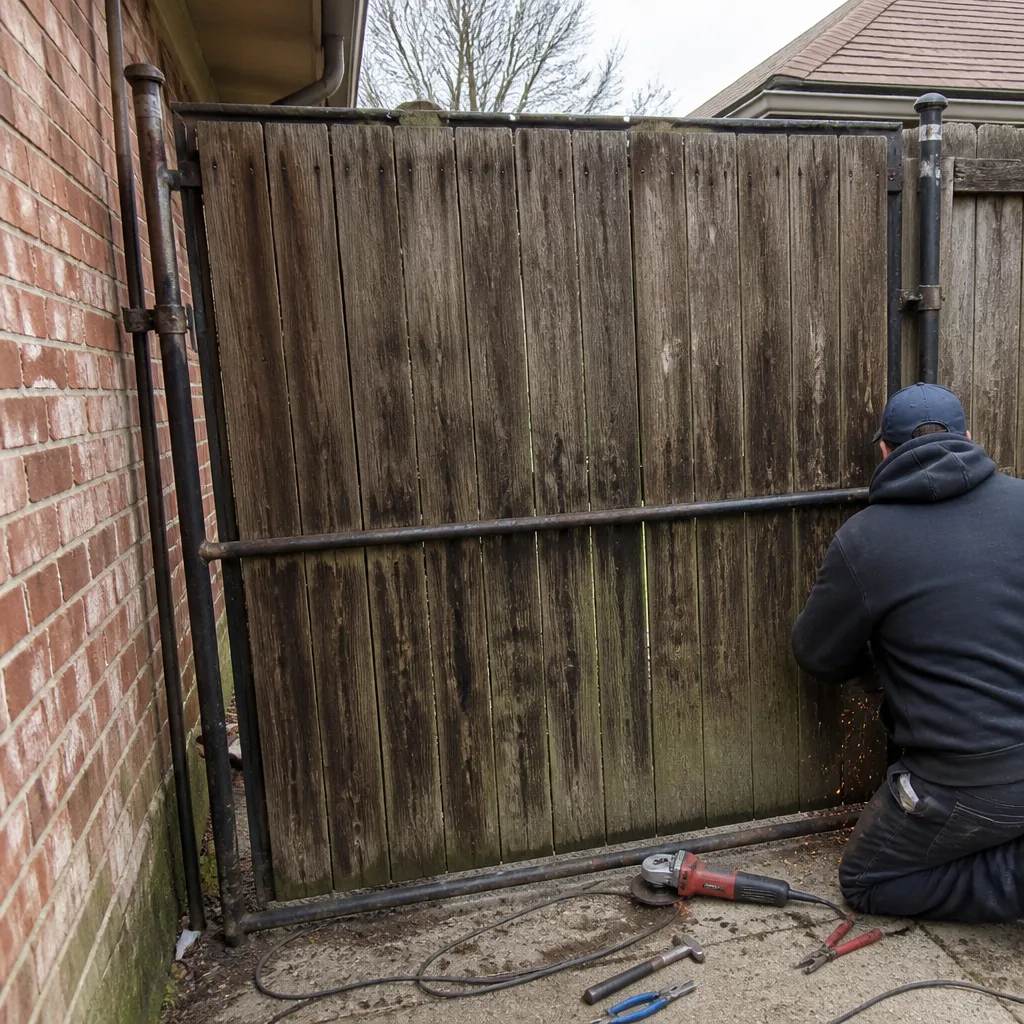 Before
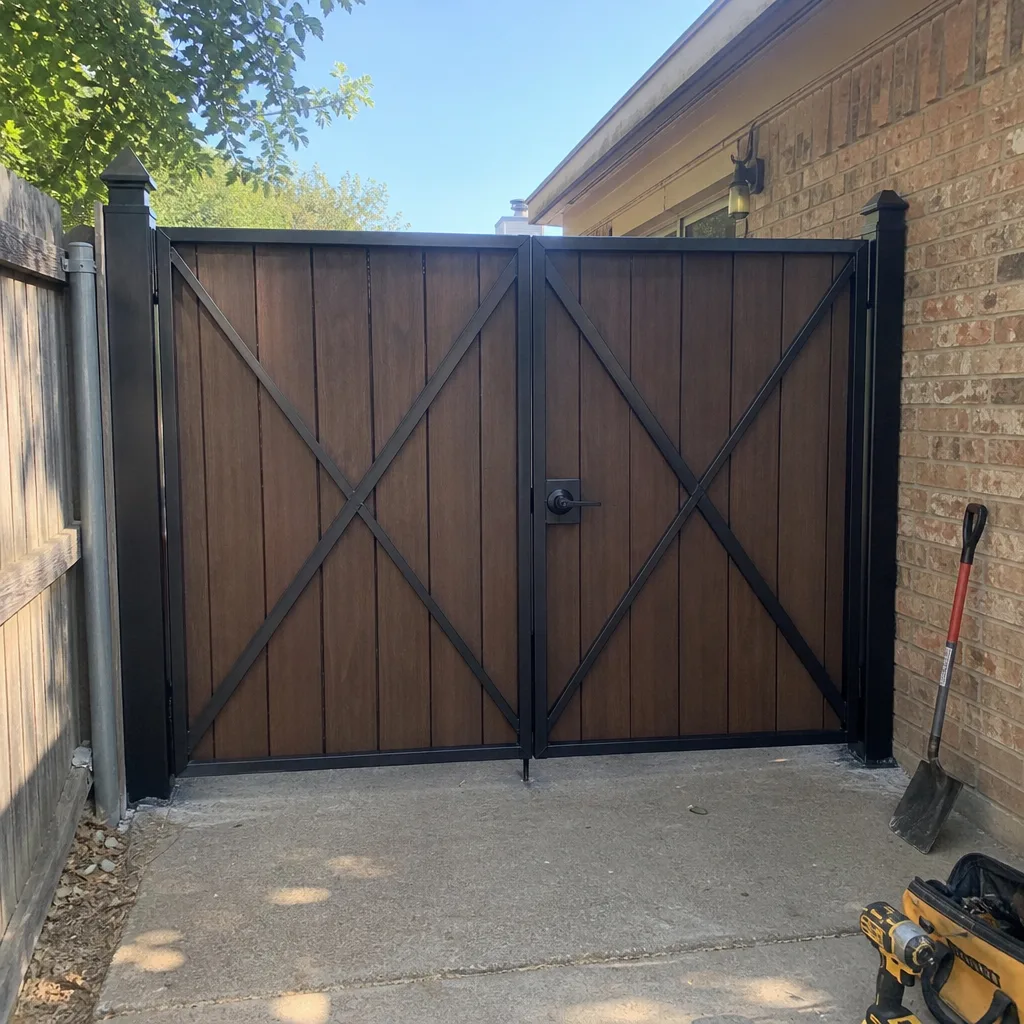 After
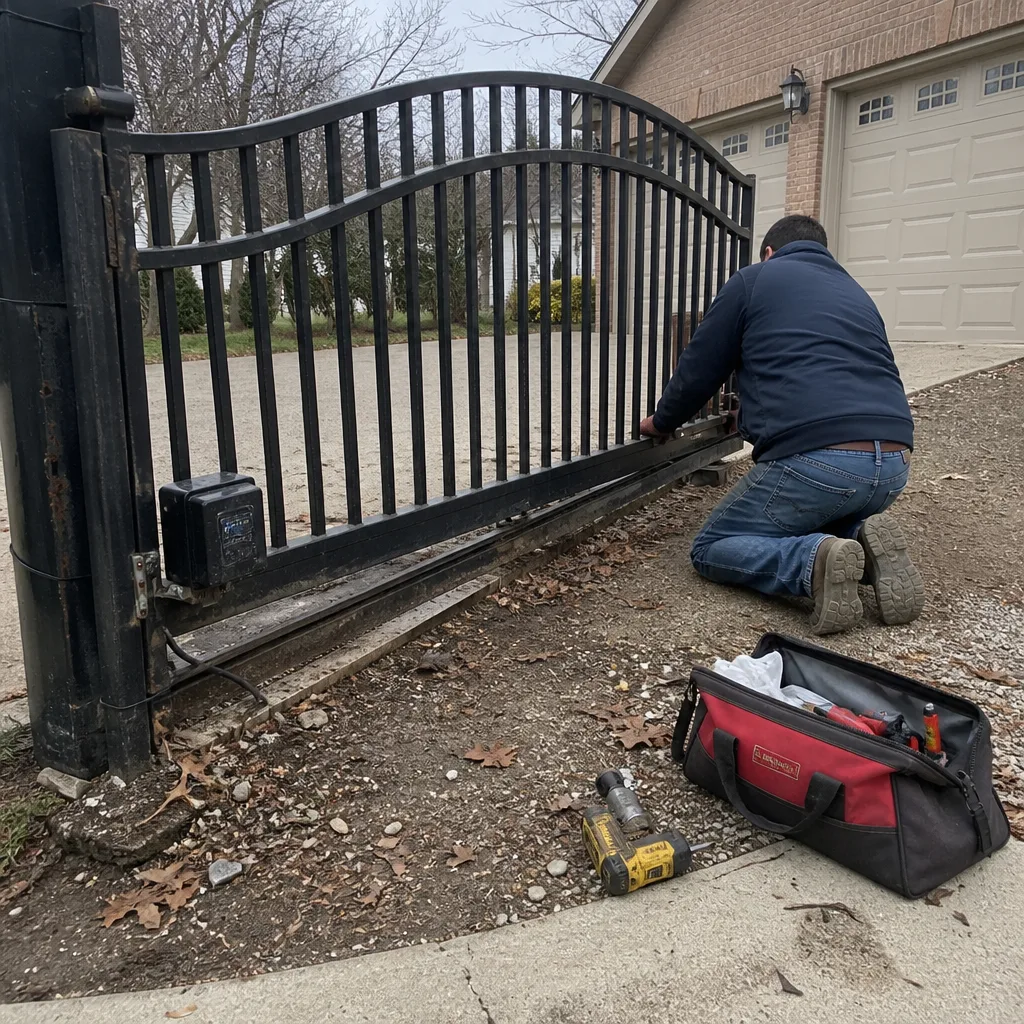 Before
 After
 Before
 After