
Last updated October 31, 2026
 Wrought iron
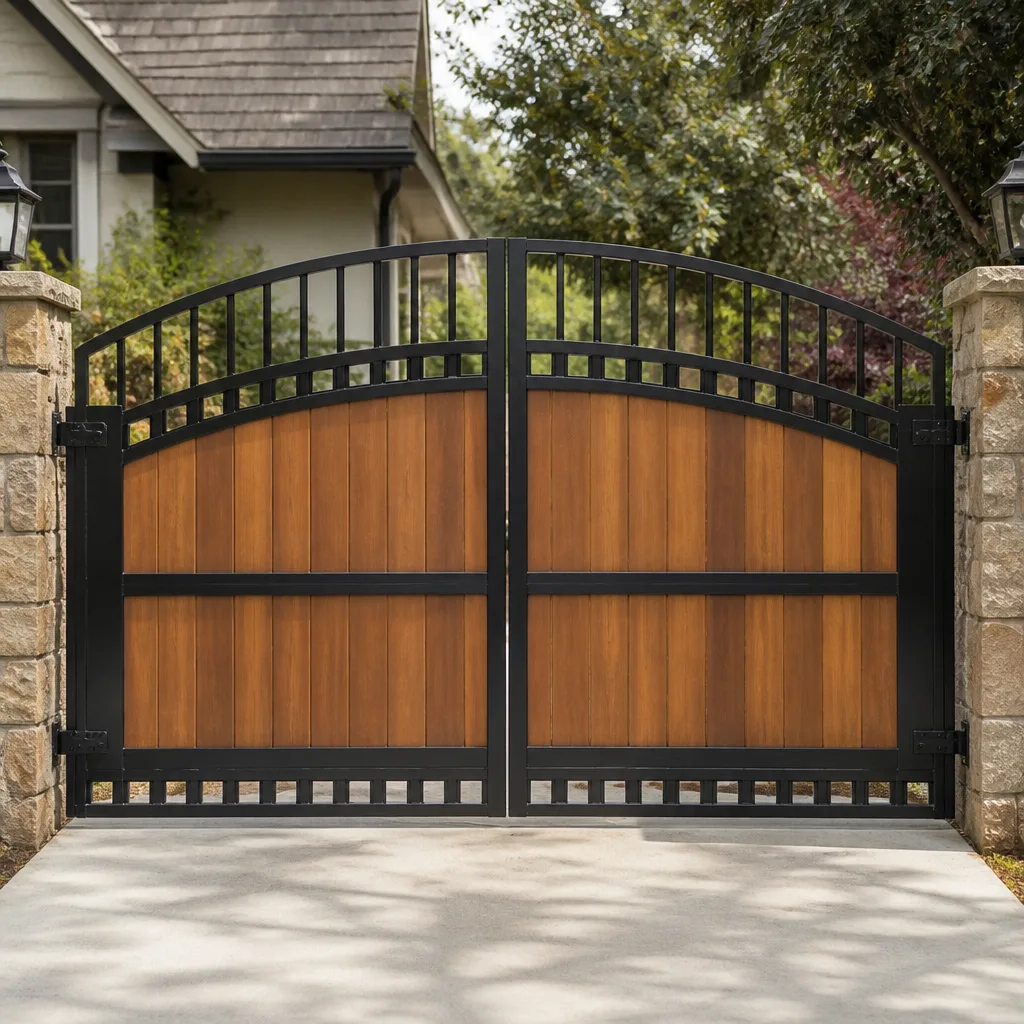 Wood & steel frame
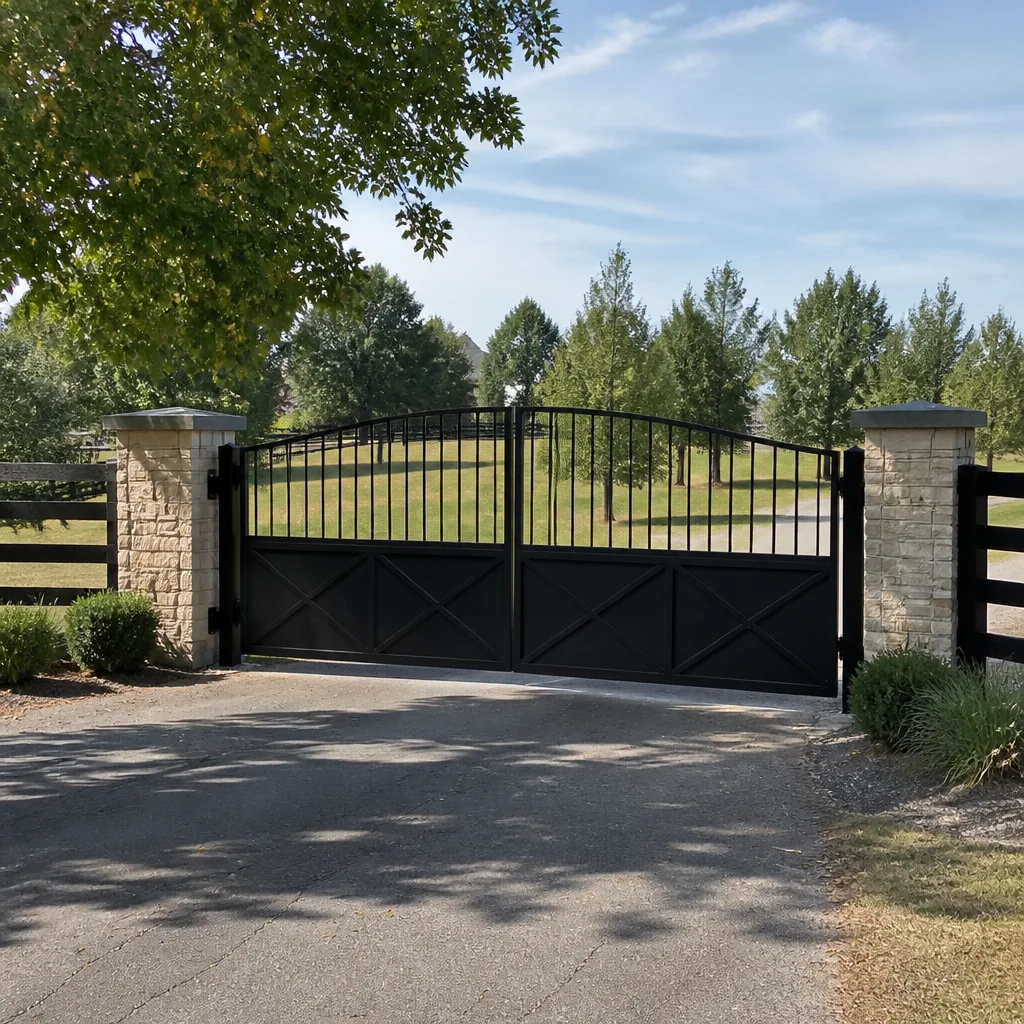 Farm & ranch
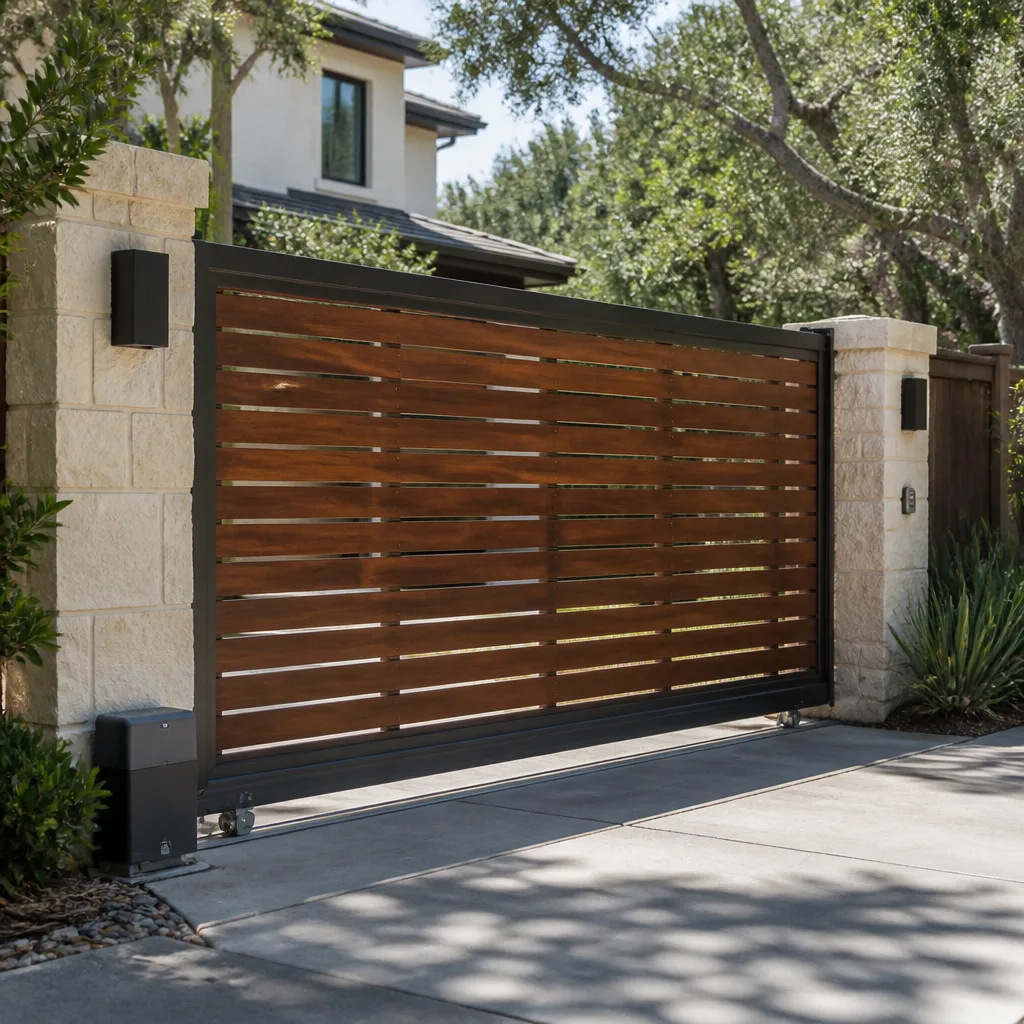 Sliding driveway gates
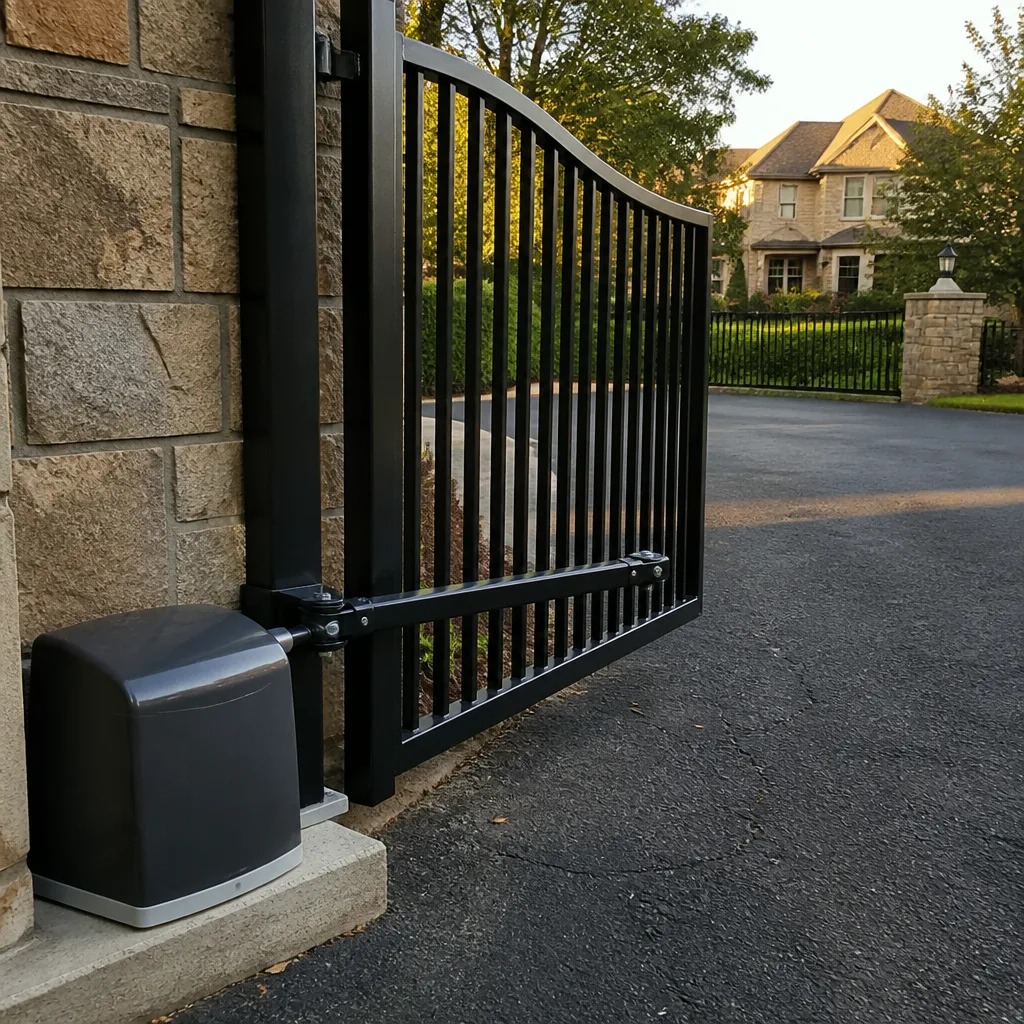 LiftMaster operators
Free on-site gate assessment - hinges, posts, and your LiftMaster or Nice gate operator checked before anything is quoted
The assessment is free and the quote is the invoice.
Get your free estimateGate Repair Maintenance Checklist for Rowlett Homeowners
Most gate maintenance checklists floating around online were written for generic installs in temperate climates. Follow one in Rowlett through a Texas summer and you’ll still miss the three things most likely to cause an after-hours breakdown: clay soil shifting your posts, 100-degree heat cooking the grease out of your hinges, and spring storm debris jamming your track. This guide is built for the gates we actually see in Rowlett – the swing gates on Lakeshore Drive, the slide gates in Waterview, the operators fighting dust and heat in Springfield Estates. We’re going to walk through the maintenance rhythm that keeps your gate operating the way it should, month by month, season by season.
Styles & brands we work with
Quick Answer
A Rowlett gate maintenance routine should include quarterly post and hinge inspections, monthly track and roller cleaning, lubrication every 90 days (or more often during 100°F+ heat), and twice-yearly operator testing that covers battery backup, limit switches, and safety loops. Homeowners can handle cleaning and visual checks themselves. Anything touching the operator circuit board or underground loop detectors belongs with a gate specialist.
Table of Contents
- Why Rowlett Gates Fail Differently
- The Monthly Visual Checklist (15 Minutes)
- The Quarterly Mechanical Inspection
- Seasonal Maintenance Calendar for Rowlett
- Operator-Specific Maintenance by Brand
- Clay Soil and Post Movement: A Rowlett Problem
- Sounds, Speeds, and Behaviors: What Your Gate Is Telling You
- DIY vs. Specialist: Where to Draw the Line
- Common Mistakes to Avoid
- When to Call a Professional
- Frequently Asked Questions
- The Bottom Line
Why Rowlett Gates Fail Differently
Rowlett sits on expansive clay soil. That single fact drives more gate repairs than any other variable in this city. The soil under your gate posts swells when it rains and shrinks when it bakes. Over a typical Texas year, that movement is enough to shift a post by half an inch or more. On a swing gate, that half inch transfers straight to the hinge alignment. On a slide gate, it bends the track. Most maintenance checklists never mention soil movement because they were written for markets with stable, sandy ground.
The second factor is heat. Rowlett averages more than 90 days a year above 90 degrees, and a stretch of 100-plus days is common from July through September. Standard gate greases break down faster in that heat. A hinge lubricated in April can be dry and grinding by early August. Manufacturers assume a 90-day lubrication cycle based on moderate temperatures. In Rowlett, you need to shorten that cycle during the summer or switch to a high-temperature lithium complex grease.
Third is storm debris. Spring storm season brings wind, hail, and enough airborne debris to clog a slide gate track in a single afternoon. Flooding along Rowlett Creek and the lake shoreline creates additional moisture issues for gates in low-lying areas. A checklist calibrated for Rowlett accounts for all three. A generic one misses them. That’s why we see so many gates fail in August and April – the two months when accumulated neglect meets peak environmental stress.
If you want the full picture of what goes wrong on gates in this city, our Gate Repair in Rowlett page covers the failure patterns we see most often – these maintenance steps are designed to catch them before they become repair calls.
The Monthly Visual Checklist (15 Minutes)
This is the routine you can do without tools, without training, and without calling anyone. Fifteen minutes once a month catches the majority of problems while they’re still cheap to fix. Ideally you’ll do it on the first weekend of the month, but consistency matters more than the exact date.
Walk the Full Gate Path
- Open and close your gate two full cycles. Stand where you can see both the leading edge and the hinge side. Watch for hesitation, jerking, or speed changes mid-cycle.
- Listen during operation. A healthy gate makes a low, even hum from the operator. Grinding, squealing, clicking, or a rhythmic thumping sound means something needs attention now.
- Look down the entire track or arc. On a slide gate, check for debris, gravel, or weeds along the track. On a swing gate, confirm the gate clears the ground by at least two inches throughout its arc. Soil movement in Rowlett often lifts one side of the arc first.
- Test the safety features. For an automated gate, wave your hand or an object in front of the photo eye while the gate is closing. It should stop and reverse. If it does not, that’s a safety issue, not a maintenance issue. Do not ignore it.
- Check the posts. Look for cracks in the concrete around the post base, visible lean, or a gap between the post and the surrounding concrete. Mark anything you find with a pencil so you can track whether it’s growing.
Quick Notes on What You See
Keep a simple note in your phone. Date, sound you heard, gap you measured, photo eye result. When a technician eventually comes out, that log is genuinely useful. It tells us whether the problem started three weeks ago or three months ago, and that changes the diagnosis. In our experience, Rowlett homeowners who keep a basic log get faster, more accurate repairs because we’re not starting from zero.
The Quarterly Mechanical Inspection
Every three months, go beyond the visual routine and touch the hardware. This is where you catch the problems a camera can’t see. Schedule these around the same time you change your HVAC filter – most Rowlett homeowners remember one reminder if they bundle it with a habit they already have.
Hinge Check and Lubrication
On a swing gate, the hinges take the full weight of the gate and the full punishment of Texas heat. Grab the gate at the latch side and lift. There should be no vertical movement at all. If you can move the gate up and down by any measurable amount, the hinge pins or bushings are worn. On a heavy ornamental steel gate, even an eighth inch of play will accelerate wear across the entire structure.
For lubrication: use a white lithium grease on hinge pins and a dry lubricant on latch mechanisms. Avoid WD-40 as a primary lubricant – it’s a solvent and will strip the grease that’s already there. During Rowlett summers, check the hinges every 45 to 60 days instead of 90. The heat burns off standard grease faster than manufacturer intervals assume.
Track and Roller Cleaning
For slide gates, the track is the lifeblood of the system. Clear it completely. Use a blower or broom to remove all leaves, dirt, and gravel. Then inspect the rollers. Worn rollers develop flat spots or wobble when you spin them by hand. A roller that is not perfectly round puts uneven stress on the track and the operator. Track misalignment is one of the most preventable electric gate repair in Rowlett calls we receive. Keeping the track clean and rollers round takes most of them off the board entirely.
Operator Box Inspection
Open the operator housing and look inside. What you’re checking for: ants (very common in Rowlett in spring and fall), dirt accumulation, moisture, and chewed wires. Fire ants love the warm, dry interior of a gate operator. Their nests can short out a control board. If you see ant activity, remove it carefully and consider a perimeter ant bait around the operator pad.
Do not touch the control board, wiring, or any connected components. This step is visual only. If you see corrosion, burned spots on the board, or loose wires, that’s the time to call a specialist.
Seasonal Maintenance Calendar for Rowlett
Rowlett’s climate isn’t a mild four-season cycle. It’s a pattern of extremes: wet springs, brutal summers, short autumns, and winters that occasionally dip hard enough to crack metal. Here’s the calendar that matches what we actually experience.
Spring (March – May): Storm Prep and Flood Awareness
- Deep-clean the track and check drainage. Spring storms dump debris and standing water. If your gate sits in a low spot, verify that water drains away from the track within a few hours. Standing water accelerates rust and attracts fire ants.
- Test safety loops. If your gate uses an underground loop detector for vehicle exit, spring is the time to test it. Drive slowly over the loop and confirm the gate triggers. Soil saturation from spring rains can shift loop sensitivity. A loop that stops detecting is a sign the wire may be damaged or the sensitivity dial needs adjustment.
- Inspect all wiring for storm damage. Hail and high wind can chew through exposed low-voltage wire. Look for cracks in insulation on any wire run along a fence or post.
Summer (June – September): Heat and Lubrication
- Shorten lubrication intervals. Standard grease breaks down faster in 100-degree heat. Lubricate hinges and rollers every 45 to 60 days instead of 90. Use a high-temperature lithium complex grease for hinges carrying heavy gates.
- Check the operator’s thermal shutdown behavior. If your operator shuts down during a hot afternoon and works again after sunset, that can indicate an overheating motor or control board. This is not normal behavior and shouldn’t be written off as “Texas heat.” It’s often the earliest warning of a motor on its way out.
- Inspect for ant activity every month. Fire ant pressure peaks in Rowlett during dry, hot spells. They’re looking for shade and will happily build a nest inside your operator.
Fall (October – November): Pre-Freeze Inspection
- Re-tighten hardware. After a summer of expansion and contraction, bolts and screws work loose. Check hinge bolts, operator mounting bolts, track hardware, and latch screws. A quarter turn on a loose mounting bolt now prevents a misaligned operator in January.
- Re-check post stability. The ground has been through a full swell-and-shrink cycle. This is the moment to look at the post base again for new cracks or gaps. In Rowlett, post movement tends to show up most clearly after the first cool, dry weeks of fall.
- Test the battery backup. If your operator has battery backup, now is the time to test it. Disconnect power at the breaker and run the gate. Most batteries last three to five years. If yours is approaching that age and the gate runs slow or fails to complete a cycle on battery power, replace it before winter.
Winter (December – February): Freeze Response
- Inspect hinges after any night below 30 degrees. Metal contracts in the cold. A hinge with worn bushings will bind or stick in freezing temperatures even if it worked fine in summer. A quick visual check after a hard freeze catches this before a full failure.
- Clear frost from safety equipment gently. Do not use hot water on a frozen photo eye or operator. Use a soft brush to clear ice. Rapid temperature changes crack plastic housings.
- Watch for lock freeze. Manual key locks and mechanical latches can freeze. A small application of a dry graphite lubricant before cold weather reduces this risk.
Operator-Specific Maintenance by Brand
Not all gate operators need the same care. The brand on your operator determines its maintenance rhythm. We work on the brand you already have – and here’s what that looks like in practice for the operators most common in Rowlett.
LiftMaster Operators
LiftMaster is the most common brand we service in Rowlett, and it’s also one of the easiest to maintain if you understand its design. These units are built around a 24V system with a battery backup on most residential models. The key maintenance points are the battery (test it twice a year, replace every three to five years), the limit switches (listen for the gate straining or stopping short), and the belt or chain on the operator arm. LiftMaster’s safety loop integration is sensitive – if a loop stops triggering, it’s usually a loop wire issue rather than a board failure, but the board needs to be checked both ways.
If you’re weighing maintenance versus replacement on a LiftMaster unit that’s been fighting Rowlett heat for more than eight or nine summers, a gate installation in Rowlett may be the more cost-effective path. We’ll walk you through the math before you spend a dollar.
Linear and GTO Operators
Linear and the GTO line (also sold under the Mighty Mule name) are common on residential swing gates in Rowlett. These are generally 12V systems with a simple control board. Their weakness in our climate is the control board’s exposure to heat and ants. The maintenance emphasis is: clean the board enclosure regularly, check the fuse, and verify the sensitivity settings. Linear actuators also need regular travel limit verification. If the actuator over-travels, it stresses the gate frame and the hinge mounting.
BFT and Viking Operators
BFT and Viking are more common on larger residential estates and commercial gates in Rowlett. These are hydraulic or electromechanical units built for continuous duty, but they’re not maintenance-free. Hydraulic units need fluid level checks and filter changes on schedule. Viking operators, especially slide gate models, rely on limit switch precision. A limit switch that is a fraction off causes the gate to slam against the end stop or stop short and trigger a fault. This is where brand-specific diagnostic knowledge matters most – a technician who doesn’t know Viking’s limit switch logic can chase that problem for hours.
Ghost Controls is another brand we see on DIY-installed residential gates. These units are relatively simple, but the installation quality determines the maintenance burden. A Ghost Controls operator bolted to a misaligned post will eat through the actuator gear in two summers. The fix is twofold: correct the post alignment and then address the actuator wear.
Clay Soil and Post Movement: A Rowlett Problem
This is the single most overlooked maintenance item in this city, and it’s the item that separates a cheap repair from a structural one. The expansive clay under Rowlett moves more than most other soil types in the country. Your gate post is a lever stuck into that moving soil. When the soil swells, the post lifts or tilts. When it shrinks, the post settles. Over a single year, a post can move enough to pull a swing gate out of alignment by a full inch.
Here’s how to inspect for it quarterly:
- Measure the gate gap. With the gate closed, measure the gap between the latch side of the gate and the latch post at both the top and bottom. Write down both numbers. If the top gap and bottom gap differ by more than a quarter inch, the gate or the post has moved.
- Check the concrete apron. Look for hairline cracks radiating out from the post base. Concrete cracks under lateral post pressure. A crack that appears and grows over two or three months is solid evidence of active post movement.
- Sight down the gate line. Stand back 20 feet and sight along the length of the gate. A straight gate has a continuous line. A gate with a subtle bow or kink indicates the frame is compensating for post movement.
- Test the latch engagement. When a post tilts, the latch and catch no longer align. If your latch requires lifting, pushing, or forcing to engage, the post has likely moved.
If you catch post movement early, the fix is often re-shimming the hinges or adjusting the track. If you let it progress, the repair becomes a post reset – excavation, new concrete, full gate re-hang. That’s the difference between a few hundred dollars and a four-figure structural job. This is exactly the kind of problem our Pinehurst Gate Repair home team is built to catch early, because we’ve seen the row of homes along Miller Road where nearly every gate on the block shows the same post lean within five years of installation.
Sounds, Speeds, and Behaviors: What Your Gate Is Telling You
Your gate doesn’t have a check engine light, but it does have a language. Operators, hinges, and rollers all communicate through sound, speed, and behavior changes. Here’s what we listen for when we evaluate a gate in Rowlett – and what you can start listening for today.
Sounds That Mean “Call Soon”
- A rhythmic thump or clunk during travel: This usually means a flat spot on a roller or a bent track section. It’s the gate equivalent of a tire with a bulge. You can drive on it for a while, but it’s getting worse every cycle.
- A high-pitched squeal at start or stop: Nearly always a dry hinge or roller bearing. Lubricate now. If the squeal persists after lubrication, the bearing or bushing is already worn and replacing it is cheaper than letting it fail under load.
- A grinding sound from the operator: This suggests gear wear inside the operator. Manual or electric, swing or slide – a grinding operator gear is not a lubrication problem. It’s a wear problem. Continuing to run it accelerates the damage.
- A soft click followed by no movement: Common on older control boards. Usually a relay or capacitor failing. This is an electrical issue, not a mechanical one.
Speed Changes That Mean “Inspect Now”
- Gate runs slower than it did three months ago: Could be low voltage, a weakening capacitor, or increased mechanical resistance. Track all three by feel. If the gate also runs hot (the operator housing feels warm after two cycles), that’s trending toward overload.
- Gate runs faster or “slams” at the end of travel: Almost always a limit switch or travel setting problem. On some brands, the speed setting is adjustable via dip switches. On others, the speed is fixed and a to-fast gate means the mechanical braking system has failed.
- Gate hesitates mid-cycle: Could be an obstacle being sensed, a loose wiring connection, or a safety loop triggering intermittently. A gate that hesitates at the same spot every time is often reading a misaligned track at that point.
In our experience, the gates that end up needing emergency service in Rowlett almost always gave a warning. The sound was there in May. The speed change was noticeable in June. The failure came in August, on a 103-degree Saturday afternoon. Listening early is the cheapest repair tool there is.
DIY vs. Specialist: Where to Draw the Line
Some gate maintenance is homeowner work. Some of it is not. Knowing the difference prevents both expensive mistakes and dangerous situations. Here’s the line as we draw it.
Safe for Most Homeowners
- Visual inspections and taking measurement notes
- Clearing debris from tracks and around the gate path
- Lubricating hinges, latch mechanisms, and rollers with appropriate products
- Testing photo eyes and safety loops by observing behavior
- Tightening exposed bolts and hardware that are clearly accessible
- Cleaning the operator enclosure exterior and checking for ant activity
Leave to a Gate Specialist
- Anything involving the control board. Modern gate control boards are sensitive to static discharge and incorrect voltage. Touching the wrong component with the wrong tool can damage a board that was simply misconfigured. Replacing a board isn’t just about unplugging and plugging – it requires matching the board to the operator, setting dip switches and limits correctly, and often reprogramming remote controls.
- Underground loop detector work. Loop detectors are buried in the driveway. Diagnosing a failed loop requires special tools and often excavation. Guessing at loop sensitivity settings without understanding the loop’s resistance can make a working loop stop working.
- Spring and high-tension hardware. Some swing gates use tension springs or counterbalance springs. These carry stored energy. A spring under tension is dangerous if released improperly. Gates with counterbalance springs should only be serviced by someone who knows how to release that tension safely.
- Post resets and structural repairs. Resetting a gate post means excavating, setting new concrete, and re-hanging the gate. Getting any part of that sequence wrong produces the same problem you paid to fix.
- Hydraulic operator service. BFT hydraulic operators and similar units contain pressurized fluid and precision valves. Opening a hydraulic system without depressurizing it correctly can result in a face full of hot fluid and a ruined operator.
Common Mistakes to Avoid
- Lubricating with the wrong product. WD-40 on hinge pins strips the grease, leaving the hinge drier than before. Use a lithium grease on pins, a dry graphite on locks, and a silicone spray on weather stripping. The wrong product feels like maintenance while actually accelerating wear.
- Ignoring a slightly-slow gate. A gate that runs 10 percent slower than last year is telling you something. Waiting until it stops entirely turns a $300 repair into a $1,500 replacement. Track speed changes the same way you’d track a check engine light.
- Power-washing the operator. Pressurized water forces moisture past the housing seals and into the electrical components. Clean the operator with a soft brush and a damp cloth, never a pressure washer. Rowlett’s clay dust is annoying but water intrusion is worse.
- Adjusting limit switches by feel. Limit switches control where the gate stops at each end of travel. Guessing at these settings causes the gate to strain against the end stop or stop short and leave a gap. Both failures accelerate wear and create security gaps. This is a calibration job, not a guessing job.
- Deferring post inspection because “the gate still works.” Post movement is silent until it’s catastrophic. By the time the gate stops functioning, the post has moved enough to require structural repair. The quarterly gap measurement takes 30 seconds and is the cheapest insurance you’ll ever buy on your gate.
- Replacing the operator without diagnosing the mechanical problem. Many operators get replaced because the gate was binding and the motor burned out fighting the resistance. The new operator inherits the same binding. Fix the mechanical issue first, then evaluate the operator.
- Treating safety loop issues as optional. A loop that stops detecting vehicles is a convenience problem until someone backs into the gate. A photo eye that stops working is a safety problem immediately. Both should be addressed promptly, not deferred to the next “big” repair.
When to Call a Professional
Some maintenance findings demand a trained set of eyes. If your quarterly inspection reveals post movement beyond a quarter inch of gap differential, a gate that binds or strains at any point in its travel, an operator that runs hot to the touch, a safety loop that no longer triggers, or any sound you can’t identify – that’s not a wait-and-see situation. These are early indicators of failures we see turn into emergency calls every summer in Rowlett. The fix is always cheaper before the failure than after.
For anything you’re not comfortable touching, Pinehurst Gate Repair offers free estimates in Rowlett – call (877) 265-5743. We’ll come out, look at what you’re seeing, and tell you honestly whether it needs a repair now, a repair soon, or just a note in your maintenance log.
Frequently Asked Questions
Lubricate hinge pins and rollers every 90 days during most of the year, but shorten that to every 45 to 60 days during the summer months when 100-degree heat breaks down standard grease faster. If your gate sits in full sun all afternoon, err toward the shorter interval. Use a high-temperature lithium complex grease for hinge pins on heavy gates. Call us at (877) 265-5743 if you’re unsure what your specific hinge type needs – estimates and advice are free.
A basic maintenance visit in Rowlett typically runs between $125 and $250 depending on the gate type, operator brand, and how many components need service. A full inspection with lubrication, limit switch verification, and safety loop testing on an automated gate is toward the higher end. Parts like replacement rollers or a new battery backup add to the total. Pinehurst Gate Repair provides a written price before any work starts – call (877) 265-5743 for a free estimate.
Yes, we handle emergency gate repair in Rowlett and we’ll work you into the schedule as quickly as possible when a stuck gate means your car can’t get in or out. The fastest way to get a technician rolling is to call (877) 265-5743 and describe exactly what the gate is doing or not doing. That lets our tech show up with the right parts for your brand rather than guessing.
A full maintenance service includes the visual walk-through, hinge and roller lubrication, track cleaning and alignment check, post movement measurement, operator inspection, limit switch verification, battery backup test, and safety loop and photo eye testing. We document everything so you have a baseline for future checks. For the brand-specific side, we verify settings against the manufacturer’s spec for your operator – LiftMaster, BFT, Linear, Viking, Ghost Controls, or whichever brand is on your post.
Yes, we handle both the mechanical and electrical components of automated gates. That includes control boards, low-voltage wiring, battery backups, limit switches, and loop detectors, plus all the mechanical hardware underneath. Most gate companies in the Rowlett area can manage either the mechanical or the electrical side – we’re comfortable with both because a gate failure often involves both. For electric-specific questions, see our electric gate repair in Rowlett page or call (877) 265-5743.
That depends on three things: the age of the operator, the condition of the structural posts, and the total spent on repairs in the last three years. A gate with a well-installed post system and a newer operator is usually worth maintaining. A gate with recurring post movement and an operator more than 10 years old often isn’t. We’ll walk through the numbers with you honestly – if replacement is the better financial move, we’ll say so, and our gate installation in Rowlett service means you don’t have to start over with a different contractor. Call (877) 265-5743 for a straight answer.
The Bottom Line
Gate maintenance in Rowlett isn’t about following a generic national checklist. It’s about understanding your specific hardware, your specific soil, and your specific climate – then doing the small things on schedule so the big things don’t arrive unannounced. The homeowners who avoid after-hours breakdowns are the ones who check post gap every quarter, lube hinges more often in summer, test the operator’s safety features twice a year, and know when to stop DIYing and call someone who works on their brand every single week. Fifteen minutes a month and a disciplined quarterly routine is the whole strategy. The alternative is a Saturday afternoon in August with a stuck gate and a 103-degree driveway.
Written by the team at Pinehurst Gate Repair, serving Rowlett since 2013.
See the difference
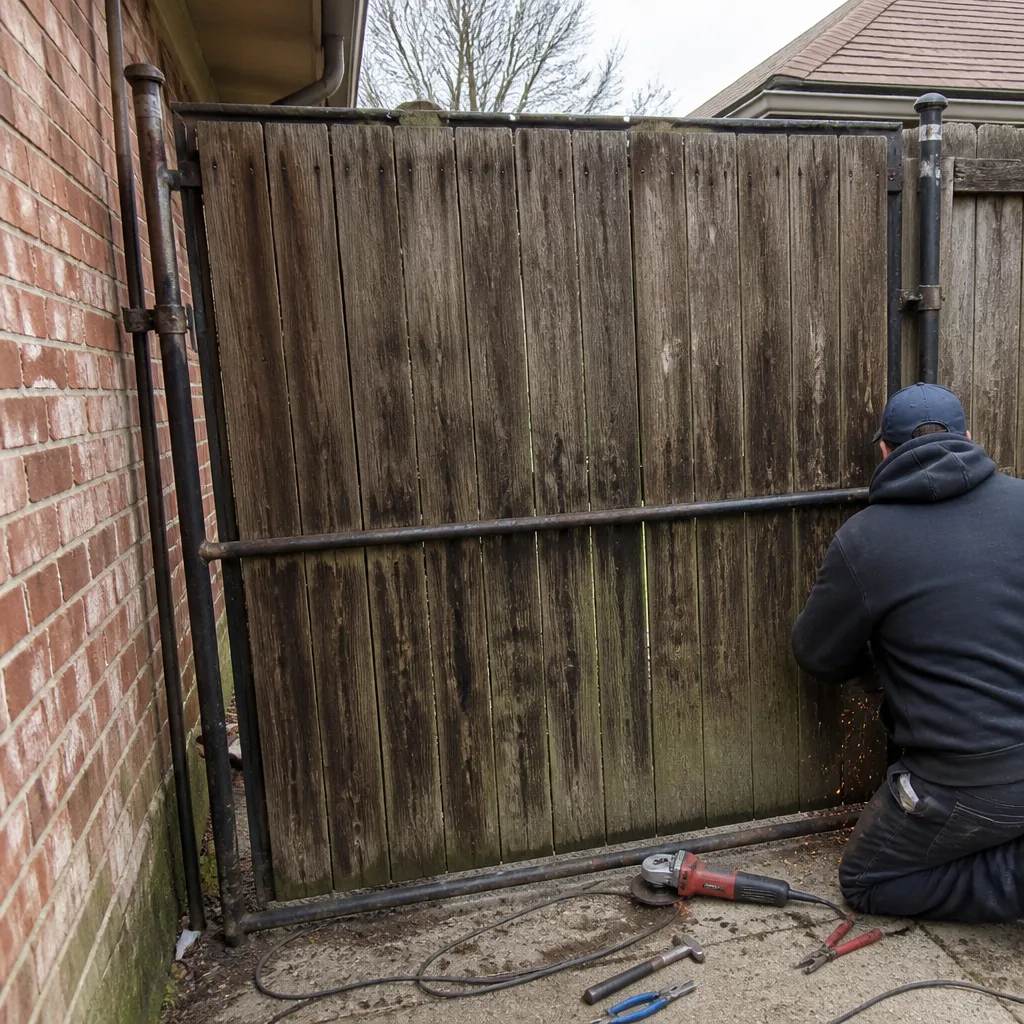 Before
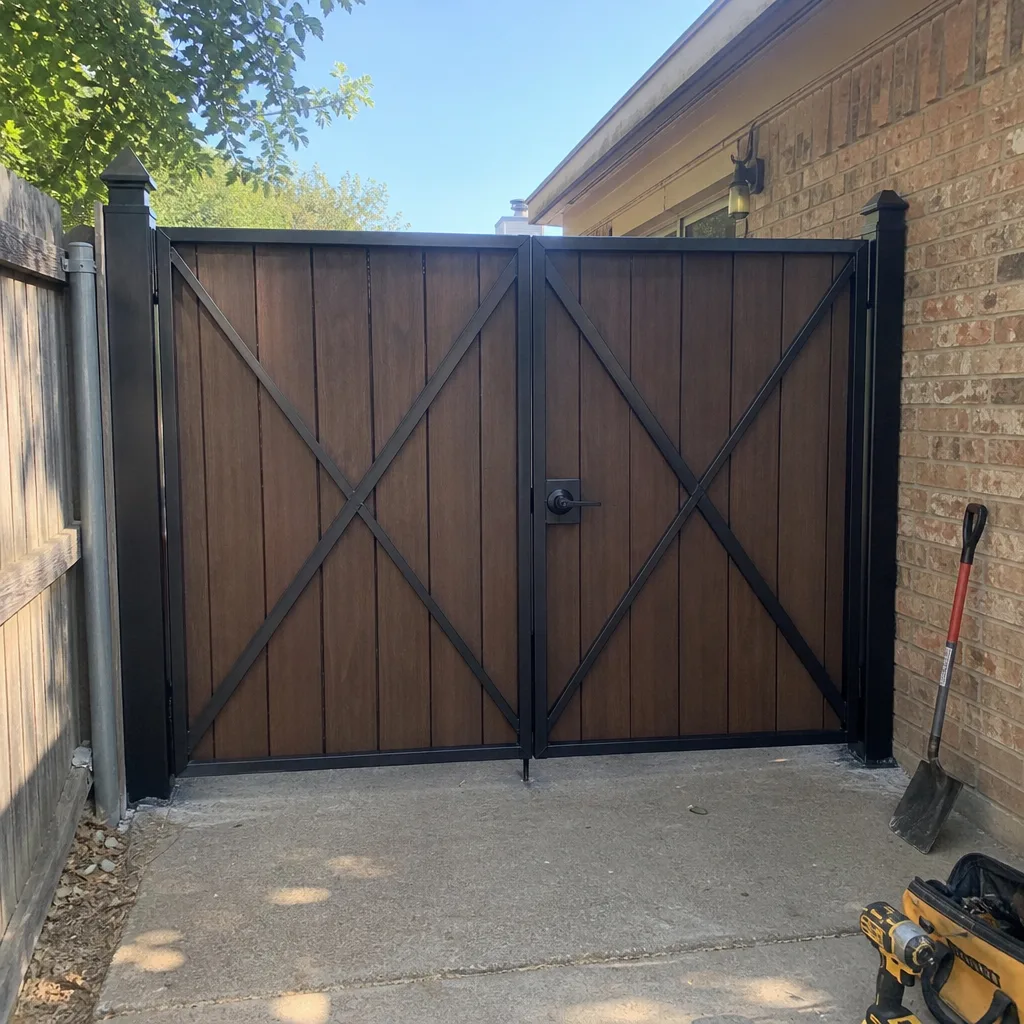 After
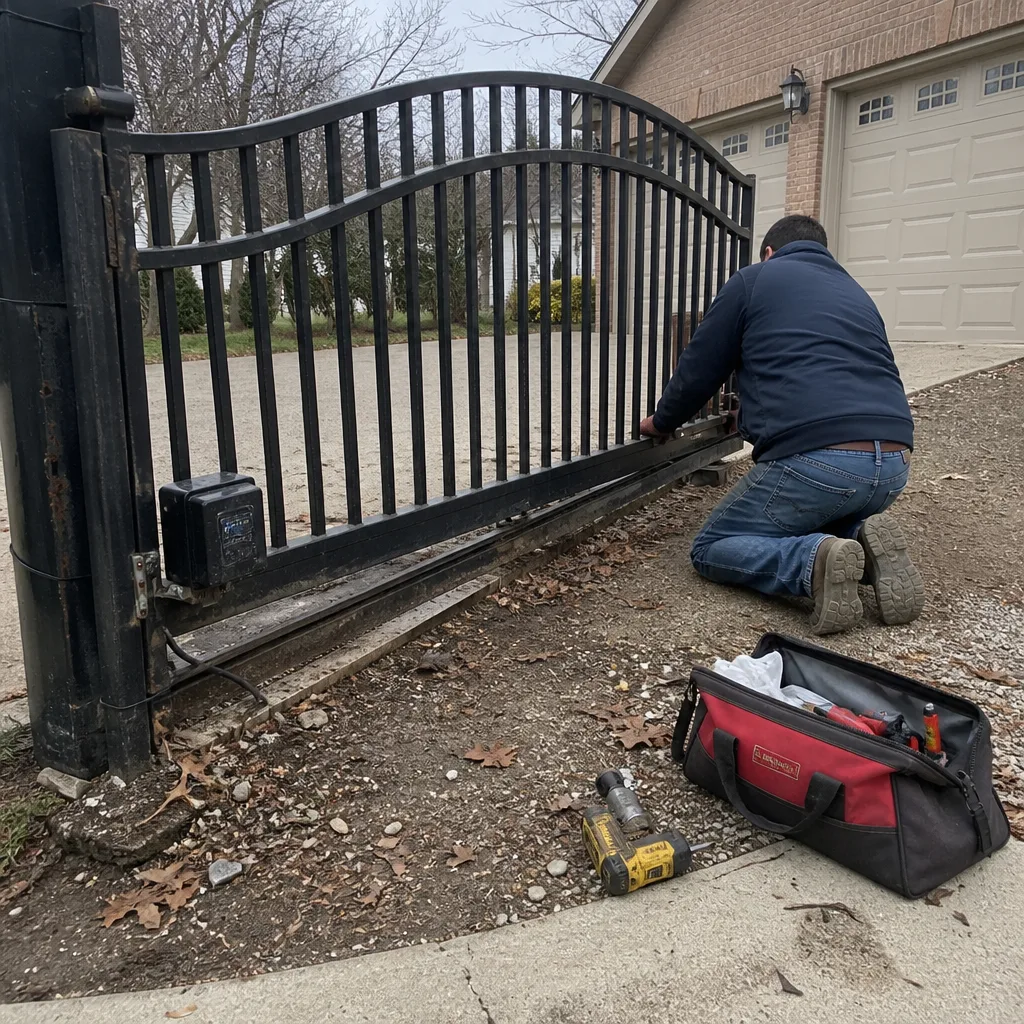 Before
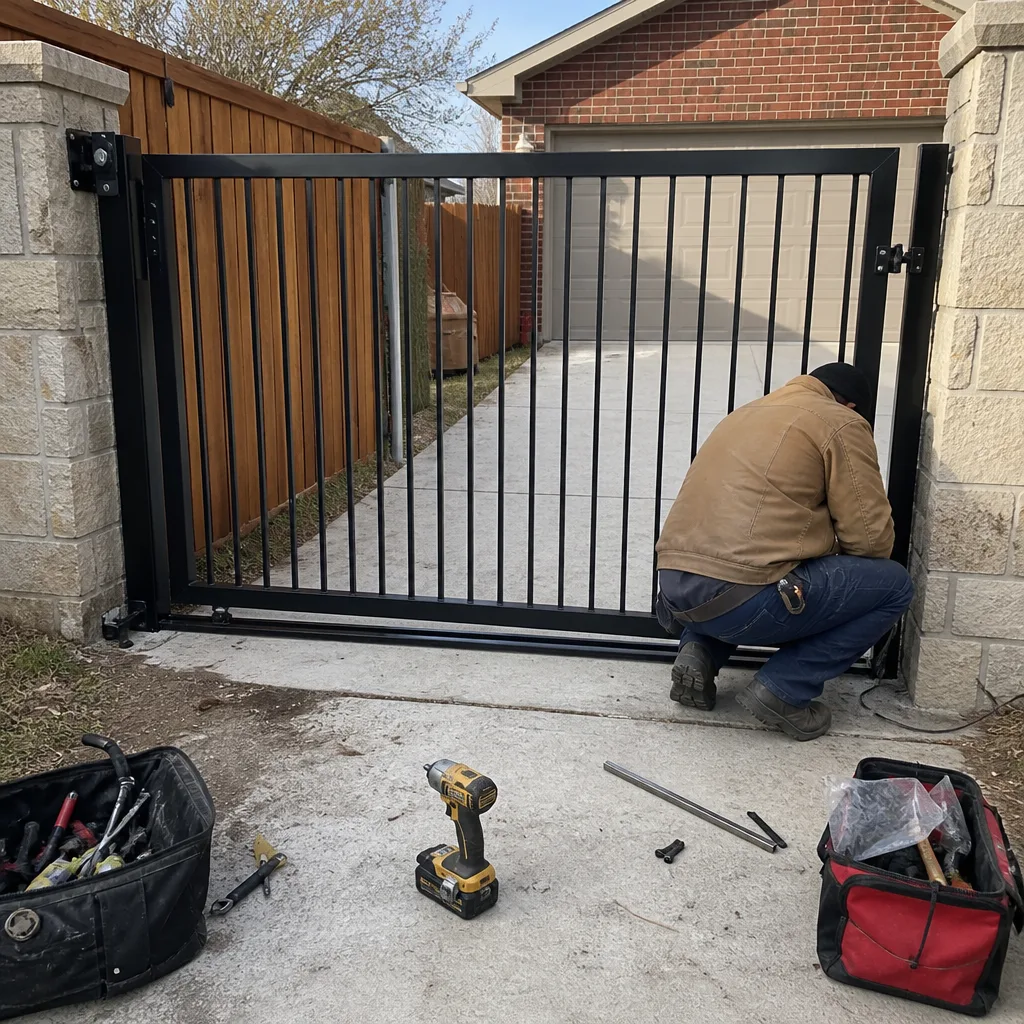 After
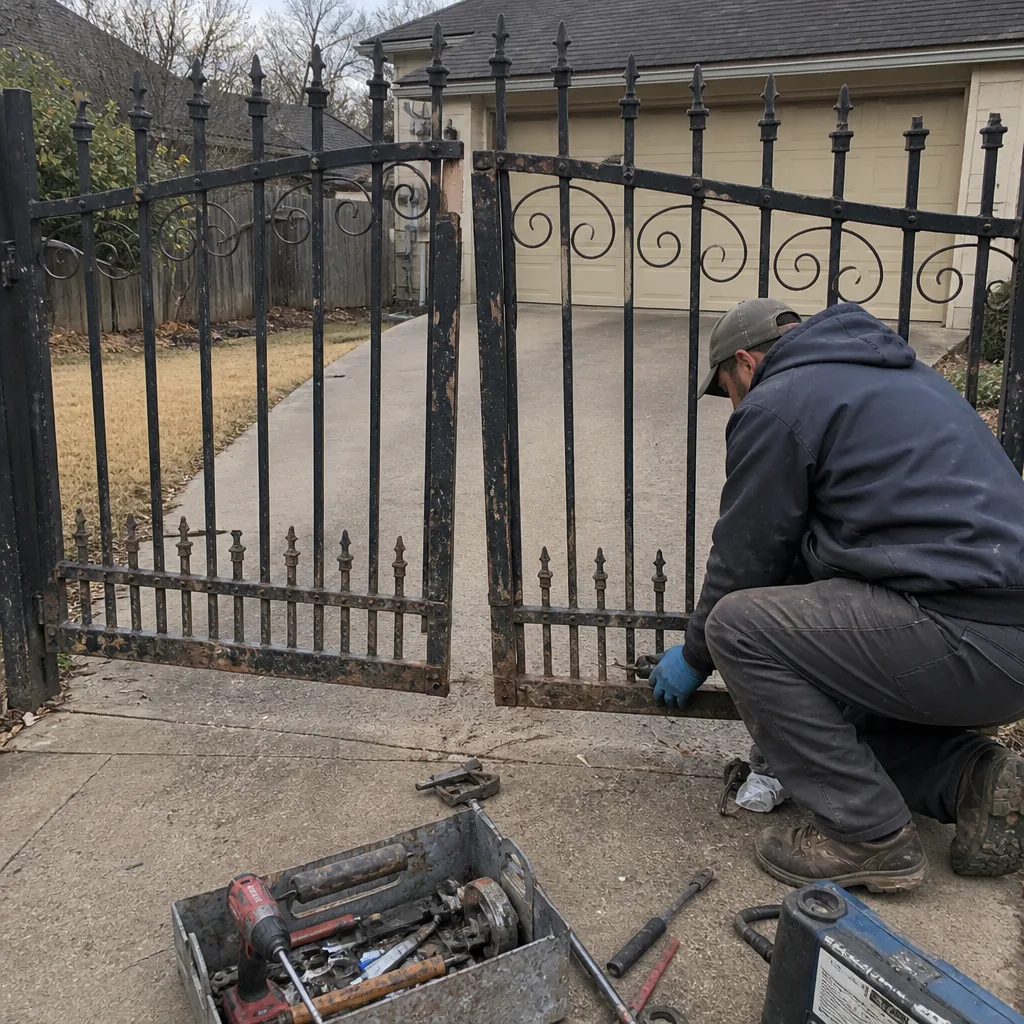 Before
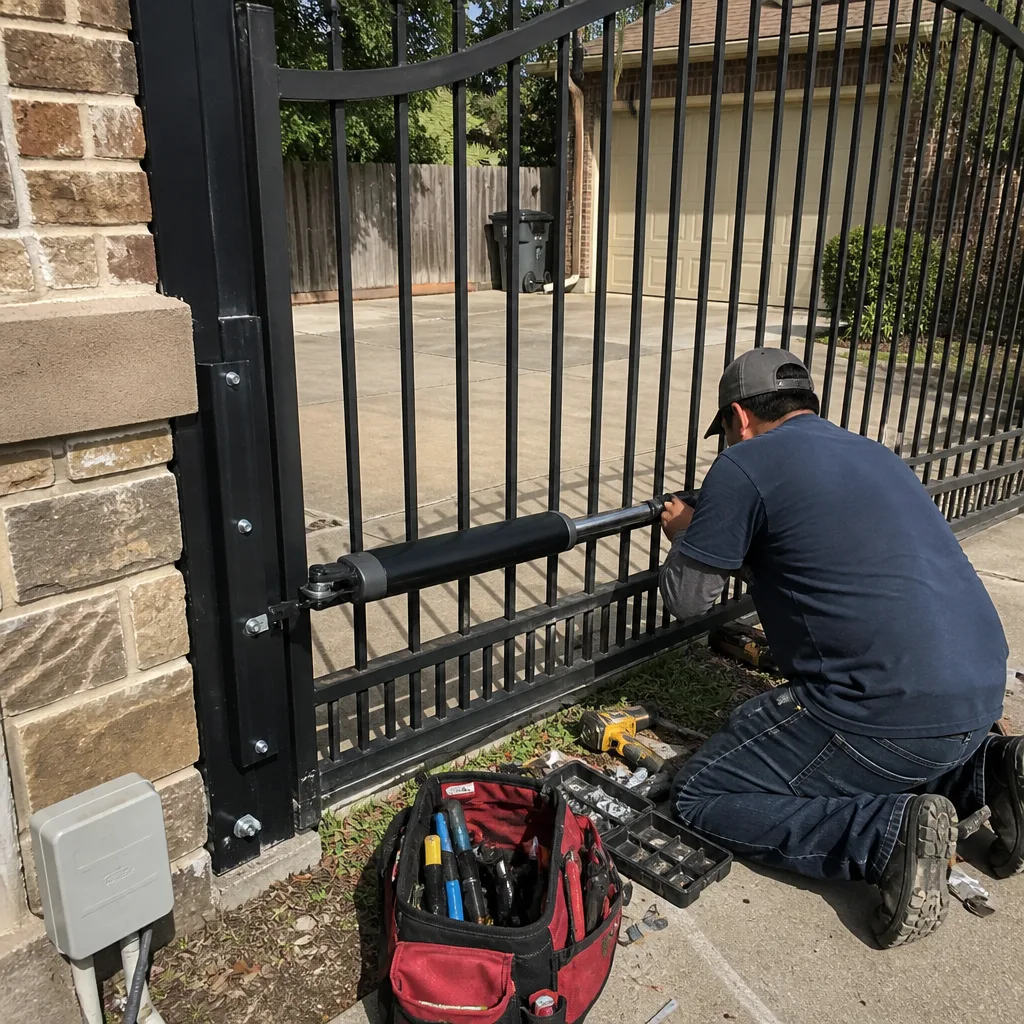 After